The post must be under 400 words and contain the title within the post.
{My entry is 390 words and comes from THE LEGEND OF VICTOR STANDISH,
detailing Victor's first meeting with the ghoul, Alice Wentworth, by the crypt of Marie Laveau at midnight.)
Alice murmured, “How did you read my thoughts, meal-about-to-be.”
“It must be some voodoo magic still clinging to Marie Laveau’s crypt.”
She took a step back. “How is that possible?”
I hitched myself up on a marble slab. “Pull up a seat. Maybe I can have you hear my thoughts.”
She sat beside me. I reached out and gently took her left hand and concentrated.
I stiffened as the swirling sea of her loneliness, her joy at being in touch with another hurt spirit swept me up.
I drew her into me, into my memories of burnt out ends of smoky days laced with violence, with the withered leaves of a thousand misunderstandings, and with the gropings of my heart to the uncaring hearts of others.
The autumn world of my days on the streets came rising up over the dark horizon of my loneliness. Lost friends, mocking enemies, the haunted eyes of Mother.
The yellowed papers of recollection curled up around us from Detroit, to Cleveland, to that strange bus ride to New Orleans.
The light of hope shot through the shutters of fear as images of me wandering lost through the madness that was Meilori’s. My losing everything as I decided that for Captain Sam to live I had to die.
The cry of Alice’s heart calling out to me as she struggled to escape her own private hell. Her spooky entrance into my life. My own loneliness reaching out to hers.
The circle completing its circuit. Resurfacing from the waters of our shared spirits. Our fingers parting. Her pale face looking at me haunted.
Alice was shivering. My head was spinning. Something was wrong with my heart.
It wasn’t empty anymore.
What had I done to me?
Maybe you couldn’t see, really see, into someone without it changing you. And you couldn’t show them the you that you really were without the two of you never being the same anymore.
I looked into her strange eyes. My heart skipped a beat. Her eyelids lowered. Her hand softened around mine.
A wild thought came to me.
I brought her cold hand up to my lips and kissed it.
Alice’s lower lip trembled. “How could you?”
“C-Could I what?”
“Turn out so special?”
Black tears welled in her eyes. “Love is not blind, Victor, rather it sees what others cannot.” ***
We writers have to wrestle with that demon daily. Developing writing skills bolsters your confidence that you are, indeed,
a writer
Growing in your skill in establishing atmosphere through your descriptions
is one weapon to use against that wily demon, insecurity.
Look around you.
Hearts have grown cold,
ears dull,
minds impatient.
And this affects you as a writer just how?
Each page of your novel could be the reader's last ...
unless ...
unless you make your novel alive and alluring.
People pick up a book in a store, thumb through it, and read a page at random.
That is your only shot at snaring him/her into buying what cost you years of sweat and effort.
Make each page count. Make each paragraph breathe. Make each moment live in the mind of the reader.
Each of the senses should be touched by your words. And one of the ways you do that is to paint your locale with such brushstrokes of prose, the reader "sees" and "feels" and "smells" the unique flavors of your locale.
New Orleans :
Hollow-eyed mothers hugging hungry children within a block of spacious mansions, framed by lush bushes and gleaming iron lacework fences.
Decaying public schools slowly devolving into raucous social jungles and tribal warfare over gang colors and drug territory.
A hardened, jaded police department that in some seasons can be scarier than the city's criminals. Official corruption at every level. Murder rates ever soaring. And hot, steamy air you can wear 7 months out of the year.
And it is a wonderful place to live :
The morning mists parting as the St. Charles streetcar happily clatters through the shimmering fog under the avenue's great oak trees.
The second-line parade of trumpet blowers high-stepping intricate steps in honor of some event or another.
The mellow, haunting notes of Ellis Marsalis playing piano as you sit at Snug Harbor, sipping a drink light on alcohol, heavy on taste.
You must paint your reader into your locale with words that touch the taste buds, stroke their cheeks, and tug on their heartstrings.
Only then, with the setting so real that they hear the sound of throaty laughter and fine jazz, will the Stetson wearing, doomed hero, Samuel McCord, feel like an actual person to them.
Remember :
Each city whispers in its own voice. Your city. My city.
You know streets that whisper to stay away at night.
You know what scandal has stained some avenue beyond repair. You know what person's name is spoken in hushed tones long after he or she has died and been buried in your city.
Each city has its own personality. Like a human's, it changes with trauma, years of abuse, and moments of historic impact.
Lifting the veil from the distinctive features of the setting of your novel makes your whole narrative come alive for your reader.
But how do you do that verbal sleight of hand?
Details. Some obvious to tourists. Some that you have to ferret out by research in the library, on the internet, or by listening to a local visitor to your setting.
Feelings. How does your hero/heroine feel about those details? How have they affected the protagonist and those important to him or her?
Weave those details and emotions into a rich tapestry of irony and longing.
What shadowed corner of your setting is especially dangerous or emotion-laden to your central characters? Why?
Paint a passage where that tapestry flutters in the shadows, not quite completely seen but more evocative because of that.
Time. What era is it in your setting? Has your protagonist lived through more than one era of time in it?
How has the passing seasons shaped his/her mind, opinions, and outlook for the present? For the future? How does your protagonist view his and the setting's past?
Master these points, and your novel will live for your reader. ***
Bored? Hate them? Think there can be a new twist on them?
I have revenants (as Victor says, "Think vampires ... but without as many morals.") in my urban fantasies.
I take famous historical figures as revenants, having their humanity slowly ebbing away over the decades. Abigail Adams is my tragic figure that towers over them all. In THE RIVAL, she takes center stage quite often.
Here is what Neil Gaiman has to say of vampires :
"The glorious thing about being a vampire is that you don't die.
And whether you're talking sparkly magic vampires or the intelligent, sympathetic Dracula — Fred Saberhagen's Dracula Tape series for example,
or the Saint Germain Chronicles by um, oh God, what's her name? Chelsea Quinn Yarbro —
all of that stuff essentially gives you, ''You're conquering death.''
You have limitations, and it depends on how crippling you think those limitations are.
The very best piece of vampire fiction, I think, is incredibly short, and it was written by Charles Beaumont [in 1961]. It was just a vampire talking to a psychoanalyst.
And it's just a glorious, very, very short story. It's called ''Blood Brother.'' It's the guy bitching about not being able to shave properly.
And not being able to cross running water, and what that actually means in a city, and turning in and out of a bat.
It's a wonderful sort of grumpy vampire shtick. And a kind that nobody's really done. Then of course there's Sesame Street, which I think may well have really created the sympathetic vampire for the world."
Veteran writing coach, developmental editor, and writing instructor Jessica Page Morrell fills in the gaps in every rejection letter you've ever received.
In it, Mrs. Morrell states that you will never know when you've arrived, if you don't know where you're going. Makes sense, right?
She says, that like a map, an outline for your novel with tell you its end. Knowing that will allow you to take the most effective (dramatic) route to it.
Mrs. Morrell literally hates hearing writers say that writing is driving in the fog.
Sounds logical, true?
Here is part of what the award-winning, best-selling author, Neil Gaiman, wrote in his blog yesterday :
It's a weird thing, writing.
Sometimes you can look out across what you're writing, and it's like looking out over a landscape on a glorious, clear summer's day. You can see every leaf on every tree, and hear the birdsong, and you know where you'll be going on your walk.
And that's wonderful.
Sometimes it's like driving through fog. You can't really see where you're going. You have just enough of the road in front of you to know that you're probably still on the road, and if you drive slowly and keep your headlamps lowered you'll still get where you were going.
And that's hard while you're doing it, but satisfying at the end of a day like that, where you look down and you got 1500 words that didn't exist in that order down on paper, half of what you'd get on a good day, and you drove slowly, but you drove.
And sometimes you come out of the fog into clarity, and you can see just what you're doing and where you're going, and you couldn't see or know any of that five minutes before.
Never heard of him? Peter Straub has. Listen to what he says of the book :
"Louis Maistros has written a lyrical, complex, and brave novel that takes enormous risks and pulls them all off. He is a writer to watch and keep reading, a writer to cherish."
Listen to the Library Journal :
"One has to write with considerable authenticity to pull off a story steeped in magic and swamp water that examines race and class, death and rebirth, Haitian voodoo, and the beginnings of jazz in 1891 New Orleans.
Maistros's gritty debut novel follows the interconnected lives of the Morningstar siblings--all lovingly named by their father after disease-- as they wrestle with a powerful demon, con outsiders, kill and die, die and are reborn."
Or to what Donald Harrington, Winner of the Robert Penn Warren Award and the Oxford-American Lifetime Achievement Award, wrote :
"Louis Maistros ... his debut novel is a thing of wonder, unlike anything in our literature. It startles. It stuns. It stupefies. No novel since Confederacy of Dunces has done such justice to New Orleans.
If Franz Kafka had been able to write like Peter Straub, this might have been the result."
I found this review for GHOST WRITERS IN THE SKY on Amazon by Mary Bartlett :
"I've been writing fiction and poetry for over thirty years and reading writing books longer. At this point, it's rare to read a writing book that doesn't say much the same as every other and the information in this book is comparable - but -
This book is the BEST writing advice from some of the BEST writers in history. The author did a good job of spinning together some of our greatest author's writing advice, while weaving in personal insights into the complex occupation -
or preoccupation - that is writing. Whether you're a new writer or seasoned writer, there are valuable things to harvest from this entertaining, informative book."
Rats. GHOST WRITERS has slipped to #14 in AMAZON'S TOP 100 BEST SELLING WRITING SKILLS books.
What fan of the arcane and the supernatural has not heard of them? But did you know that there were equally mysterious Nazca Lines for writers?
Bet you didn't.
But there are. And you need to know them. Imagine this famous scenario :
you're at a writer's conference. You're waiting for the elevator doors to open and take you to listen to your favorite author. They open.
He storms out. You stumble into the elevator and bump into none other than the president of HarperCollins Publishing.
The doors close, and he glares at you. "That jerk just told me I needed him. Me need him? I made him. I could make you. Hey, you tell me what your book is about in one sentence. I like it. I'll publish it. Well, just don't stare at me. Give me that sentence!"
What do you say? Besides "Oh, shit!" to yourself. And right now, as you read this, if you're writing a novel, you better have that sentence crystal clear in your mind. If you don't, you need those mysterious Nazca Lines for authors.
What is your novel about, Roland? Now is no time for ah's. "It's about a man, nearing retirement, invited to a company country retreat, only to find out it is his employers' deadly way of downsizing by 'accident' to avoid paying him his benefits."
The president's eyes roll up. "Why should I care? What's the shake-up in this retread?"
"Ah, you see, he's not human. He's ... he's an alien with gruesome dietary needs. And he's more than happy to add these company killers to his menu."
"Hey, that might work. Give me an eagle-eye view of this, kid."
Eagle-eye view. That is what the Nazca Lines for authors happens to be.
First Nazca Line - The theme in one sentence.
In an important aspect, a good novel is an argument posed by the author to the reader. As in : what is more important, love or success? What is love really? And success? How do you measure that? Your theme is your argument.
How do you get your theme seamlessly inserted into your novel? Usually thourgh the lips of a secondary character. In my THE MOON & SUN AS HIS BRIDES, Webster, the one-eyed orphanage headmaster, stalks towards my young hero as the orphange burns down around them.
He jabs at his empty eye-socket. "You want the truth? You want to understand? That costs, boy. It costs!" {As it turns out Webster is really Wotan, he who you might know as Odin -- and wisdom cost him his eye.}
Second - The Book-Ends :
The Opening Scene and Your Closing Scene.
Some publishers look at the first 10 pages and the last 10 pages. Think of them as the "Before" and "After" photos in all those advertisements. There has to be a drastic change in the main character underlinging your theme or the rubber stamp "REJECT" comes down on your manuscript. Ouch.
Third - The Set-Up Lines :
The first 50 pages or the first 3 chapters.
In those you must set-up your hero, the life-or-death stakes, the goal of the story, and all the major characters are introduced or hinted at. Think of any classic Hollywood movie. In the first 15 minutes you will see that same set-up. You don't have it in your novel? You don't have a good novel. Or least that is what the publisher will think. And he is the one we're trying to sell.
Fourth - The Flaws That Show & Those That Don't :
You should have three major time bombs in your hero's life that need fixing and three minor ones that prevent him from seeing the real problems in his life. Tick. Tick. Tick. BOOM!
Fifth : Let The Games Begin :
Fun. That's what gets readers to come back for a second and third read. It what gets them to urge friends to read. Let the hero and his circle of comrades have adventure. Let them get away with the loot. Let them thumb their noses at the howling Dark Ones. It's what would be on the poster if your novel was turned into a movie. Luke and Leia swinging on that rope. Quigley shooting his rifle over impossible distances. Iron Man streaking across the dark heavens ... to slam into the brick wall of the next Nazca Line ---
Sixth - The Twilight of The Gods :
Or that is what I call it : the hero realizes too late a harsh truth. The forces of darkness have won. He is alone. There is no hope. He comes face to face with the fool that he was. And then, kneeling in blood and ashes, he decides ...
Seventh - The Phoenix Rises/ The Catalyst Sizzles :
There is losing. Then, there's quiting. The hero decides to fight on. But fight on smarter. The bad news was really the good news. It is that moment the reader loves. The harsh realities that every reader faces is tilted on its ear by a carefully sown subplot. The person the hero thought he has lost returns. And the forces of darkness discover you never count a hero down until you see his corpse. And maybe not even then.
Eighth - The Mid-Point Line :
The stakes are raised. The hero wins. Or does he? The floor bottoms out beneath him. All is lost. The hero was a fool. He obtained his goal, only to discover he had lost the real treasure in getting a tarnished, empty vessel.
Ninth - The Wolves Close In :
What makes a hero? What ticks inside a proponent of Evil? The answers to those two questions are what turns defeat into a learning, growing stage in the hero. The hero fights for others. The antagonist fights for himself. The hero is willing to die if those he loves live. The antagonist usually finds a way for followers to die for his cause. He himself wants to live to bask in the glory of winning.
Tenth - Gethsame_Golgotha_The Empty Tomb :
Death. Someone dies. Something important dies. In every classic movie, death is the seed that is sown to bring a harvest of redemption to the hero. As the shadows close in around our defeated, dejected hero ...
Eleventh - The Sun Also Rises :
Love usually brings the believed lost partner of the hero back to his side. A moment of joy leads to a revelation of a solution. The lessons learned in the prior pages are brought to bear. The forces of darkness have learned nothing. The hero has learned a great many things. He brings them to his arsenal of weapons. One by one, he and his comrades and his love dispatch the enemy. Until it is just the hero versus his arch-foe. New surprises are thrown at our hero. He takes his hits and keeps coming. He may die, but he will not be defeated. Nor is he.
And The Lines Strikes Twelve - The "World" is changed.
Triumph isn't enough. The world must be drastically changed -- for the hero or for everyone. But changed it is.
Final Image :
It echoes the first image we got in the book. But this image has more depth, brought by the dark colors of death, pain, and revelation. You have made your point in the argument you proposed in the novel's beginning. You know your reader will close your book with a sad sigh at a great experience ended. And maybe, just maybe, if you've done your job right ... your reader will turn to page one again to read your novel with renewed delight at knowing where you are going to take him/her.
*********************
And talking of eagle-eye views, here is a music video that is a life lesson all by itself :
There are things only the dead know, views only the dead see.
Victor Standish, impudent pup that he is,
asked me to write of them here anyway.
At least in how they shape the art of writing.
What do I know of writing you ask? Each of us is the author of our lives, though many insist upon making them boring, repetitive.
The way of the writer is the way of water :
Most of you restrict yourselves, limit your vision. Be instead water.
You put water in a cup, it becomes the cup;
You put water into a bottle it becomes the bottle;
You put it in a teapot it becomes the teapot.
Sometimes it is still like the hush before dawn. Sometimes it is wild like the heart betrayed. But it is always alive to the world around it.
Be water, my friend.
Do not think, feel....it is like pointing your finger towards the moon. Do not concentrate on the finger or you will miss the stars!
The ghost of Thoreau tells me only that day dawns to which we are awake. Water is always awake. But are you?
A child is acutely aware of his expanding world, for it is new, ever-growing, ever fascinating. The way of the writer is to stay that child.
Most of the living become calloused by their flow of experiences, falling into the sleep of habit.
They wrap their personal problems about their eyes so that they walk blindly through all their days, listening only to the soundtrack of their sorrows.
They put on layer upon layer of habits, clothing themselves in restriction until the water of their souls become stagnant like a swamp.
You living become so insulated in this manner that only the knife of tragedy or great joy can stab through to you.
Most of you have stopped being aware sometime in high school. Have you not noticed men whose fashion sense halted in their mid-twenties?
Since most of you are not laying up new stores of awareness and observations each day, you must go back to the same stale, old ones when you were still awake.
No wonder that so many authors write and re-write the sensations of their early years or childhood. Have you not known an author who seems to be able to tell only one story?
No matter the heroine’s name, the snowflakes will still melt on her fluttering eyelashes. The hero will always be strong, silent, misunderstood.
Ah, but the truth is that all of us remember strongly the things we saw through the clear, warm light of childhood. And when we want to bring a scene to life, we return to those sensations that sing to us of life, of being aware.
But if we endlessly return to that same pool, soon our writing grows stale, repetitive, and lifeless.
The ghost of Henry James just strolled by, saying, “Tell them to be one of the people upon whom nothing is lost.”
You cannot do that overnight.
No. Take ten minutes of each day to practice the innocence of the eye,
to ask how a child would see what is around you. Do this in different locales, never the same.
Taste the breeze. Listen to the robin in the tree to your left. Watch the stroll of the ambling dog outside your window, studying where he stops, watching his eyes, looking at his wrinkling nose and shifting ears.
Turn yourself into a stranger in your own life.
What colors are the things around you? Why would someone paint his house moldy green? What colors are the cars that pass you? Did the persons want that color? Why?
Close your eyes. What are the smells? What are the sounds? What could a blind person tell about the world you perceive this way?
Truth has no path. Truth is living and, therefore, changing. Awareness is without choice, without demand, without anxiety.
In that state of mind, there is perception. To know oneself is to study oneself in action with another person.
Awareness has no frontier; it is giving of your whole being, without exclusion.
Be awake, my friend. Be a child. Be a writer. *** SHOULD GHOST RECEIVE 10 REVIEWS (whenever that happens) I WILL DRAW FROM THOSE 10 NAMES FOR A ROBERT DOWNEY, JR. AUTOGRAPH!! How cool is that?) ***
Dreamer. Writer. Believer in the worth of each soul I meet.
It is not so bad a thing to have been born with the gift of laughter and the knowledge that the world is mad.
Book 4: Victor Standish risks all reality to bring back from the dead those he loves.
WOLF HOWL HAS HIS OWN BLOG!
VISIT IF YOU DARE
THE LAST SHAMAN AUDIO BOOK!
Mankind's time is nearly up. Can the last Lakota shaman save the soul of the assassin he loves before the end?
McCorkle Creations!
Let Heather McCorkle design covers and promo materials for you. You will be amazed.
ONLY $4.86!
Sometimes it is death, not life, that brings us love
A GHOSTLY WRITING MANUAL
Twain, Hemingway, Lovecraft & More!
An Age Is Ending & Ancient Evil Returning
Like PENNY DREADFUL? This is for you.
A SUPERNATURAL LONGMIRE
In Egypt, the dead never rest easy
NO ONE HEARS THE SCREAMS IN SILENT FILMS
An isolated Hollywood film crew is hunted by Nightmare
A SAMPLER OF MY HEROES
Mysteries Explained, Secrets Exposed
The Origin of Toomey Starks!
Hellhounds were never this much fun! Only $4!
VOODOO & LOVE IN THE FRENCH QUARTER
Now available in PRINT!
FRENCH QUARTER NOCTURNE AUDIO BOOK!
The supernatural predators come out after Katrina. Can two undead legends stop them?
AFTER KATRINA, THERE IS NONE BUT TWO TO STOP THE UNDEAD
ONLY $1.99 WHEN YOU BUY THE KINDLE BOOK!
LISTEN to GHOST OF A CHANCE
Can an author be drawn into his own fictional world and killed by his own characters?
HIBBS HAS FOUND HIS VOICE!
A tale of enchantment
Souls At The Crossroads
Where do you need to be?
THE DEADLIEST ENEMY IS WITHIN
What if Stephen King wrote of the life of a blood courier?
Listen to this haunting tale of horror and love
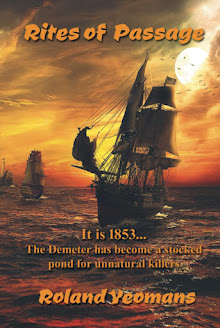
It is 1853. An undead Texas Ranger is on board a cursed ship in search of a murderer who is wearing the face of her last victim as a mask.
Listen to the LAST FAE
When the world is mad, there is little else to do but show them what true insanity is!
Can a man marry both the moon and the sun?
In the eclipse of myth, he can
What Defense is an innocent soul against the Powers of Darkness?
Let Hibbs, the cub with no clue, show you
Before Indiana Jones or Allan Quartermain
There was Sam McCord and his doomed love for Meilori Shinseen
Alice and Victor in 1834 New Orleans
Do a review and have a 1 in 13 chance to win a Johnny Depp autograph!
Buy_FRENCH QUARTER NOCTURNE
Hurricane Katrina has cast New Orleans into darkness. Predators, living and undead, close in on the helpless survivors. Can Samuel McCord and a vampire priest keep the French Quarter from being drowned in blood?
Buy_LET THE WIND BLOW THROUGH YOU
Enter the dangerous world of a Native American Noir thriller where forbidden love clashes with the politics of crime
You will never see the end coming
In his beginning is his end
My 1st SERIAL TRILOGY continues
There are none so lost as those who refuse to see
The 1st SERIAL TRILOGY!
In the dark, we are all orphans
In Memoriam - Maukie my cyber friend
RITES OF PASSAGE link
The earliest Samuel McCord adventure: Dare to board a fantasy Titanic as it sails into the Bermuda Triangle
VICTOR'S HERE!
BOOK 1: No one talks openly of the misty figures seen walking along New Orleans' iron-laced terraces, casting no shadow. Of the shapes seen rising from sewer grates. And no one willingly visits the crypt of Marie Laveau at midnight. Into this strange world arrives the street orphan, Victor Standish, from Charon's Greyhound. Charon has to keep up with the times ... the End Times. And the teen destined to be called the "Ulysses of the French Quarter" has come just in time for Hurricane Katrina, the End of All Things ... and the deadly love of the Victorian ghoul, Alice Wentworth.
VICTOR AND ALICE ARE BACK!
BOOK 2: Victor's a street kid. Alice is a Victorian ghoul Their love breaks the chain of reason. Their new adventures bring the French Quarter back from the brink of nightmare.
THE RIVAL
BOOK 3: Victor & Alice are in the French Quarter of 1834. Voodoo. Demigods. Revenants. And the hilarious Menage a Trois of Death! Oh, and someone we love dies at the end.
END OF DAYS is here!
St. Marrok's. The most eerie high school in which you will ever die. Its curriculum? The End of Days. Alice Wentworth plans to get an A+.
ADRIFT IN THE TIME STREAM link
SEQUEL to RITES OF PASSAGE: Come aboard the doomed DEMETER with undead Texas Ranger, Sam McCord, and sail with her into the depths of madness in ADRIFT IN THE TIME STREAM.
Buy_CREOLE KNIGHTS
SEQUEL to FRENCH QUARTER NOCTURNE: The dead rise. Elder Beings strain to enter our world through Katrina devastated New Orleans. And the Angel of Death is kidnapped to clear their way. Can Sam McCord stem the tide of madness in time?
Buy_THE LAST FAE
Once there was an age undreamed where legends walked this earth … and nightmares, too. Terrible were the battles, tragic the outcome of the wars. Until finally there were only two survivors : the nightmare and one bruised legend. These are the legend’s stories, each one a different facet of the same priceless gem – a jewel that has come to believe herself worthless. So come. Listen to her. Listen to THE LAST FAE.
GHOST OF A CHANCE
What if what you wrote became real?
BURNT OFFERINGS
When dreams are sacrificed, it is the soul that burns.
CHECK OUT THE FUN!
Explore if you dare
Buy_THE LAST SHAMAN
Journey with the last Lakota shaman, Wolf Howl. The white govenments call him Drew August. Those who hunt him call him Death. The last day of Man has dawned. Watch as Wolf Howl turns to meet his human hunters. Shadow, the love of his life, returns to aid his hunters. Then, Mankind's death descends. Can he save Shadow before the world's time runs out?
BRING ME THE HEAD OF McCORD!
Only 99 cents. C'mon. Take a chance.
GHOST WRITERS IN THE SKY
LEARN TO WRITE BETTER AND LAUGH ALONG THE WAY
LAST EXIT TO BABYLON
At the dawn of the End of All Things, the Last Fae finds there is no hope ... but love.
IT'S HERE TO BUY!!
The trilogy concludes. Not even the eclipse of myth is forever. But love is. And eclipses return. Listen. The voice of Blake, son of Man, is calling across the night skies.
Buy THE PATH BACK TO DAWN
Only in the eclipse of myth can a young man find himself with both the Moon and the Sun as his brides. Can he survive what follows?
Buy_LOVE LIKE DEATH
From the pages of THE LAST FAE springs this paranormal romance/thriller. Fallen, the last fae, discovers the name of the young teenager to whom she lost her heart : Blake Adamson.But she also discovers what happens when you believe your fears over your love : heartache and loss. And so Blake Adamson finds himself torn between two loves : one fae, the other an alien drinker of souls. Their love is deadly, but love, like death, will have its way.
THE BEAR WITH 2 SHAD0WS link
Based on the stories my Lakota mother told me as a child when I was deathly ill in a freezing Detroit basement apartment. Think a Native American LORD OF THE RINGS.
FROM THE GREAT BEYOND HOP!
You dare not miss it!!
ZOMBIE PREPAREDNESS!
LISTEN TO THE CDC
Thanks, Alex!
THE WORLDS OF ROLAND YEOMANS
Donna Hole astonishes with her insights on my linked worlds
FANTASTIC REVIEW OF THE LEGEND OF VICTOR STANDISH
Michael Di Gesu does a masterful review. I am honored by his friendship
LIFE LESSONS taught me by GYPSY
Dedicated to GYPSY
PAPYRUS PRODUCTIONS
Have Wendy make your book into a trailer that wows the reader!
HELP THE HURTING
100% of the profits for ALL my books this FEBRUARY are going to THE SALVATION ARMY. My Valentine's gift to the hurting.
Buy_BLOOD WILL TELL
One lone telepath finds himself a helpless spectator as the race of Man is subjugated into mindless drones by the very blood within their bodies.When the war is over, and he finds himself totally alone ... How can he go on and why?
CALL ME TOMBS
The last Lakota Heyoka faces voodoo and ultimate evil in the Carpathian Mountains of Transylvania with his Hellhound, Puppy
CATCH FIRE!
BLOG TOUR FOR ALEX J, CAVANAUGH'S NEWEST NOVEL
SIV'S BLOGFEST!
The Norse Gods Are Watching You!
NERDY IS THE NEW SEXY!
BECOME A JEDI KNIGHT FOR TEENS
THE SECRET OF SPRUCE KNOLL
Help save the endangered species of Earth by buying THE SECRET OF SPRUCE KNOLL!
AMAZON KEEPS SELLING OUT!
Written by the author who could very well turn out to be the new William Faulkner, Elliot Grace
FABULOSITY GALORE bookstore
Visit an online bookstore and help a blogging friend!!

 Posts
Posts


 Denise Covey and Francine Howarth