Posts
Posts


No, AUTHOR BRANDING is not the new hate crime
where gangs of illiterates grab a writer off the streets and brand the letter "A" on his forehead!

Think "Woody Allen Movie,"
and you will come up with a specific type of movie, although his filmography contains varied storylines and genres.
The same applies with Quentin Tarentino, although his range is slightly more narrow than Allen's.
"Earn a character first if you can, and if you can’t, then assume one.”
—Mark Twain (Samuel Clemens)
You see, when readers hear Jack Reacher, they may not know who the author is, but they know what to expect --
So much so that when they walk into a bookstore, they ask, "Is the new JACK REACHER in?"
That's a brand.
Both Allen and Tarentino have such a brand that when you hear of a new movie from them, you generally know what to expect --
And if you're a fan, you'll make a note to keep an eye out for the premier.
PIXAR and MARVEL have established strong brands. No matter the title, you know generally what to expect.
And rather than limiting those studio's, their brand allows them to experiment as with GUARDIANS OF THE GALAXY.
The audiences knows that they will be entertained.
Take Stephen King -- Say he'd write a mystery.
You'd know there would be memorable characters, unexpected surprises (and deaths), and quality prose.
MR. MERCEDES gave us just that.
Should Mr. King write a romance or a comedy, his brand would let us know to expect the same things as above.
People would buy that romance or comedy solely on the strength of Mr. King's brand.
I want readers to be that way when they see the name, VICTOR STANDISH or MEILORI'S or SAMUEL McCORD.


He wrote in a distinctively sardonic, conversational style. His writings and talks presented a down-home persona, a homespun narrator full of folk wisdom and tall tales.
He assumed the trappings of brand image: a white suit, a cigar, a distinctive mustache, tousled hair.
He got out on the lecture circuit, testing and honing his best stuff. He developed a knack for the “sound bites,”
the short, quotable epigram (such as, “Man is the only animal that blushes—or needs to.”)
In addition to his novels, he published many brief pieces:
speeches, articles, short stories. And most notably, he adopted a pseudonym:
Mark Twain,
a wonderfully punchy, memorable, plausible name, imbued with a folksy, easily spoken resonance
(taken from a Mississippi riverboat call on sounding the depth of the river).
Clemens/Twain knew the secrets of personal branding
Creating a brand involves, as he noted, both earning it and assuming it.
Each of us has a unique worldview, a characteristic way of expressing ourselves, and distinct thoughts on what constitutes a meaningful life.
THAT IS OUR BRAND.
We can help distinguish our Brand by
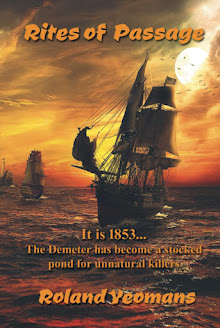
1.) COVERS --
a.) In a stand-out style that are one of a kind.
b.) Just a glimpse of your cover should bring to mind your name.
c.) Please! All those bare chest covers blur together for me.
2.) TITLES --
a.) Distinctive of you.
b.) Travis McGee's titles are had a color in them.
c.) A DEADLY SHADE OF GOLD, etc.
3.) DIALOGUE --
a.) Distinctive of you.
b.) Memorable lines
c.) "She lived life as if it were a grave illness."
What is Your Personal Brand?
Your brand image is not how you see yourself,
but how others perceive you—quickly, clearly, positively.
What comes to mind when they think of you as a literary professional?
Prompt? Reliable? Humorous? Thoughtful? Broad-ranging? Laser-focused?
Do you deliver the goods in a friendly or fun or factual manner?
How do others describe you if they recommend you to another person?
So tell me. I'd be interested to know.