FREE KINDLE FOR PC

FREE KINDLE FOR PC
So you can read my books
Showing posts with label DEATH IN THE HOUSE OF LIFE. Show all posts

Friday, September 5, 2014

Can you write STEAMPUNK without STEAM?


What is STEAMPUNK?

I ask that question because three of my former customers say that my last two novels are STEAMPUNK


Really?


One set of definitions include:

Steampunk perhaps most recognizably features anachronistic technologies or retro-futuristic inventions as people in the 19th century might have envisioned them, 

and is likewise rooted in the era's perspective on fashion, culture, architectural style, and art. 

 Steampunk may also incorporate additional elements from the genres of

fantasy, horror, historical fiction, alternate history, or other branches of speculative fiction, making it often a hybrid genre

Sean Fagan wrote a fascinating post on the basic necessities  of STEAMPUNK:


1.) ADVENTURE


Think Doc Savage, The War of the Worlds, 20,000 Leagues Under the Sea.  That kind of adventure.

In THE STARS BLEED AT MIDNIGHT, two undead empires are at each other's throats and a plague worse than the Black Death threatens the world.


2.) EXOTIC LOCALES


From the bloody madness of the Devil's Wind in 1857 India

to the tinder box that was Egypt in 1895,

the heroes of THE STARS BLEED AT MIDNIGHT manage to stay one step ahead of death.


3.) SHIPS


In both HOUSE OF LIFE and STARS, excavated Egyptian temple sites are in actuality sentient alien star craft,

filled with deadly booby traps ... and aliens awakening to exact revenge.

Nikola Tesla has his "Flying Carpet", molded in the form of Horus and his sheltering wings.  It is actually a hybrid airboat and hover craft.


4.) A GENIUS AHEAD OF HIS TIME


Albert Einstein was once asked how it felt to be thesmartest man alive, and he said, "I do not know. Ask Nikola Tesla."

Again and again in THE STARS BLEED AT MIDNIGHT, the inventions of Nikola Tesla save the lives of Samuel McCord, his wife, and his companions. 

Most of those presented in that book and in DEATH IN THE HOUSE OF LIFE Nikola actually invented!


5.) STRONG, CAPABLE WOMEN


McCord's wife, Meilori Shinseen, is actually Sekhmet!


McCord wins the friendship of the alien Bast


His erstwhile companion is Ada Byron, inventor of the first computer language 100 years before the creation of the computer.
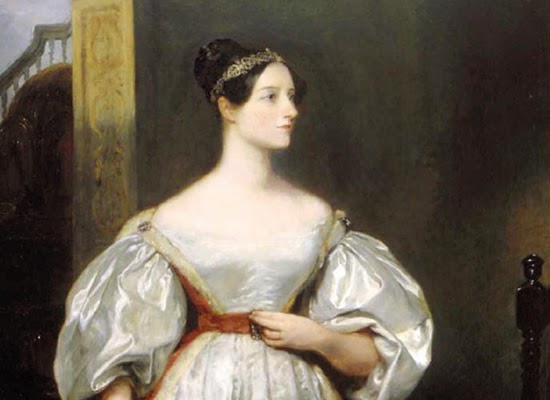


His three enemies in THE STARS BLEED AT MIDNIGHT are the undead Abigail Adams and the revenant Empress Theodora


And the mummy child, Princess Shert Nebti, carrier of a dread plague that could wipe out Mankind


6.) A RELATABLE EVERYMAN


Samuel McCord, reflective though cursed Texas Ranger, provides the sounding board for all the readers

who can see and feel the adventures and mysteries and riddles of these two tales.


Trying to explain the wonders to himself, he explains them to the readers as they turn the pages.


7.) A BAND OF MISFITS


Mark Twain, seeking fame, fortune, and adventure in a mid-life crisis.

Oscar Wilde, freshly broken out of Reading Goal by Twain and McCord, searches for the inner peace and self-respect he has lost.

Lt. Winston Churchill on the road to glory finds an even greater treasure.

Nikola Tesla, yearns for a like mind who will understand his misunderstood genius.


{Nikola Tesla and Mark Twain}


Come read THE STARS BLEED AT MIDNIGHT and DEATH IN THE HOUSE OF LIFE to see just how STEAMPUNK I can be!  Or not be -- depending on your definition!!


Friday, August 15, 2014

WHAT WILL CARRY YOU THROUGH

{Cover by the lovely Leonora Roy}
 

“Darkness cannot drive out darkness: only light can do that. Hate cannot drive out hate: only love can do that.” 
Martin Luther King, Jr.

What will carry you through as a writer?
 

1. A Wild And Mad Daemon of a Muse:


If you want to survive, you’ve got to have an imagination that won’t lay down and die. 

Your cat has exploded?  Use it. 

Zombies are pounding on the door.  Ignore them.  Think of it as the pulse of your muse murmuring ideas to you.


2. Discipline:


No amount of imagination will help you unless you sit your tush in the chair, pound the keyboard, and put prose on the blank screen.

Need Motivation?

Come up with your own item of visual motivation. It might be inspirational words taped to your computer

(“You get what you dare, baby, and if you want big, you dare big”—author Leonard Bishop)


 The primary way writers keep discipline going is through the weekly quota. Most successful fiction writers make a word goal and stick to it.


Discipline is helped by a healthy body.


The imagination is housed in the brain. The brain is housed in the body. The body is the temple of the soul. Treat it as such.

Your productivity and creativity depend on it.  Take that brisk walk!  Both your body and muse need it. 


3. A Schizophrenic Frame of Mind:


You must be a triad:

Optimistic enough to believe your work will eventually be bought/

Realistic enough to know it will not be overnight/

Pessimistic enough to question the purity of human motives when you finally are handed a contract to sign.


4. Inner Strength:


You have to be able to pound nail after nail into board after board to build your Ark under a cloudless sky to the sound of derisive laughter behind you.

You must believe in yourself before anyone else will.

Face the Harsh Law:

What You Are Inside Only Matters Because of What It Makes You Do

You may believe your talent is one in a million, but it is what you do with it that counts.

Make it an inner contract to finish what you start,

to wring that final chapter out of your imagination, and to brave rejection and put it out there either by self-publication or submitting to agents/editors.


5. Curiosity:
 

"The important thing is not to stop questioning.

 Curiosity has its own reason for existing.

One cannot help but be in awe when he contemplates the mysteries of eternity, of life, of the marvelous structure of reality.

It is enough if one tries merely to comprehend a little of this mystery every day. Never lose a holy curiosity."
- Albert Einstein

Most writers are curious by nature. We look at the world around us and wonder at it.

Who are these people? What are we all doing here?

Where are we heading? Why do we do the things we do? How will we achieve our goals?

Remember how curious you were as a child?

Everything you encountered spawned a series of questions

because you were trying to learn and understand the world around you.

Bring that childlike curiosity back, and you’ll never need to look far for now, inspiring writing ideas.

By fostering curiosity, we can create a fountain of ideas.

It doesn’t matter what form your writing takes or what genre you’re writing in.

By coming up with intriguing questions, you’ll soon find yourself overwhelmed with inspiration.

Take the basic questions and put a riveting spin to them:

Who?
Who does my main character trust? What does that say about them? About the trusted person?

What?
What motivates people to take drastic actions?

Where?
Where do these people want to be?

When?
When does a child become an adult?

Why?
Why does this story matter?

How?
How do you describe something that doesn’t really exist?
 
The tune for Victor Standish's first meeting
with the ghoul, Alice Wentworth, by Marie Laveau's crypt: 

Thursday, August 14, 2014

DOES AUTHOR BRANDING HURT?


No, AUTHOR BRANDING is not the new hate crime

where gangs of illiterates grab a writer off the streets and brand the letter "A" on his forehead!


Think "Woody Allen Movie,"
 
and you will come up with a specific type of movie, although his filmography contains varied storylines and genres.
 
The same applies with Quentin Tarentino, although his range is slightly more narrow than Allen's.
 
What did the ghost of Samuel Clemens tell me the other day?


"Earn a character first if you can, and if you can’t, then assume one.”
Mark Twain (Samuel Clemens)


You see, when readers hear Jack Reacher, they may not know who the author is, but they know what to expect --
 
So much so that when they walk into a bookstore, they ask, "Is the new JACK REACHER in?"


That's a brand.

Both Allen and Tarentino have such a brand that when you hear of a new movie from them, you generally know what to expect --

And if you're a fan, you'll make a note to keep an eye out for the premier.

PIXAR and MARVEL have established strong brands.  No matter the title, you know generally what to expect.

And rather than limiting those studio's, their brand allows them to experiment as with GUARDIANS OF THE GALAXY.

The audiences knows that they will be entertained.

Take Stephen King -- Say he'd write a mystery. 

You'd know there would be memorable characters, unexpected surprises (and deaths), and quality prose.

MR. MERCEDES gave us just that.

Should Mr. King write a romance or a comedy, his brand would let us know to expect the same things as above.

People would buy that romance or comedy solely on the strength of Mr. King's brand.

I want readers to be that way when they see the name, VICTOR STANDISH or MEILORI'S or SAMUEL McCORD.

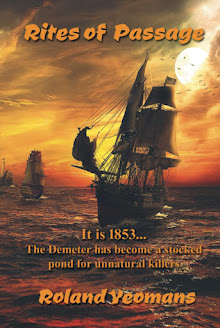
Rites of Passage Official Sample http://t.co/bd5Piu9kG1 on ‪#‎SoundCloud


Samuel Clemens, writing as Mark Twain, was one of the first American writers to become a celebrity. He practiced many aspects of personal branding.


He wrote in a distinctively sardonic, conversational style. His writings and talks presented a down-home persona, a homespun narrator full of folk wisdom and tall tales.


He assumed the trappings of brand image: a white suit, a cigar, a distinctive mustache, tousled hair.


 He got out on the lecture circuit, testing and honing his best stuff. He developed a knack for the “sound bites,”


the short, quotable epigram (such as, “Man is the only animal that blushes—or needs to.”)


In addition to his novels, he published many brief pieces:


 speeches, articles, short stories. And most notably, he adopted a pseudonym:

Mark Twain,


a wonderfully punchy, memorable, plausible name, imbued with a folksy, easily spoken resonance


(taken from a Mississippi riverboat call on sounding the depth of the river).


Clemens/Twain knew the secrets of personal branding


 Creating a brand involves, as he noted, both earning it and assuming it.

Each of us has a unique worldview, a characteristic way of expressing ourselves, and distinct thoughts on what constitutes a meaningful life.

THAT IS OUR BRAND.
 
We can help distinguish our Brand by
 
1.) COVERS --
 
       a.) In a stand-out style that are one of a kind.
 
       b.) Just a glimpse of your cover should bring to mind your name.
 
       c.) Please! All those bare chest covers blur together for me.
 
2.) TITLES --
 
        a.) Distinctive of you.
 
        b.) Travis McGee's titles are had a color in them.
 
        c.) A DEADLY SHADE OF  GOLD, etc.
 
3.) DIALOGUE --
 
        a.) Distinctive of you.
 
        b.) Memorable lines
 
        c.) "She lived life as if it were a grave illness."


What is Your Personal Brand?


Your brand image is not how you see yourself,


but how others perceive you—quickly, clearly, positively.


What comes to mind when they think of you as a literary professional?


Prompt? Reliable? Humorous? Thoughtful? Broad-ranging? Laser-focused?


Do you deliver the goods in a friendly or fun or factual manner?


How do others describe you if they recommend you to another person?


So tell me.  I'd be interested to know.


Wednesday, August 13, 2014

DUEL OF SHADOWS


EGYPT

{Courtesy Tim Bradstreet}

   Before there was Man, the Black Land existed.

      And the Black of that Land was not soil ...

          It was the ABSENCE of Light, of Mercy, of Life itself.

Call it Anti-Life for want of a better term that your primitive minds might understand.

I call myself ...  DayStar,

that last burning ingot in the dying night that rails at the coming of the Light.

Do you dimly sense the vast epoch lurking behind the East of the early ages?

Do your souls shiver at the murmur of that once lurking Night behind the dawn of Egypt and Babylon?

And when you dream fitfully on nights of new moons, do you glimpse flashes of gigantic black cities from whose ruins the first Babylon rose,

a last mirrored remnant of an age lost in the deep gulf of prehistory's endless night?

Now
it is the year 1895 in Egypt.

The nations play at what they pathetically call the
Great Game,
vying to see who will dominate the world.

But Others in the Shadows, born of my Darkness place a pawn here, sacrifice a knight there.

Though but hundreds of years old, they have grown smug in their supposed power.

Not knowing that they, themselves, are being played.

The Seed I sowed 3000 years ago has just been harvested.

Man is about to taste her bitter fruit.

The board is set.  My pieces are in place.

Now, after so long, my Adversary moves his knight:

{Courtesy Tim Bradstreet}

Samuel McCord --
 
One Lone Knight Against the Shadows in 
THE STARS BLEED AT MIDNIGHT
{Coming Soon}
 
Its Prelude:
DEATH IN THE HOUSE OF LIFE
http://www.amazon.com/DEATH-HOUSE-LIFE-Roland-Yeomans-ebook/dp/B00HIU5O38/

Sean McLachlan's short story The Scavenger will be free August 14-18.
Give him a neat birthday present and download it, will you?
 

Sunday, July 6, 2014

A KNIGHT WITHOUT ARMOR

No, I'm not talking about Paladin.


I'm referring to young Winston Churchill. He was perhaps the only true soldier/journalist of our times.


The Geneva Convention would not have permitted him to bear arms in a war he covered as a journalist.


But that is exactly what he did. And he took a soldier's training and mentality with him as a reporter.

Words were his bullets, and scarse was his ammunition. He made each word count. His prose was sparse and lean like his backpack.


In 1894, Winston became a 2nd lieutenant in the 4th Queen's Own Hussars.

In 1895, he spent his first military leave in Cuba for a London newspaper, THE LONDON TELEGRAPH.

He spent the next year with his regiment in India. The following year he published his newspaper articles in his first book.

{For his fictional adventures in 1895 Egypt with Mark Twain, Oscar Wilde, Nikola Tesla, and my Samuel McCord --

read DEATH IN THE HOUSE OF LIFE and the soon to be released THE STARS BLEED AT MIDNIGHT.}

His eye was keen. To stay alive as a soldier it had to be. To keep his prose living, his eye had to be just as discerning.


He kept that eye open for opportunity --

as when in 1898, he volunteered for a posting with the 21st Lancers just before the climax of the expedition to reconquor the Sudan.

In the Battle of Omdurman, he participated in the last great cavalry charge of the 19th century.


The following year he again published a series of newspaper articles he had written on the River Wars. He then resigned his commission to focus on journalism.


He went to South Africa to cover the Boer War where he promptly got captured.

And just as promptly, he escaped.


With a price on his head and not being able to speak a single word of Dutch, Winston made good his escape back to England.


And you nod in appreciation for his heroism, but what about his verbal prowess?


Churchill wrote his own speeches.

The speeches that, during the Nazi bombing of London, shook the British resolve to its core.
With his words and voice alone, Churchill bound England's bleeding heart and fanned the fading embers of courage to a roaring flame:


"You ask, what is our policy?


I will say:
It is to wage war, by sea, land and air, with all our might and with all the strength that God can give us:


to wage war against a monstrous tyranny, never surpassed in the dark, lamentable catalogue of human crime.


That is our policy.


You ask, what is our aim?


I can answer in one word:


It is victory, victory at all costs, victory in spite of all terror, victory, however long and hard the road may be;


for without victory, there is no survival."


This is a writer we must listen to when he talks on how to write. If we can catch but a spark of his fire then we will become eagles of prose.


And what does he say of the art of writing?


A short word is good. A short, old word is even better.
And there is wisdom both old and new to that sentence. Short words flow easier in our minds as we read. Short paragraphs are easier on the eye.


And the new wisdom to it?


In Google Search, the engine will lock onto the shortest, most used word describing a subject.
If we want our novel, our words to pop up when someone Googles, then we should stick to short, well-used words.

And he spoke on a subject tender to most of us struggling writers:
Criticism.

"It may not be agreeable, but it is necessary.
It calls attention to an unhealthy state of things that will only worsen if not dealt with. 
Courage is what it takes to get up and speak. Courage is also what it takes to sit down and listen to criticism."


Winston had his thoughts on writing as a whole:


“Writing a book is an adventure.

To begin with, it is a toy and an amusement;

then it becomes a mistress,

and then it becomes a master, and then a tyrant.

The last phase is that just as you are about to be reconciled to your servitude,

you kill the monster, and fling him out to the public.”


Churchill also likened writing a book to swimming a river.


He described the stimulating and pleasant feeling of getting one's feet and ankles wet,
wading in waist deep, and finally kicking off the bottom altogether, striking out eagerly toward the opposite shore.


As the adventure progresses, however, the water can feel colder than it seemed at first and the current more swift than was initially estimated.


Thus, nearing the center of the river may include thoughts about returning to the shore left behind, but looking back confirms that it is now nearly as far away as the opposite shore.


Resolutely gathering up strength, the intrepid swimmer forges willfully toward the inviting but distant shoreline.


The "middle of the middle" is encountered, however, where both the shore left behind and the shore lying ahead seem much too far.
Hope drains away and is replaced with feelings ranging from frustration to fear (or perhaps anger or seemingly overwhelming discouragement).


This midpoint Churchill described as "the middle of the middle",
and he commented that it seemed to him the most demoralizing and depressing part of the entire journey for the swimmer
(or author, or anyone working through any significant sequence, time period or project).


From "the middle of the middle" on, one often has to rely on sheer strength and determination or other resources, as well as a more distant hope, to make it the rest of the way.


Finally, when the swimmer feels totally exhausted, cold, and bedraggled, the opposite shore is encountered
(or the hoped for better time that was originally anticipated comes.)


And the swimmer drags up on shore and collapses, not particularly caring whether or not the journey was victorious.


The paradox here is that by the time the goal is reached, or the season passed, the person doesn't really care much one way or the other --
at least in the immediate situation.


So take heart:
even a heroic spirit like Churchill's felt as you do now. You are weary, uncertain of success, despondent of finishing.

You will finish the course. You have paid too dear a price not to. And if success is denied you?


There is no failure.

Not to those who leap into the surging currents of writing and keep stroking until their numb feet touch the other shore. No failure. You will have completed what you started.


Your novel is finished.
And so what if agents and editors turn aside?
Time is a mysterious companion. What is rejected this year may be published next year or next decade.


Just take what lessons you've learned and plunge into the currents again.


Like Winston:
keep your prose lean, your eye keen, and your senses searching for new opportunites to step into the spotlight of new agents and new arenas of growth.

Can you smell that cigar smoke? A titan is watching you. Make him proud.
**********
Winston will also be joining my band of adventurers
as they are wisked to Ancient Egypt in the 3rd book in my Egyptian trilogy:
RED LAND, BLACK DEATH