FREE KINDLE FOR PC

FREE KINDLE FOR PC
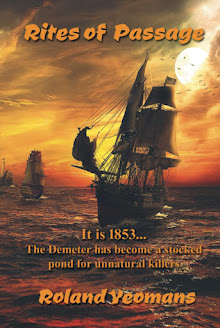
So you can read my books
Showing posts with label JOHN STEINBECK. Show all posts

Tuesday, June 3, 2014

MAN DOES NOT CHANGE


John Steinbeck
Sag Harbor
June 3, 1953

Dear Roland:

How odd it is:

Here I am much older, not nearly as wise as I would have hoped to be, still writing to you unchanged in the year 2014!

Your words over the years have helped me, though I fear mine to you has not helped any at all.

I am back from Washington, D.C.  and just now reading the newspaper and your latest letter to me.

Two first impressions:

First, a creeping, all pervading, nerve-gas of immorality which starts in the nursery and does not stop before it reaches the highest offices both corporate and governmental.

Two, a nervous restlessness, a hunger, a thirst, a yearning for something unknown— perhaps morality.

Then there’s the violence, cruelty and hypocrisy symptomatic of a people which has too much, and last, the surly ill temper which only shows up in humans when they are frightened.

Nothing seems to have changed in the nature of Man.

You mention this best-selling author, James Patterson, no longer writing his own books.

He does the outlines and hires different co-writers. He does credit the other writers,

and he probably does pay them handsomely,

but the whole thing is coiled up in my stomach like bad diner food.


Ghost-writing 


How to express my feelings for it?  Let me try:

Early on I had a shattering experience in ghost-writing that has left its mark on me.

In the fourth grade in Salinas, Calif., my best friend was a boy named Pickles Moffet.

He was an almost perfect little boy, for he could throw rocks harder and more accurately than anyone, he was brave beyond belief

in stealing apples or raiding the cake section in the basement of the Episcopal church,

a gifted boy at marbles and tops and sublimely endowed at infighting.


Pickles had only one worm in him.

The writing of a simple English sentence could put him in a state of shock very like that condition which we now call battle fatigue.

Imagine to yourself, as the French say,

a burgeoning spring in Salinas, the streets glorious with puddles, grass and wildflowers and toadstools in full chorus,

and the dense adobe mud of just the proper consistency to be molded into balls and flung against white walls—

an activity at which Pickles Moffet excelled.

It was a time of ecstasy, like the birth of a sweet and sinless world. And just at this time our fourth-grade teacher hurled the lightning.


She assigned us our homework.


We were to write a quatrain in iambic pentameter with an a b - a b rhyme scheme.


Well, I thought Pickles was done for.


His eyes rolled up. His palms grew sweaty, and a series of jerky spasms went through his rigid body. I soothed him and gentled him,

but to show you the state Pickles was in—he threw a mud ball at Mrs. Warnock’s newly painted white residence. And he missed the whole house.


I think I saved Pickles’ life.


I promised to write two quatrains and give one to him. I’m sure there is a moral in this story somewhere, but where?

The verse I gave to Pickles got him an A while the one I turned in for myself brought a C.

You will understand that the injustice of this bugged me pretty badly. Neither poem was any great shucks, but at least they were equally bad.

And I guess my sense of injustice outweighed my caution, for I went to the teacher and complained:

 “How come Pickles got an A and I only got a C?”

Her answer has stayed with me all my life.

She said,

“What Pickles wrote was remarkable for Pickles. What you wrote was inferior for you.”

 You see what this says of your James Patterson and those who ghost-write for him?

If you do, please write and explain it to me.

Yours,

John


Friday, July 6, 2012

OUR GREATEST HAZARD AND ONLY HOPE

Ghost of John Steinbeck here.

Hemingway brought Eve's comment of yesterday to my attention.

How dare she not know about my life he growled. I laughed.

His short stories and all of Faulkner's writing should be remembered. I did much to deserve my loneliness.

All great and precious things are lonely. I told my physician before I died that I felt in my flesh that the spirit did not go on. I was wrong.

But I was right about one thing when I told the Nobel Committee, "Man himself has become our greatest hazard and our only hope."

After the Trade Towers and today's blood-drenched headlines, you know all too well how Man can be a hazard. But how can he be our hope?

It is up to you.

Try to understand men. If you understand each other you will be kind to each other. Knowing a man well never leads to hate and almost always leads to love.

To do that, you must truly see those around you. I wonder how many people I looked at during my life and never truly saw.

The clue to do that is in the Hebrew language.

The Hebrew word, the word timshel—‘Thou mayest’— that gives a choice.

It might be the most important word in the world. That says the way is open. That throws it right back on a man. For if ‘Thou mayest’—it is also true that ‘Thou mayest not.'

I was a war correspondent during WWII. All war is a symptom of man's failure as a thinking animal. I was wounded badly and healed my hurts as I always did with writing.

It usually worked. But not all the time. The best writing I did was when my best friend, Ed Ricketts, was still alive. I frequently took small trips with Ed along the California coast to give me time off from my writing and to collect biological specimens, which Ed sold for a living.

I moved away from California but just knowing Ed was still roaming the California wilderness made me smile.

In May 1948 I traveled to California on an emergency trip to be with Ed, who had been seriously injured when his car was struck by a train. Ed died hours before I arrived. On returning home from this devastating trip, I was confronted by Gwyn, my wife, who told me she wanted a divorce for vague, nonsense reasons.

Even now, I can see the smile on her face when she told me, seconds after I had sobbed of Ed's death.

Even now.

It's so much darker when a light goes out than it would have been if it had never shone.

Ed. Gwen. When two people meet, each one is changed by the other so you've got two new people.

I was born lost and take no pleasure in being found. I have always lived violently, drunk hugely, eaten too much or not at all, slept around the clock or missed two nights of sleeping,

worked too hard and too long in glory, or slobbed for a time in utter laziness. I've lifted, pulled, chopped, climbed, made love with joy and taken my hangovers as a consequence, not as a punishment.

I have said much ... and nothing. You friends of Roland's are writers, so I will leave you with this:

I believe that there is one story in the world, and only one. . . .

Humans are caught—in their lives, in their thoughts, in their hungers and ambitions, in their avarice and cruelty, and in their kindness and generosity too—in a net of good and evil. . . .

There is no other story. A man, after he has brushed off the dust and chips of his life, will have left only the hard, clean questions:

Was it good or was it evil? Have I done well—or ill?

Man has only one story.

All novels, all poetry, are built on the never-ending contest in ourselves of good and evil.

And it occurs to me that evil must constantly re-spawn, while good, while virtue, is immortal.

Vice has always a new fresh young face, while virtue is venerable as nothing else in the world is.

And I am happy to report that in the war between reality and romance, reality is not the stronger.

Sunday, January 2, 2011

BLOOD AND CHAMPAGNE_THE ART OF PACING


John Steinbeck wrote of photojournalist Robert Capa

in a quote that launches the well-written, exhaustively researched biography, BLOOD AND CHAMPAGNE :

"Like the pen, the camera is as good as the man who uses it. It can be the extension of his mind and heart."

Blood and Champagne.

The term could be used on the yin yang of that most bothersome of aspects to our writing : pacing.

A good friend emailed me on a bit of a bother she was having with pacing on her WIP. It occurred to me that if she, as good a writer as she is, was having troubles with pacing, some of you might be having similar problems with it as well.

Both THE LEGEND OF VICTOR STANDISH and its sequel, VICTOR'S NOT JUST MY NAME, have a lot of action in them. But like with pepper, action must be used wisely. But too much introspection or description is dangerously bland.

Pacing is all-important.

Think of the best jokes : there is always a prep time that leads to the punch line. Without it, the punch is muted.

Where are your transitions in your novel? How does your MC get from here to there? Reflection along the road, whether it be a physical one or a metaphysical one, is always a good way to pace -- and sow seeds for appreciation of the action to come.

The best monsters, the scariest moments in horror films are always the glimpses not the full shots.

In your novel, you show a terrorist place a suitcase under a table. You give a close-up of the timer : 60 seconds.

Two lovers sit at the table the terrorist just left. They talk about things important for the reader to know to understand the action of what is to come. But despite the flow of backstory, the reader stays keyed-up because between every paragraph you put one line :

40 seconds.
30 seconds.
15 seconds.
7 seconds.

No action. Only suspense. Then, BOOM!

It is a matter of instinct. It is, after all, your novel. Tell it your way. If your instincts bother you about a scene, listen to them. Ask if the pacing is off in some way. Too much build up? Not enough?

Each chapter is a three act play all its own. But with a difference -- each must end with a hook to link to the chapter following.

Each chapter must breathe.

No one inhales all the time. You have to exhale. So does the reader -- give her and him a chance to reflect.

Reading without reflecting is like eating without digesting. Give your characters a moment to savor their victories or cringe from their defeats. Blows leave bruises. Show them. Let the readers see your characters limp from life's impacts.

Actions have consequences -- perhaps your instincts are telling you to paint the consequences more fully with an extra paragraph or scene or two.

If you want to slow the pace, write longer sentences -- when you want the reader to consciously think about what you're showing him.

This is true for paragraphs -- it will slow down the speed of the reader. But don't over-do this. Long, blockly paragraphs tire the reader.

Pace is the tempo at which a scene moves. You are the conductor of your own orchestra, playing your own composition.

You know the overall story you want to tell. Slow down to build tension and hit the reader with short, active sentences and paragraphs to tug the reader along for a wild ride.

Use shorter sentences when you want the reader to react, not to think -- as if he's taking part in the whirlwind action.

Then, too, there are hard words and soft words, both in sound and meaning.

You can choose either or both. Hard words are those that contain hard consonants or create small explosions of breath when pronounced: b-d-t-v- x-z, for example.

Soft letters let the breath escape slowly or create the sound in your throat or mouth: j-l-m-r-,s to name a few.

Though we don't read aloud usually, we still "hear" the words in our heads. So use those hard and soft words artfully to subconsciously build the mood you want.

Some words themselves create feeling:

He drew her head back / He yanked her head back.

Both sentences paint different pictures and create different feelings about the action.

Having a character flex his hands hints at strength more than his stretching his hands would.

The overall pace of a novel needs to escalate as the story moves forward in order to keep the reader interested.

It has peaks and valleys along the way. Each peak must be higher than the ones before it, and each valley not as deep.

This gives the reader less time to catch his breath and little or no inclination to put the book down.

A good way to learn more about pace is by paying special attention to how published authors control pace in the novels you enjoy.

When a scene makes you bite your fingernails or clutch the edge of the chair, insert a slip of paper to mark the place so you can study the scene after you finish the book.

Analyze the scene this time, notice things the writer did that caught you up in what was happening as the pace sped up. How did the author stir your emotion or evoke a physical response?

Mastery of the fine art of pace comes with experience. Start getting it now with these few tricks and add and refine your pacing skills as you grow in your writing career.

I hope these thoughts helped you in some small way.

*) A word about my ending to GHOST OF A CHANCE and about my novella in general :

My ending is an analogy of sorts :

We authors do go throuh Hell, bringing our Main Character through the tribulations that end in a satisfying conclusion.

And also, we authors face the temptation of staying too long at the end, reluctant to leave those characters we have come to know and perhaps to care for deeply.

Best to leave the readers with laughter, a lingering melody, and a glimpse of love rewarded ... but only a glimpse, the readers' minds will fill in the details much better than we ever could.

See? My ending, in fact of all of GHOST OF A CHANCE, was a lesson on how to write a little better. Some lessons in how to do it. Sometimes in how NOT to do it. I wrote some of those chapters dead exhauted. Hopefully, knowing that, re-reading will be even more fun for those of you who do it.

Happy New Year, Roland
***
The love that shaped Ernest Hemingway's life for both good and ill :