FREE KINDLE FOR PC

FREE KINDLE FOR PC
So you can read my books

Friday, June 5, 2015

MAN DOES NOT CHANGE?


Many believe Samuel McCord and his haunted jazz club, Meilori's, fictional. 

Keep on believing: you will sleep easier at night.

For his own reasons,

Samuel has exchanged letters between myself and John Steinbeck over the decades of his life these past twelve months.

Here is the latest delivered to me from Mr. Steinbeck:


John Steinbeck
Sag Harbor
June 3, 1953

Dear Roland:

How odd it is:

Here I am much older, not nearly as wise as I would have hoped to be, still writing to you unchanged in the year 2015!

Your words over the years have helped me, though I fear mine to you has not helped any at all.

I am back from Washington, D.C.  and just now reading the newspaper and your latest letter to me.

This gold medalist proclaims himself a woman and those that think this odd from a father are decried as haters and bigots?

How odd.  The tyranny of the politically correct: McCarthyism at the opposite end of the spectrum.

Two first impressions from both my trip and your letter of your own confused times:

First, a creeping, all pervading, nerve-gas of immorality which starts in the nursery and does not stop before it reaches the highest offices corporate, media, and governmental.

Two, a nervous restlessness, a hunger, a thirst, a yearning for something unknown— perhaps morality.

Then there’s the violence, cruelty and hypocrisy symptomatic of a people which has

either too much or no chance at all to get enough,

and lastly, the surly ill temper which only shows up in humans when they are frightened.

Nothing seems to have changed in the nature of Man.

You mention this best-selling author, James Patterson, no longer writing his own books.

He does the outlines and hires different co-writers. He does credit the other writers,

and he probably does pay them handsomely,

but the whole thing is coiled up in my stomach like bad diner food.


Ghost-writing 


How to express my feelings for it?  Let me try:

Early on I had a shattering experience in ghost-writing that has left its mark on me.

In the fourth grade in Salinas, Calif., my best friend was a boy named Pickles Moffet.

He was an almost perfect little boy, for he could throw rocks harder and more accurately than anyone, he was brave beyond belief

in stealing apples or raiding the cake section in the basement of the Episcopal church,

a gifted boy at marbles and tops and sublimely endowed at infighting.


Pickles had only one worm in him.

The writing of a simple English sentence could put him in a state of shock very like that condition which we now call battle fatigue.

Imagine to yourself, as the French say,

a burgeoning spring in Salinas, the streets glorious with puddles, grass and wildflowers and toadstools in full chorus,

and the dense adobe mud of just the proper consistency to be molded into balls and flung against white walls—

an activity at which Pickles Moffet excelled.

It was a time of ecstasy, like the birth of a sweet and sinless world.

And just at this time our fourth-grade teacher hurled the lightning.


She assigned us our homework.


We were to write a quatrain in iambic pentameter with an a b - a b rhyme scheme.


Well, I thought Pickles was done for.


His eyes rolled up. His palms grew sweaty, and a series of jerky spasms went through his rigid body. I soothed him and gentled him,

but to show you the state Pickles was in—he threw a mud ball at Mrs. Warnock’s newly painted white residence.

And he missed the whole house!


I think I saved Pickles’ life.


I promised to write two quatrains and give one to him. I’m sure there is a moral in this story somewhere, but where?

The verse I gave to Pickles got him an A while the one I turned in for myself brought a C.

You will understand that the injustice of this bugged me pretty badly. Neither poem was any great shucks, but at least they were equally bad.

And I guess my sense of injustice outweighed my caution, for I went to the teacher and complained:

 “How come Pickles got an A and I only got a C?”

Her answer has stayed with me all my life.

She said,

“What Pickles wrote was remarkable for Pickles. What you wrote was inferior for you.”

 You see what this says of your James Patterson and those who ghost-write for him?

If you do, please write and explain it to me.

Yours,

John


Thursday, June 4, 2015

WHAT'S MORE IMPORTANT THAN THE DRAGON?


INNER CONFLICT

All of us deal with internal conflict while we engage in external challenges. It is the human condition.  
  
Internal Conflict

 Good writing depends upon it. 

In every scene. It's what pulls the reader and the story itself along. 

As the plus and minus of electrons determines the flow of electricity, 

so the plus and minus of EVERY scene determines the healthy flow of a novel's narrative:

An upscale attorney walks into his office, his back being slapped by his associates for winning another case. 

He closes the door, turns on the light, and turns off his smile. 

 His eyes move to the certified letter on his desk, informing him of his wife's plans to divorce him. 

He walks to his desk, sits down, and buries his face in his hands.

***
 A metropolitan mayor is hanging his latest civic award upon his paneled wall. 
 
His eyes flick to the picture of his son, killed in Iraq. He remembers his last words to him: 
 
ugly words, harsh words, impossible to erase words. 
 
He takes the award from the wall, dropping it into the waste basket.

Plus and Minus.
 
All fiction is based on conflict and this conflict is presented in a structured format called PLOT. 

An internal conflict is a good test of a character's values.

Internal conflict is the heart of characterization, but it's also at the heart of drama.

The conflicts that bring characters alive are the smaller conflicts that occur between two people, 

a small group and the internal conflicts we deal with on a daily basis.

The thing that will make the connection with your reader is the internal conflict your protagonist has to go through. 

This is what makes him or her human and this is where you have a memorable impact on your reader.

Whether you’re writing epic fantasy or literary fiction, 

the inner conflict is what will keep your reader turning the pages.

There is one steadfast rule when writing fiction and you probably know this rule.

Your character has to grow.

There has to be an internal path that is taken.

And even if your writing takes place on an exotic world with a stable of wondrous creatures, 

the main character is still human - 

and even if your main character is not human, your reader is.

There is the crisis that seems center-stage and the inner conflict which actually drives the story.

The same is true with our own lives.

It’s not the crisis facing us that is truly important, but what we tell ourselves about the crisis.

Are you facing a crisis?

Is your “self-talk" accurate and realistic?   

Are there any “should’s” lurking in the shadows of your thoughts?   

There are really no should’s: things are just what they are.

No one is perfect. 

Cut yourself some slack. 

Do the best you can with resources you have 

and learn from whatever mistakes you might make.

See? A hint on how to better write and live both in one post. How cool is that?

Tuesday, June 2, 2015

WHEN LIFE KNOCKS YOU DOWN_IWSG post


The lab results that shook you to the core.  

The harsh retort that cost you a relationship.  

The needed car repair that costs more than you have.

Life has a way of continually knocking you to the ground without warning.  

Sometimes you don't know if you have it within you to get up one more time.

You don't have to continually get up.  

You just have to get up one more time 
than they knock you down.

And that means adapting to the present, thinking outside of our usual responses to stress.

We have been brought low by the myth of HAPPILY EVER AFTER.  

There is no such thing.


Our endless and impossible journey toward home is in fact our home. 

There is beauty, laughter, and friendship along our journey, 

but if we focus on the maybe happiness of a future with goal won, we will lose today ...

 We will have lost priceless treasures existing in our Now by the searching for Tomorrow's  fool's gold. 


Jeremy Hawkins wrote in comment to my last post:


"I have been trying to obtain a dream or reality for some time now and for me... 

I have hit the bottom. 

Many life situation has sucked my creative side dry and my steps, sites and attention proves it. 

Do we get it back, can I... I only hope too.

 Sadly, it's a long road... dreams are for those who like me, trying and failing.

Though I keep trying, but there is nothing I am trying for at the moment... 

and that thing called reality, that just sucks.

I think I went off topic... dammit, sorry."


Jeremy, you, nor any of my friends, are ever off-topic with me when you speak from your heart.

The hidden thing about crossroads 

is that we never know we are at one until we have made our decision and are reaping the consequences.

Sometimes the way ahead is not clear.

Yet "Impossible" just gives birth to legends. 

When I was abandoned at six on Skid Row in Detroit, 

when my home burned to the ground with no insurance, 

when the love of my life died in surgery, 

when my whole city was forcibly evacuated from our homes --

 I hit bottom all those times.

Bottom gives us a place to stand, to rise, to reflect upon what is left ... 

to perhaps see a new path to old goals or hidden roads to new ones.

Wilde wrote that insanity was trying the same things repeatedly and expecting different results. 

We must take different steps to reach new destinations.

Each blow, each wound, each set-back has a lesson for us if we but stand back and reflect. 

Those things have shaped us and surviving them has made us stronger, wiser.

There is beauty, there is humor, there is hope ... 

perhaps those are the only lights in Man's dark world. 

In tragedy and in despair, 

when an endless night seems to have fallen, hope can be found in the realization that the companion of night is not another night, 

that the companion of night is day, that darkness always gives way to light, 

and that death rules only half of creation, life the other half.

That is the great thing about life: 
  
Though it is often cruel, it is also mysterious, filled with wonder and surprise; sometimes the surprises are so amazing that they qualify as miracles,  

and by witnessing those miracles, a shattered person can sometimes discover a reason to live.

Often I am scared down to the marrow of my bones, 

but I keep telling myself that as long as I have laughter, I am not without hope.

In your blog, Jeremy, you always find something to laugh about.  

May laughter be your companion today, leading you to a new goal or the realization of an old one.

Monday, June 1, 2015

DON'T CHASE YOUR DREAMS


It's become a mantra of our generation 

and of all those seminars where "experts" charge you $89.99 to tell you:  

It starts with a dream ...
   ...add faith and it becomes a belief.

Add action ...
   ... and it becomes a way of life.

Add perseverance ...
   ... and it becomes a goal in sight.

Add patience and time ...
   ... and it becomes a dream come true.


Sadly, no.


Many who follow that course of action never achieve their dreams.

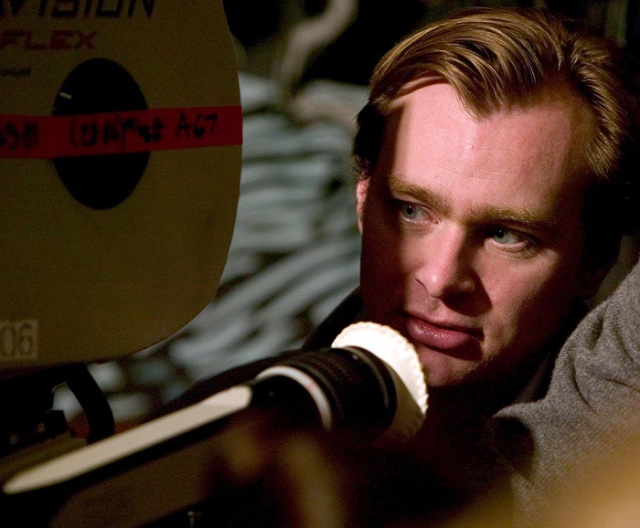
 Christopher Nolan 


shared some respectful, realistic graduation advice at Princeton's commencement ceremony on Monday morning.

It ran counter to what speeches like that say.

 "In the great tradition of these speeches, generally someone says something along the lines of  'Chase your dreams,' 

But I don't want to tell you that because I don't believe it," he told the students at Class Day. 

"I want you to chase your reality."

"I feel," he said,

"that over time, we started to view reality as the poor cousin to our dreams, in a sense. ... 

I want to make the case to you that our dreams, our virtual realities, these abstractions that we enjoy and surround ourselves with — 

they are subsets of reality."

The end of Inception where the camera cut to black just as the spinning top looked to be wobbling was Nolan's statement --

Cobb didn't care anymore.  He was with his kids ... all levels of reality are valid.

Nolan said, 

" But the question of whether that's a  dream or whether it's real is the question I've been asked most about any of the films I've made. 

It matters to people because that's the point about reality. Reality matters."

" I think our generation went out into the world believing 

that if we could connect the world, if we could allow the free exchange of ideas across geographical boundaries, economic boundaries, 

if we could all talk, these problems would go away. 

Unfortunately, I think by now, we have to acknowledge that we were wrong, 

that's not the case. Communication is not everything."


I agree with Nolan that reality matters, that if we sacrifice the bounties of the here and now 

for the grasping of that Brass Ring that may never come close to our fingers ...


We have ceased to live fully, to be entirely in the moment ...


and our fiction will be paler and less authentic than winning prose needs to be.


Hemingway's work is still valued and talked about ... for he lived life fully ...


He inhaled life and breathed out prose that pulsed with reality.


What do you think?