FREE KINDLE FOR PC

FREE KINDLE FOR PC
So you can read my books
Showing posts with label DEAN KOONTZ. Show all posts

Wednesday, September 17, 2014

WHAT MAKES A GOOD BOOK?


Or what makes a book good?

What is the criteria you use to gauge whether a book is worth the read?

Does a book have to be good to make a difference in someone’s life? Why or why not?

Victor Standish:

"For me, if it grabs my interest, makes me think, or helps me learn something then it is a good book."


Samuel McCord:

"A good book is a treasure trove of humanity so that no matter where you open a page and start reading, there is something new to be discovered."


Ada Byron, Lady Lovelace:

" I can more easily say why I don’t like certain books and to be honest, it is often the result of the author.

Of the most recent books that come to mind: one author I simply don’t like due to her style of writing and how her characters are always women who can’t take care of themselves."


So?  What do you think makes for a good book?

Action.  No action.  Romance.  No romance.  A bit of both?


I believe there are some universal facets that make a book good and a good book (the two are sometimes not the same.)


1.) AN INTERESTING VOICE

If you don't connect to the voice, then no matter how spell-binding the plot, you will drift away from the book ...

that is if you even buy the book at all.

Why?

Because the Voice, like the wind in a ship's sails, is what carries you through the book's journey. 

Like an aroma, it permeates each page, each word of the book.

The voice is what will make a page detailing even a train ride something memorable or witty or both.


2.) MEMORABLE CHARACTERS

The sparkling character of Tony Stark made IRON MAN.  Hannibal Lector dominates each page he is on.

The characters in the world of Odd Thomas by Dean Koontz kept me turning the pages to meet more of his one-of-a-kind neighbors.

Memorable characters bring the story to life.  They make you itch to get back to their banter when the world draws you away from their adventures.

In a way, they become friends you can come back to.  They let us see and feel the world in a new way, expanding our minds, enriching our lives.


3.) A VIVID SETTING

It doesn't have to be a fantasy setting.  No matter the genre, however, the world around the characters must feel "real." 

Great settings "ground" the story.  They highlight in the larger world, the tragic or comic elements in the smaller world of the lead characters.

Settings in good books become actual characters in the story either nourishing or preying, sometimes doing both.

After Katrina, New Orleans' streets killed the children/teens who roamed them.  Their souls went before their lives.

Take 1895 Cairo:

 the common man fared even worse.  Their servitude was to multiple masters: taxes, poverty, landed aristrocrats, British prejudice.  They were always in the crossfire of conflicting demands.

A well done setting breathes life into the story you are reading.


4.) A GRIPPING STORY

In essence, the plot has the reader asking, "What happens next?"

What is riveting to you may not be riveting to me. 

But the bottom line to the gripping plot must be PERSONAL and PRIMAL to the reader.

The neighbor of a police detective has her baby kidnapped.  The child is being returned to her one finger, one toe at a time.  No ransom demand.

Did the cleaning lady see something she shouldn't have?  Did she throw away the wrong thing?  Or is it about the detective's past, something to punish him?

Whatever the plot, the reader is invested in it and is staying up longer than she should to see what happens next.


What do you think is essential in a good book?


Inger Wiltz wrote me that my latest book was good -- which made my day.


"Reading helps me so much. I felt that The Stars Bleed at Midnight is the best of your books I have read to date.

So full of wisdom, less battles with creepy critters, and marvelous conversations and bantering back and forth between your characters.

I loved it and I'm looking forward to the continuation."

Why not go to my book's Amazon page 
and try the LOOK INSIDE feature
and see if it interests you?


Wednesday, July 9, 2014

DEAN KOONTZ at MEILORI'S

{Photo courtesy Steve Z Photography:

{This post based on two excellent interviews by STRANGE HORIZONS and NOVEL ROCKETS.

Go to these links for much more revelations and tips}:

http://www.novelrocket.com/2007/10/bestselling-author-dean-koontz.html
http://www.strangehorizons.com/2008/20080428/1mccarty-a.shtml 

Stan Getz was doing an evocative version of  "Skylark" as Dean Koontz sat opposite me at Meilori's.

Thanks for agreeing to come here and talk to those who, like VR Barkowski, edit as they write.

http://vrbarkowski.wordpress.com/2014/07/07/in-defense-of-editing-as-you-go/

I've read that you will rewrite a page until it's right before moving on, sometimes redoing a draft thirty or forty times. This must make for a slow process. Approximately how long does it take you to write one novel?

I work 10- and 11-hour days because in long sessions I fall away more completely into story and characters than I would in, say, a six-hour day.

On good days, I might wind up with five or six pages of finished work; on bad days, a third of a page. Even five or six is not a high rate of production for a 10- or 11-hour day, but there are more good days than bad.


And the secret is doing it day after day, committing to it and avoiding distractions.


A month--perhaps 22 to 25 work days--goes by and, as a slow drip of water can fill a huge cauldron in a month,

so you discover that you have 75 polished pages. The process is slow, but that's a good thing.

Because I don't do a quick first draft and then revise it, I have plenty of time to let the subconscious work;


therefore, I am led to surprise after surprise that enriches story and deepens character.

I have a low boredom threshold, and in part I suspect I fell into this method of working in order to keep myself mystified about the direction of the piece--

and therefore entertained.

A very long novel, like FROM THE CORNER OF HIS EYE can take a year. A book like THE GOOD GUY, six months.

What kinds of things are you doing during that time:
Writing? Plotting? Rewriting? Outlining? Character development?

I sit down at my desk about 7:30 [a.m.], or 8:30 if it's my turn to walk the dog—9:00 if I also have to polish the alligator—

and I'm there until dinner, because I rarely eat lunch.

When I need an excuse to avoid taking out the garbage, I usually claim to have been abducted by extraterrestrials,

because deadlines aren't a sufficient excuse to deflect Gerda.

Why she buys the evil-aliens story, I don't know, but she's never called me on it.

Outline?

I never outline.
 

For me, fiction is character driven, not plot driven,

so I start with one or two interesting characters and a brief premise—and then leap off the narrative cliff.

On the way down, like a circus clown, I'm desperately opening a series of ever larger umbrellas, hoping to slow my speed of descent and land on both feet.

Character development?
 

That isn't something I do as a separate task.

I don't cobble up lists of a character's favorite foods, habits, preferences in clothing, political attitudes, favorite game shows, or his excuses for not taking out the garbage.

That's all useless.

If characters come alive, they do so by virtue of their actions, their decisions and choices,

and it's in the writing that they assume dimension, not in some portrait or capsule biography written prior to launching the book.

Though I was once a Freudian writer, showing how every character's traumatic past shaped the person he became,

I have in the '90s become virulently anti-Freudian because I believe it's all bunk, and dangerous bunk to boot.

Freudian-colored writing—which is 99 percent of all fiction in this century—

reduces every character to a victim on some level; and the writer who either consciously or unconsciously uses Freudian dogma to explain his characters' motivations

is reducing the mysterious complexity of the human mind to a monkey-simple cause-and-effect mechanism.

Dicken's characters were not given depth by mechanistic psychological analyses of their childhoods;

Freud hadn't yet started to infect the world, and Dickens defined his characters by their actions, by their decisions and choices and attitudes.

Some critics won't get what I'm doing, because they're conditioned to looking for certain devices and techniques as signs that characterization is taking place—

but, happily, most have not only caught on to it but have supported it as more natural and, ultimately, deeper reaching.

Strangers
 
As for plotting . . .

well, this is also something that resolves itself in the process of writing, not in an outline.

If I keep the characters moving, keep them thinking and feeling, the plot will evolve as I go. An outline always felt unnatural to me,

and I stopped using one when I began Strangers. Before that, I created outlines, but the books never followed them anyway.

Rewriting is also not a separate task for me.

I don't bang out a book, or even a chapter, and then go back to revise it.


I rework every sentence before moving to the next, and then rework every paragraph before moving to the next,

and then revise each page twenty, thirty, fifty times before moving on to the next.

When I reach the end of a chapter—which has by that time been revised exhaustively—

I then print it out and pencil it three or four times, because I see things on the printout that I don't see on the screen.

By the time I reach the end of the book, every line in it has received so much attention that there's nothing to go back and revise—

unless the editor spots a problem that, on reflection, I agree needs to be addressed.

I've sometimes described this method of writing a novel as being similar to the way coral reefs are formed from the accreted skeletons of marine polyps—

though I must admit I've never polled any polyps to see if they agree.

Some writers have wondered how I maintain spontaneity when working in this fashion, but it's no problem at all, because you get so intimately involved with the fine details of the story

 that it remains eternally fresh to you on a lot of levels rather than just on the level of plot.

I'm sure all those polyps feel spontaneous and full of life as they form colonies, reproduce, and finally die in the service of creating underwater tourist attractions and providing the raw material for junk jewelry and dust-catching paperweights.


Do you think a new novelist should take the route you did and write some easier to place genre fiction to get their foot in the door or begin with the type of fiction they hope always to write?

Out of the gate, run with what you most love.

Starting in a genre--if you don't expect always to stay there--will label you,

and the labor needed to strip off a publisher's label, once it has been applied, is Herculean. I know because I've had to reinvent myself more than once.

{Just look at his private library and his 18 year old computer}


Monday, November 18, 2013

DEAN KOONTZ talks to NaNoWriMo


{Photo courtesy Steve Z Photography:

{This post based on two excellent interviews by STRANGE HORIZONS and NOVEL ROCKETS.

Go to these links for much more revelations and tips}:

http://www.novelrocket.com/2007/10/bestselling-author-dean-koontz.html
http://www.strangehorizons.com/2008/20080428/1mccarty-a.shtml 

Stan Getz was doing an evocative version of  "Skylark" as Dean Koontz sat opposite me at Meilori's.

Thanks for agreeing to come here and talk to those who have decided to do NaNoWriMo.

I've read that you will rewrite a page until it's right before moving on, sometimes redoing a draft thirty or forty times. This must make for a slow process. Approximately how long does it take you to write one novel?

I work 10- and 11-hour days because in long sessions I fall away more completely into story and characters than I would in, say, a six-hour day.

On good days, I might wind up with five or six pages of finished work; on bad days, a third of a page. Even five or six is not a high rate of production for a 10- or 11-hour day, but there are more good days than bad.

And the secret is doing it day after day, committing to it and avoiding distractions.


A month--perhaps 22 to 25 work days--goes by and, as a slow drip of water can fill a huge cauldron in a month, so you discover that you have 75 polished pages. The process is slow, but that's a good thing.

Because I don't do a quick first draft and then revise it, I have plenty of time to let the subconscious work; therefore, I am led to surprise after surprise that enriches story and deepens character.


I have a low boredom threshold, and in part I suspect I fell into this method of working in order to keep myself mystified about the direction of the piece--and therefore entertained. A very long novel, like FROM THE CORNER OF HIS EYE can take a year. A book like THE GOOD GUY, six months.

What kinds of things are you doing during that time:
Writing? Plotting? Rewriting? Outlining? Character development?

I sit down at my desk about 7:30 [a.m.], or 8:30 if it's my turn to walk the dog—9:00 if I also have to polish the alligator—

and I'm there until dinner, because I rarely eat lunch.

When I need an excuse to avoid taking out the garbage, I usually claim to have been abducted by extraterrestrials, because deadlines aren't a sufficient excuse to deflect Gerda. Why she buys the evil-aliens story, I don't know, but she's never called me on it.

Outline?

I never outline. For me, fiction is character driven, not plot driven, so I start with one or two interesting characters and a brief premise—and then leap off the narrative cliff. On the way down, like a circus clown, I'm desperately opening a series of ever larger umbrellas, hoping to slow my speed of descent and land on both feet.

Character development?

That isn't something I do as a separate task. I don't cobble up lists of a character's favorite foods, habits, preferences in clothing, political attitudes, favorite game shows, or his excuses for not taking out the garbage.

That's all useless.

If characters come alive, they do so by virtue of their actions, their decisions and choices, and it's in the writing that they assume dimension, not in some portrait or capsule biography written prior to launching the book.

Though I was once a Freudian writer, showing how every character's traumatic past shaped the person he became, I have in the '90s become virulently anti-Freudian because I believe it's all bunk, and dangerous bunk to boot.

Freudian-colored writing—which is 99 percent of all fiction in this century—

reduces every character to a victim on some level; and the writer who either consciously or unconsciously uses Freudian dogma to explain his characters' motivations

is reducing the mysterious complexity of the human mind to a monkey-simple cause-and-effect mechanism. Dickens's characters were not given depth by mechanistic psychological analyses of their childhoods;

Freud hadn't yet started to infect the world, and Dickens defined his characters by their actions, by their decisions and choices and attitudes. Some critics won't get what I'm doing, because they're conditioned to looking for certain devices and techniques as signs that characterization is taking place—but, happily, most have not only caught on to it but have supported it as more natural and, ultimately, deeper reaching.
Strangers
As for plotting . . .

well, this is also something that resolves itself in the process of writing, not in an outline. If I keep the characters moving, keep them thinking and feeling, the plot will evolve as I go. An outline always felt unnatural to me,

and I stopped using one when I began Strangers. Before that, I created outlines, but the books never followed them anyway.

Rewriting is also not a separate task for me. I don't bang out a book, or even a chapter, and then go back to revise it.

I rework every sentence before moving to the next, and then rework every paragraph before moving to the next, and then revise each page twenty, thirty, fifty times before moving on to the next.

When I reach the end of a chapter—which has by that time been revised exhaustively—I then print it out and pencil it three or four times, because I see things on the printout that I don't see on the screen.

By the time I reach the end of the book, every line in it has received so much attention that there's nothing to go back and revise—unless the editor spots a problem that, on reflection, I agree needs to be addressed.

I've sometimes described this method of writing a novel as being similar to the way coral reefs are formed from the accreted skeletons of marine polyps—

though I must admit I've never polled any polyps to see if they agree. Some writers have wondered how I maintain spontaneity when working in this fashion, but it's no problem at all, because you get so intimately involved with the fine details of the story

 that it remains eternally fresh to you on a lot of levels rather than just on the level of plot.

I'm sure all those polyps feel spontaneous and full of life as they form colonies, reproduce, and finally die in the service of creating underwater tourist attractions and providing the raw material for junk jewelry and dust-catching paperweights.


Do you think a new novelist should take the route you did and write some easier to place genre fiction to get their foot in the door or begin with the type of fiction they hope always to write?

Out of the gate, run with what you most love. Starting in a genre--if you don't expect always to stay there--will label you, and the labor needed to strip off a publisher's label, once it has been applied, is Herculean. I know because I've had to reinvent myself more than once.

{Just look at his private library and his 18 year old computer}

Saturday, August 25, 2012

THE GOOD GUY

We live life sometimes on auto-pilot.

Our bruised hearts murmur to withdraw, to exist, to try to forget.

Life is patient. Life lures you to sleep. Then, the snake of Change strikes.

Timothy Carrier is a man with a past that will not give him peace.

Having a beer after work at his friend’s tavern, he tries to distract his mind from haunting memories by drawing eccentric customers into amusing conversations.

But the jittery man who sits next to him tonight has mistaken Tim for someone very different—and passes to him a manila envelope full of cash.

“Ten thousand now. You get the rest when she’s gone.”

The stranger walks out, leaving a photo of the pretty woman marked for death, and her address.

Bad right? But things are about to get worse. In minutes another stranger sits next to Tim. This one is a cold-blooded killer who believes Tim is the man who has hired him.

Thinking fast, Tim says, “I’ve had a change of heart. You get ten thousand—for doing nothing. Call it a no-kill fee.”

He keeps the photo and gives the money to the hired killer. And when Tim secretly follows the man out of the tavern, he gets a further shock: the hired killer is a cop.

Suddenly, Tim Carrier, an ordinary guy, is at the center of a mystery of extraordinary proportions,

the one man who can save an innocent life and stop a killer far more powerful than any cop … and as relentless as evil incarnate.

But first Tim must discover within himself the capacity for selflessness, endurance, and courage that can turn even an ordinary man into a hero,

the inner resources that will transform his idea of who he is and what it takes to be The Good Guy.

This is the novel that introduced me to Dean Koontz.

Koontz uses an interesting technique to build suspense.

While we gradually learn, through Tim's incredible skill in evading the killer and his unflappable grace under pressure, that he must harbor a past profession in which he cut things other than stone,

Koontz withholds this secret from the reader until the final pages of the book.

He does the same with Linda and her past, contributing not only to the suspense but also to the extended first-date-type-thrill of romance that blossoms amidst the carnage.

Take this one with you this summer's end or have it on hand for times when you want a good read. You won't be disappointed.

Koontz writes well, with a dark, sarcastic style that matches the tension and violence of his situations. His images are well chosen and original;

indeed, Koontz is superior to many adepts of supposedly more serious literature. The Good Guy is something of a cross between Raymond Chandler and the TV series 24:

pulsing with action but richly, idiosyncratically portrayed.

It is also a pure thriller: unlike most of Koontz's prose, classified as horror, it doesn't involve the supernatural. I doubt you will hold it in your hands longer than three days. In fact, you will be tempted to read it on one sitting.

{THE RIVAL http://www.amazon.com/THE-RIVAL-chapter-STANDISH-ebook/dp/B007JOUJ60/ref=sr_1_17?s=digital-text&ie=UTF8&qid=1345910759&sr=1-17&keywords=Zombie+Love is still #17 on Amazon's Zombie Love Best Sellers!}

Tuesday, July 3, 2012

JULY 4TH'S Insecure Writer's Support

IMPORTANT NOTE: MY CONTEST HAS BEEN EXTENDED TO JULY 15TH FOR THOSE JUST LEARNING OF IT!

July 4th is America's INDEPENDENCE DAY.

I want to help my writing friends become INDEPENDENT of fear

which is the chief cause of aspiring writers never writing the novel inside them.

Here are 23 (a mystic number in itself) quotations from authors much wiser than myself!


Writing a novel is like driving a car at night. You can see only as far as your headlights, but you can make the whole trip that way. —E.L. Doctorow


Close the door. Write with no one looking over your shoulder. Don’t try to figure out what other people want to hear from you; figure our what you have to say. It’s the one and only thing you have to offer. —Barbara Kingsolver


Artists who seek perfection in everything are those who cannot attain it in anything. —Gustave Flaubert


The art of writing is the art of applying the seat of the pants to the seat of the chair. —Mary Heaton Vorse


Almost all good writing begins with terrible first efforts. You need to start somewhere. Start by getting something—anything—down on paper. -Anne Lamott


I have never thought of myself as a good writer. Anyone who wants reassurance of that should read one of my first drafts. But I’m one of the world’s great rewriters. I find that three or four readings are required to comb out the cliches, line up pronouns with their antecedents, and insure agreement in number between subject and verbs…My connectives, my clauses, my subsidiary phrases don’t come naturally to me and I’m very prone to repetition of words; so I never even write an important letter in the first draft. I can never recall anything of mine that’s ever been printed in less than three drafts. You write that first draft really to see how it’s going to come out. —James A. Michener

Fear of failure is the reason most often cited to explain why so many aspiring writers never realize their dreams. But I think it’s that same fear of failure that absolutely invigorates those who do push through—that is, the fear of not being heard. -Betsy Lerner


If you haven’t got an idea, start a story anyway. You can always throw it away, and maybe by the time you get to the fourth page you will have an idea, and you’ll only have to throw away the first three pages. —William Campbell Gault


Courage is resistance to fear, mastery of fear - not absence of fear. Do something every day that you don't want to do; this is the golden rule for acquiring the habit of doing your duty without pain. -Mark Twain


A great deal of talent is lost to the world for want of a little courage. —Sidney Smith


I learned never to empty the well of my writing, but always to stop when there was still something there in the deep part of the well, and let it refill at night from the springs that fed it. -Ernest Hemingway


There is always the risk that you may disappoint yourself. That risk is there even for productive writers, as most writers don’t write as often as they would like. Because of this reality, you will need to practice self-forgiveness. —Eric Maisel


By writing much, one learns to write well. —Robert Southey


If we had to say what writing is, we would have to define it essentially as an act of courage. —Cynthia Ozick


Exercise the writing muscle every day, even if it is only a letter, notes, a title list, a character sketch, a journal entry. Writers are like dancers, like athletes. Without that exercise, the muscles seize up. —Jane Yolen


Please, don't torture me with cliches. If you're going to try to intimidate me, have the courtesy to go away for a while, acquire a better education, improve your vocabulary, and come back with some fresh metaphors. ― Dean Koontz (ODD HOURS)


Inspiration doesn’t descend like a lightning bolt from the gods. Inspiration comes instead from a steady breath, a solid foundation, and a commitment to the process. —Laraine Herring


Almost all good writing begins with terrible first efforts. You need to start somewhere. Start by getting something—anything—down on paper. —Anne Lamott (Bird by Bird)


Work inspires inspiration. Keep working. If you succeed, keep working. If you fail, keep working. If you are interested, keep working. If you are bored, keep working. —Michael Chrichton


Once we are aware of our fears, we are almost always capable of being more courageous than we think. Someone once told me that fear and courage are like lightning and thunder; they both start out at the same time, but the fear travels faster and arrives sooner. If we just wait a moment, the requisite courage will be along shortly. —Lawrence Block


A writer is someone for whom writing is more difficult than for others. —Thomas Mann


The secret of getting ahead is getting started. —Agatha Christie


At some point we must stop anticipating our journey and set sail. Willa Cather said that she wrote best when she stopped trying to write and began simply to remember. —Ralph Keyes (The Courage to Write)

A last word about writing:

“But once an idea for a novel seizes a writer...

well, it’s like an inner fire that at first warms you and makes you feel good but then begins to eat you alive, burn you up from within.

You can’t just walk away from the fire; it keeps burning. The only way to put it out is to write the book.”
― Dean Koontz, Lightning

“No one's life should be rooted in fear. We are born for wonder, for joy, for hope, for love, to marvel at the mystery of existence, to be ravished by the beauty of the world, to seek truth and meaning, to acquire wisdom, and by our treatment of others to brighten the corner where we are.”
― Dean Koontz, Life Expectancy

{Thanks to several of my friends who have talked about my contest yesterday, I am EXTENDING THE DEADLINE TO JULY 15TH to give those who've just learned of my contest a fair chance.}
Prepare yourselves for chills.

Tuesday, August 2, 2011

FREE DEAN KOONTZ AUTOGRAPH!


FREE DEAN KOOTNZ AUTOGRAPH?

Yes.

If you write a review of any of my 11 eBooks, you get FIVE entries into my contest.

How cool is this?

So if your name is not selected to win the FREE STEPHEN KING AUTOGRAPH, you may still win a FREE DEAN KOONTZ AUTOGRAPH.

Those of you who have already written a review of one of books are already entered. Don't you wish you had written one now?

There is still time. SEPTEMBER 1ST will be the drawing.

The ghost of Samuel Clemens will do the drawing. No, just joshing. It will be my best friend, Sandra Thrasher, the straightest arrow I know.

***

Saturday, April 23, 2011

T is for TWEAKED_in that I have TWEAKED MY CONTEST ONCE AGAIN_last time, promise


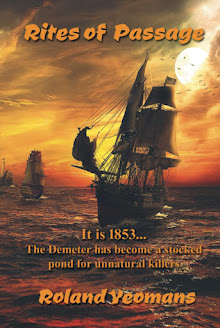
Since I have ePublished another novel, RITES OF PASSAGE,

I thought I would extend my contest in two ways :

1.) If you write a review on Amazon for either

RITES OF PASSAGE

or

THE BEAR WITH TWO SHADOWS


You will receive 5 entries to win my autographed books

Stephen King, NEEDFUL THINGS


Dean Koontz, THE TAKING


Laurell K. Hamilton, DANSE MACABRE


2.) To give you time to read one or both books, THE DRAWING WILL BE HELD ON AUGUST 31st.
***

Monday, April 11, 2011

New BEAR WITH 2 SHADOWS drawing (dedicated to Gypsy)


I'm back ...
to re-announce the new BEAR WITH TWO SHADOWS drawing :

List this contest/drawing in your sidebar,

and you will receive one entry.

Post a review of THE BEAR WITH 2 SHADOWS on Amazon,

and you will receive 5 entries.

The prizes? :

NEEDFUL THINGS autographed by Stephen King.

THE TAKING autographed by Dean Koontz.

DANSE MACABRE autographed by Laurell K. Hamilton.

The Drawing?

June 7th.

{SEND ME A COMMENT ON MY LATEST POST TO LET ME KNOW OF REVIEW OR SIDEBAR SHOUT-OUT}

The spirit of Gypsy and I wish you luck

Tuesday, December 7, 2010

THE MIDDLE OF YOUR NOVEL_VACUUM OR VICTORY?


We interrupt this post for this important message :

My Hiroshima story has been chosen as one of the 5 finalists in Tessa's OUT OF THE BOX blogfest.
The voting is today. Her link for the voting is :

http://tessasblurb.blogspot.com/

Read my and the others entries. Vote for the one you like.

Of course, I'm hoping you vote for mine. But I'm prejudiced, and the other four are great writers.

Now, back to our regularly scheduled broadcast :


We've talked about the ending ...

about how the beginning is shaped by it.

Now, what Hostess bakeries already knows :

It's the middle that makes the product.

You like that creamy filling? Me, too.

It's what brings me back. The icing entices me. The devil's food cake is the taste pleaser at the end. But it's the filling that makes the cupcake.

The title and the hook of a first sentence will snare the reader.

But it is what lies between the beginning and the stunning end that will keep him turning the pages until he reaches that finely honed climax.

Have you ever heard a good joke told badly?

Sure. We all have.

Have you ever had an agent or her intern write that your tale did not hold together?

Now, what the heck does that mean?

It means you told a good joke slightly off focus.

Eric Trant had a good point in his comment yesterday.

You don't just slap some wood together and hope you come up with a table. You start with the proper measurements and a firm idea as to what kind of table you want to build.

Have you been told your tale doesn't hold together?


1.) Perhaps that's because the pieces don't fit properly.

When you build a table, you use wood that has already been planed and sanded smooth :

Try smoothing each page you write as you write it.

Look at it closely as you finish and edit it to the best of your ability at the moment. Start with the next page. Edit it.

At the end of the chapter, print that rascal out.

You will discover flaws and rough spots you never saw on the computer screeen.

Trust me. It works. I got the idea from that rookie, Dean, ah what was his last name? Oh, yes. Dean Kootnz.


2.) The end in sight is great, but listen to the characters.

Aim for the ending you planned. But if the characters twist in your hand and suggest a great new ending.

Listen.

It is your unconscious mind speaking.

The new ending will prove to be fresher and more novel than what you originally started out with.

And since it is more in keeping with the evolved characters in your book, your tale will feel more together, less patched together.


3.) Write hungry.

Always write, knowing you could do better.

Aim higher.

Try harder.

Settle for nothing but your best. Try to make yourself laugh, cry, be surprised at the twists the characters' evolving personalities take you.


4.) Write true.

Listen to your heart.

If the beautiful sentence you just wrote rings false for the story, for the character, for the ending, edit it out.

Save it for another novel. Or don't.

Never call attention to yourself :

Isn't this a grand piece of prose.

Always ask how can I draw the reader into the story to LIVE it not read it.

Hear the characters talk in your head.

You'll pull back occasionally and say, "Hey that doesn't sound like Jane. That sounds like me. Or it sounds like Eden."

If a character says something in your head that puzzles you, go with it. Keep writing.

Wait until the end of the chapter before going back and re-reading the whole thing. Your unconscious is handing you a great surprise for your readers.

If you don't immediately know what it means, neither will your reader.

Don't waste or throw away that gift.

Follow these points and your novel's middle will be more than creamy filling. It will be the meat and potatoes of your tale.
***
And in honor of this holiday season :


s

Friday, November 26, 2010

THE BAD NEWS ABOUT GOOD GUYS


{VICTOR STANDISH ALERT! :

Victor has been spotted with his ghoul friend, Alice, at MUSINGS OF A PALIINDROME :

http://musingsofapalindrome.blogspot.com/ }

Good guys are boring?," I asked some days back.

Nickie, my co-worker, nodded sagely. "Yep. Boooooring."

We'd been talking my disenchantment with Sookie in the TRUE BLOOD novels.

Bill, her first lover, had suffered near death twice for her, but she is attracked to sociopath vampire, Eric.

"Vampire Bill is boring while Eric is just bad and sexy."

"Uh, he tore apart a guy who was just trying to escape being chained in his cellar.

And then, he got upset when the man's blood ruined his hair's highlighting."

Nickie giggled, "That was so cute."

"What if the guy had been your kid brother? Still cute?"

"Oh that guy was a jerk. He had it coming."

"And the two little children Eric looked down as munchies toward the end of season two? Did they have it coming?"

"Oh, you're as boring as vampire Bill." And Nickie hurried off to try saving LEGEND OF THE SEEKER.


Our conversation got me thinking on how difficult it is to write a non-boring hero or heroine. But being good boring?

Earl Warren, Chief Justice of the Supreme Court, once wrote : Everything I did in my life that was worthwhile, I caught hell for.

I don't know about you, but that's pretty much how it's been for me.

So Niki and actors who moan that good guys are boring don't really mean boring in the obvious sense.

As writers we have to look at heroes through the reader's eyes. And what do they want of their heroes?


To live vicariously through them.

And who wants to suffer through routine living second-hand? We get enough of that up close and personal.

Our failure with heroes is that we make them routine.

What do the readers want from the hero of the novel they're reading?

To live dangerously and to have fun through them by :

Dialogue :

How often have you been stung in a situation, only to come up with the perfect comeback HOURS after the fact?


Think CON-AIR when

Cameron Poe says to agent Larkin :

"Sorry boss, but there's only two men I trust. One of them's me. The other's not you."


Or with Robert B. Parker when Spenser says :

"...You have any suggestions, make them. I'm in charge but humble. No need to salute when you see me."

Fraser said, "Mind if we snicker every once in a while behind your back?"
"Hell, no," I said. "Everyone else does."

— Robert B. Parker (The Widening Gyre)

Or when Spenser walks into a TV station's boardroom to see three lawyers sitting on a couch beside one another.

"Which one of you speaks no evil?," I asked. (A Savage Place)

{Side-bar} :

University professor turned writer, Robert B. Parker, had thought-provoking things to say about writers, literature, and life :


“It was not just that Ross Macdonald taught us how to write;

he did something much more, he taught us how to read, and how to think about life, and maybe, in some small, but mattering way, how to live.”


"Being a professor and working are not the same thing. The academic community is composed largely of nitwits.

If I may generalize. People who don't know very much about what matters very much, who view life through literature rather than the other way around.”


“The advantage of writing a series is that it probably replicates,

for lack of a better word, real life more than most fiction

because most people have a history and know people and come and go and you have a chance to play with the characters and not just the protagonist.

It gives you the opportunity to develop--

lapsing back into academe for a moment--a whole fictive world. Gee, I love saying that now, just keeping my hand in. Fictive world!.”


"I sit down every day and write five pages on my computer.

At some point I found that not outlining worked better than outlining. The outline had become something of a limitation more than it was a support.

When I did the Raymond Chandler book, Poodle Springs, which was in the late eighties, I was trying to do it as Chandler did it,

and since Chandler didn't outline then I thought I won't outline.

If you read Chandler closely you can see that he didn't outline. What the hell happened to that chauffeur in THE BIG SLEEP?

I would recommend to the beginning writer that they should outline because they probably don't have enough self-confidence yet.

But I've been writing now since 1971 and I know that I can think it up. I know it will come."

"It's tempting to say the Ph.D. didn't have an effect, but it's not so. I think whatever resonance I may be able to achieve is in part simply from the amount of reading and learning that I acquired along the way."


But I digress ...


What, besides saying snappy dialogue, do readers want to do through their heroes?

To do the extraordinary.

Even if it is in ordinary circumstances. Spit in the eye of the bully. Tweak the nose of a snobbish boss.

Take this scenario :

A tired stone mason sits at a bar run by one of his few friends. Another man sits down beside him. He never looks at our hero, but he pushes a thick manila envelope over to him.

He whispers, "Ten thousand now. Ten thousand after she's dead."

He gets up and slowly walks away. Our hero hurriedly opens the envelope. Sure enough there is the money. And a blown-up photo of a woman from her driver's license.

Our hero gets up to follow the man to see if he can get the license plate number of his car to give to the police. The man is already outside -- getting into a police car.

What does our hero do? What would you do? And so starts the Dean Koontz novel, THE GOOD GUY. (Hey, the title even fits in with my own title of this post.)


There is a hero inside all of us ... if we only know where to look. There is a magentism to your hero of your novel ... if you know where to look. And where is that?

In your heart, friend. In your heart.
***
And in the spirit of this post and the holidays :