{ I had to start my post with a photo of a bad girl to counterbalance the good guy subject matter.
Ah, not buying that? Didn't think so. It was worth a try.}
"Good guys are boring?," I said earlier tonight.
Nickie, my co-worker, nodded sagely. "Yep. Boooooring."
We'd been talking my disenchantment with Sookie in the TRUE BLOOD novels.
Bill, her first lover, had suffered near death twice for her, but she is attracked to sociopath vampire, Eric.
"Vampire Bill is boring while Eric is just bad and sexy."
"Uh, he tore apart a guy who was just trying to escape being chained in a cellar. And then, he got upset when the man's blood ruined his hair's highlighting."
Nickie giggled, "That was so cute."
"What if the guy had been your kid brother? Still cute?"
"Oh that guy was a jerk. He had it coming."
"And the two little children Eric looked down as munchies toward the end of season two? Did they have it coming?"
"Oh, you're as boring as vampire Bill." And Nickie hurried off to read the latest Sookie Stackhouse novel.
Our conversation got me thinking on how difficult it is to write a non-boring hero or heroine.
But being good boring? Earl Warren, Chief Justice of the Supreme Court, once wrote : "Everything I did in my life that was worthwhile, I caught hell for."
I don't know about you, but that's pretty much how it's been for me.
So Niki and actors who moan that good guys are boring don't really mean boring in the obvious sense.
As writers we have to look at heroes through the reader's eyes. And what do they want of their heroes?
To live vicariously through them.
And who wants to suffer through routine living second-hand? We get enough of that up close and personal. Our failure with heroes is that we make them routine.
What do the readers want from the hero of the novel they're reading?
To live dangerously and to have fun through them by :
Dialogue :
How often have you been stung in a situation, only to come up with the perfect comeback HOURS after the fact?
Think CON-AIR when
Cameron Poe says to agent Larkin : "Sorry boss, but there's only two men I trust. One of them's me. The other's not you."
Or with Robert B. Parker when Spenser says :
"...You have any suggestions, make them. I'm in charge but humble. No need to salute when you see me." Fraser said, "Mind if we snicker every once in a while behind your back?" "Hell, no," I said. "Everyone else does." — Robert B. Parker (The Widening Gyre)
Or when Spenser walks into a TV station's boardroom to see three lawyers sitting on a couch beside one another.
"Which one of you speaks no evil?," I asked. (A Savage Place)
{Side-bar} :
University professor turned writer, Robert B. Parker, had thought-provoking things to say about writers, literature, and life :
“It was not just that Ross Macdonald taught us how to write; he did something much more, he taught us how to read, and how to think about life, and maybe, in some small, but mattering way, how to live.”
"Being a professor and working are not the same thing. The academic community is composed largely of nitwits. If I may generalize. People who don't know very much about what matters very much, who view life through literature rather than the other way around.”
“The advantage of writing a series is that it probably replicates, for lack of a better word, real life more than most fiction because most people have a history and know people and come and go and you have a chance to play with the characters and not just the protagonist.
It gives you the opportunity to develop--lapsing back into academe for a moment--a whole fictive world. Gee, I love saying that now, just keeping my hand in. Fictive world!.”
"I sit down every day and write five pages on my computer. At some point I found that not outlining worked better than outlining. The outline had become something of a limitation more than it was a support.
When I did the Raymond Chandler book, Poodle Springs, which was in the late eighties, I was trying to do it as Chandler did it, and since Chandler didn't outline then I thought I won't outline.
If you read Chandler closely you can see that he didn't outline. What the hell happened to that chauffeur? I would recommend to the beginning writer that they should outline because they probably don't have enough self-confidence yet.
But I've been writing now since 1971 and I know that I can think it up. I know it will come."
"It's tempting to say the Ph.D. didn't have an effect, but it's not so. I think whatever resonance I may be able to achieve is in part simply from the amount of reading and learning that I acquired along the way."
But I digress ...
What, besides saying snappy dialogue, do readers want to do through their heroes?
To do the extraordinary.
Even if it is in ordinary circumstances. Spit in the eye of the bully. Tweak the nose of a snobbish boss.
Take this scenario :
A tired stone mason sits at a bar run by one of his few friends. Another man sits down beside him. He never looks at our hero, but he pushes a thick manila envelope over to him.
He whispers, "Ten thousand now. Ten thousand after she's dead."
He gets up and slowly walks away. Our hero hurriedly opens the envelope. Sure enough there is the money. And a blown-up photo of a woman from her driver's license.
Our hero gets up to follow the man to see if he can get the license plate number of his car to give to the police. The man is already outside -- getting into a police car.
What does our hero do? What would you do? And so starts the Dean Koontz novel, THE GOOD GUY. (Hey, I couldn't resist.)
There is a hero inside all of us ...
if we only know where to look. There is a magentism to your hero of your novel ... if you know where to look.
And where is that?
In your heart, my friend. In your heart. *******************************************
Nickie, my co-worker, nodded sagely. "Yep. Boooooring."
We'd been talking my disenchantment with Sookie in the TRUE BLOOD novels.
Bill, her first lover, had suffered near death twice for her, but she is attracked to sociopath vampire, Eric.
"Vampire Bill is boring while Eric is just bad and sexy."
"Uh, he tore apart a guy who was just trying to escape being chained in his cellar.
And then, he got upset when the man's blood ruined his hair's highlighting."
Nickie giggled, "That was so cute."
"What if the guy had been your kid brother? Still cute?"
"Oh that guy was a jerk. He had it coming."
"And the two little children Eric looked down as munchies toward the end of season two? Did they have it coming?"
"Oh, you're as boring as vampire Bill." And Nickie hurried off to try saving LEGEND OF THE SEEKER.
Our conversation got me thinking on how difficult it is to write a non-boring hero or heroine. But being good boring?
Earl Warren, Chief Justice of the Supreme Court, once wrote : Everything I did in my life that was worthwhile, I caught hell for.
I don't know about you, but that's pretty much how it's been for me.
So Niki and actors who moan that good guys are boring don't really mean boring in the obvious sense.
As writers we have to look at heroes through the reader's eyes. And what do they want of their heroes?
To live vicariously through them.
And who wants to suffer through routine living second-hand? We get enough of that up close and personal.
Our failure with heroes is that we make them routine.
What do the readers want from the hero of the novel they're reading?
To live dangerously and to have fun through them by :
Dialogue :
How often have you been stung in a situation, only to come up with the perfect comeback HOURS after the fact?
Think CON-AIR when
Cameron Poe says to agent Larkin :
"Sorry boss, but there's only two men I trust. One of them's me. The other's not you."
Or with Robert B. Parker when Spenser says :
"...You have any suggestions, make them. I'm in charge but humble. No need to salute when you see me."
Fraser said, "Mind if we snicker every once in a while behind your back?" "Hell, no," I said. "Everyone else does."
— Robert B. Parker (The Widening Gyre)
Or when Spenser walks into a TV station's boardroom to see three lawyers sitting on a couch beside one another.
"Which one of you speaks no evil?," I asked. (A Savage Place)
{Side-bar} :
University professor turned writer, Robert B. Parker, had thought-provoking things to say about writers, literature, and life :
“It was not just that Ross Macdonald taught us how to write;
he did something much more, he taught us how to read, and how to think about life, and maybe, in some small, but mattering way, how to live.”
"Being a professor and working are not the same thing. The academic community is composed largely of nitwits.
If I may generalize. People who don't know very much about what matters very much, who view life through literature rather than the other way around.”
“The advantage of writing a series is that it probably replicates,
for lack of a better word, real life more than most fiction
because most people have a history and know people and come and go and you have a chance to play with the characters and not just the protagonist.
It gives you the opportunity to develop--
lapsing back into academe for a moment--a whole fictive world. Gee, I love saying that now, just keeping my hand in. Fictive world!.”
"I sit down every day and write five pages on my computer.
At some point I found that not outlining worked better than outlining. The outline had become something of a limitation more than it was a support.
When I did the Raymond Chandler book, Poodle Springs, which was in the late eighties, I was trying to do it as Chandler did it,
and since Chandler didn't outline then I thought I won't outline.
If you read Chandler closely you can see that he didn't outline. What the hell happened to that chauffeur in THE BIG SLEEP?
I would recommend to the beginning writer that they should outline because they probably don't have enough self-confidence yet.
But I've been writing now since 1971 and I know that I can think it up. I know it will come."
"It's tempting to say the Ph.D. didn't have an effect, but it's not so. I think whatever resonance I may be able to achieve is in part simply from the amount of reading and learning that I acquired along the way."
But I digress ...
What, besides saying snappy dialogue, do readers want to do through their heroes?
To do the extraordinary.
Even if it is in ordinary circumstances. Spit in the eye of the bully. Tweak the nose of a snobbish boss.
Take this scenario :
A tired stone mason sits at a bar run by one of his few friends. Another man sits down beside him. He never looks at our hero, but he pushes a thick manila envelope over to him.
He whispers, "Ten thousand now. Ten thousand after she's dead."
He gets up and slowly walks away. Our hero hurriedly opens the envelope. Sure enough there is the money. And a blown-up photo of a woman from her driver's license.
Our hero gets up to follow the man to see if he can get the license plate number of his car to give to the police. The man is already outside -- getting into a police car.
What does our hero do? What would you do? And so starts the Dean Koontz novel, THE GOOD GUY. (Hey, the title even fits in with my own title of this post.)
There is a hero inside all of us ... if we only know where to look. There is a magentism to your hero of your novel ... if you know where to look. And where is that?
In your heart, friend. In your heart. *** And in the spirit of this post and the holidays :
{ I had to start my post with a photo of a bad girl to counterbalance the good guy subject matter. Ah, not buying that? Didn't think so. It was worth a try.}
"Good guys are boring?," I said earlier tonight.
Nickie, my co-worker, nodded sagely. "Yep. Boooooring."
We'd been talking my disenchantment with Sookie in the TRUE BLOOD novels. Bill, her first lover, had suffered near death twice for her, but she is attracked to sociopath vampire, Eric.
"Vampire Bill is boring while Eric is just bad and sexy."
"Uh, he tore apart a guy who was just trying to escape being chained in a cellar. And then, he got upset when the man's blood ruined his hair's highlighting."
Nickie giggled, "That was so cute."
"What if the guy had been your kid brother? Still cute?"
"Oh that guy was a jerk. He had it coming."
"And the two little children Eric looked down as munchies toward the end of season two? Did they have it coming?"
"Oh, you're as boring as vampire Bill." And Nickie hurried off to try saving LEGEND OF THE SEEKER.
Our conversation got me thinking on how difficult it is to write a non-boring hero or heroine. But being good boring? Earl Warren, Chief Justice of the Supreme Court, once wrote : Everything I did in my life that was worthwhile, I caught hell for.
I don't know about you, but that's pretty much how it's been for me.
So Niki and actors who moan that good guys are boring don't really mean boring in the obvious sense.
As writers we have to look at heroes through the reader's eyes. And what do they want of their heroes?
To live vicariously through them.
And who wants to suffer through routine living second-hand? We get enough of that up close and personal. Our failure with heroes is that we make them routine.
What do the readers want from the hero of the novel they're reading?
To live dangerously and to have fun through them by :
Dialogue :
How often have you been stung in a situation, only to come up with the perfect comeback HOURS after the fact?
Think CON-AIR when
Cameron Poe says to agent Larkin : "Sorry boss, but there's only two men I trust. One of them's me. The other's not you."
Or with Robert B. Parker when Spenser says :
"...You have any suggestions, make them. I'm in charge but humble. No need to salute when you see me." Fraser said, "Mind if we snicker every once in a while behind your back?" "Hell, no," I said. "Everyone else does." — Robert B. Parker (The Widening Gyre)
Or when Spenser walks into a TV station's boardroom to see three lawyers sitting on a couch beside one another.
"Which one of you speaks no evil?," I asked. (A Savage Place)
{Side-bar} :
University professor turned writer, Robert B. Parker, had thought-provoking things to say about writers, literature, and life :
“It was not just that Ross Macdonald taught us how to write; he did something much more, he taught us how to read, and how to think about life, and maybe, in some small, but mattering way, how to live.”
"Being a professor and working are not the same thing. The academic community is composed largely of nitwits. If I may generalize. People who don't know very much about what matters very much, who view life through literature rather than the other way around.”
“The advantage of writing a series is that it probably replicates, for lack of a better word, real life more than most fiction because most people have a history and know people and come and go and you have a chance to play with the characters and not just the protagonist.
It gives you the opportunity to develop--lapsing back into academe for a moment--a whole fictive world. Gee, I love saying that now, just keeping my hand in. Fictive world!.”
"I sit down every day and write five pages on my computer. At some point I found that not outlining worked better than outlining. The outline had become something of a limitation more than it was a support.
When I did the Raymond Chandler book, Poodle Springs, which was in the late eighties, I was trying to do it as Chandler did it, and since Chandler didn't outline then I thought I won't outline.
If you read Chandler closely you can see that he didn't outline. What the hell happened to that chauffeur? I would recommend to the beginning writer that they should outline because they probably don't have enough self-confidence yet.
But I've been writing now since 1971 and I know that I can think it up. I know it will come."
"It's tempting to say the Ph.D. didn't have an effect, but it's not so. I think whatever resonance I may be able to achieve is in part simply from the amount of reading and learning that I acquired along the way."
But I digress ...
What, besides saying snappy dialogue, do readers want to do through their heroes?
To do the extraordinary.
Even if it is in ordinary circumstances. Spit in the eye of the bully. Tweak the nose of a snobbish boss.
Take this scenario :
A tired stone mason sits at a bar run by one of his few friends. Another man sits down beside him. He never looks at our hero, but he pushes a thick manila envelope over to him.
He whispers, "Ten thousand now. Ten thousand after she's dead."
He gets up and slowly walks away. Our hero hurriedly opens the envelope. Sure enough there is the money. And a blown-up photo of a woman from her driver's license.
Our hero gets up to follow the man to see if he can get the license plate number of his car to give to the police. The man is already outside -- getting into a police car.
What does our hero do? What would you do? And so starts the Dean Koontz novel, THE GOOD GUY. (Hey, I couldn't resist.)
There is a hero inside all of us ... if we only know where to look. There is a magentism to your hero of your novel ... if you know where to look. And where is that?
In your heart, friend. In your heart.
*******************************************
And if you have the time, here are some interesting scenes of an ancient TV series derived from the Spenser detective series. I fell in love with Susan Silverman from that series -- an intelligent, brave, caring woman.
Dreamer. Writer. Believer in the worth of each soul I meet.
It is not so bad a thing to have been born with the gift of laughter and the knowledge that the world is mad.
Book 4: Victor Standish risks all reality to bring back from the dead those he loves.
WOLF HOWL HAS HIS OWN BLOG!
VISIT IF YOU DARE
THE LAST SHAMAN AUDIO BOOK!
Mankind's time is nearly up. Can the last Lakota shaman save the soul of the assassin he loves before the end?
McCorkle Creations!
Let Heather McCorkle design covers and promo materials for you. You will be amazed.
ONLY $4.86!
Sometimes it is death, not life, that brings us love
A GHOSTLY WRITING MANUAL
Twain, Hemingway, Lovecraft & More!
An Age Is Ending & Ancient Evil Returning
Like PENNY DREADFUL? This is for you.
A SUPERNATURAL LONGMIRE
In Egypt, the dead never rest easy
NO ONE HEARS THE SCREAMS IN SILENT FILMS
An isolated Hollywood film crew is hunted by Nightmare
A SAMPLER OF MY HEROES
Mysteries Explained, Secrets Exposed
The Origin of Toomey Starks!
Hellhounds were never this much fun! Only $4!
VOODOO & LOVE IN THE FRENCH QUARTER
Now available in PRINT!
FRENCH QUARTER NOCTURNE AUDIO BOOK!
The supernatural predators come out after Katrina. Can two undead legends stop them?
AFTER KATRINA, THERE IS NONE BUT TWO TO STOP THE UNDEAD
ONLY $1.99 WHEN YOU BUY THE KINDLE BOOK!
LISTEN to GHOST OF A CHANCE
Can an author be drawn into his own fictional world and killed by his own characters?
HIBBS HAS FOUND HIS VOICE!
A tale of enchantment
Souls At The Crossroads
Where do you need to be?
THE DEADLIEST ENEMY IS WITHIN
What if Stephen King wrote of the life of a blood courier?
Listen to this haunting tale of horror and love
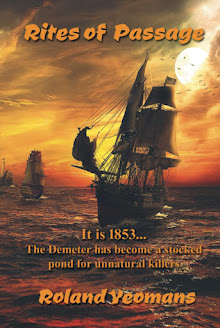
It is 1853. An undead Texas Ranger is on board a cursed ship in search of a murderer who is wearing the face of her last victim as a mask.
Listen to the LAST FAE
When the world is mad, there is little else to do but show them what true insanity is!
Can a man marry both the moon and the sun?
In the eclipse of myth, he can
What Defense is an innocent soul against the Powers of Darkness?
Let Hibbs, the cub with no clue, show you
Before Indiana Jones or Allan Quartermain
There was Sam McCord and his doomed love for Meilori Shinseen
Alice and Victor in 1834 New Orleans
Do a review and have a 1 in 13 chance to win a Johnny Depp autograph!
Buy_FRENCH QUARTER NOCTURNE
Hurricane Katrina has cast New Orleans into darkness. Predators, living and undead, close in on the helpless survivors. Can Samuel McCord and a vampire priest keep the French Quarter from being drowned in blood?
Buy_LET THE WIND BLOW THROUGH YOU
Enter the dangerous world of a Native American Noir thriller where forbidden love clashes with the politics of crime
You will never see the end coming
In his beginning is his end
My 1st SERIAL TRILOGY continues
There are none so lost as those who refuse to see
The 1st SERIAL TRILOGY!
In the dark, we are all orphans
In Memoriam - Maukie my cyber friend
RITES OF PASSAGE link
The earliest Samuel McCord adventure: Dare to board a fantasy Titanic as it sails into the Bermuda Triangle
VICTOR'S HERE!
BOOK 1: No one talks openly of the misty figures seen walking along New Orleans' iron-laced terraces, casting no shadow. Of the shapes seen rising from sewer grates. And no one willingly visits the crypt of Marie Laveau at midnight. Into this strange world arrives the street orphan, Victor Standish, from Charon's Greyhound. Charon has to keep up with the times ... the End Times. And the teen destined to be called the "Ulysses of the French Quarter" has come just in time for Hurricane Katrina, the End of All Things ... and the deadly love of the Victorian ghoul, Alice Wentworth.
VICTOR AND ALICE ARE BACK!
BOOK 2: Victor's a street kid. Alice is a Victorian ghoul Their love breaks the chain of reason. Their new adventures bring the French Quarter back from the brink of nightmare.
THE RIVAL
BOOK 3: Victor & Alice are in the French Quarter of 1834. Voodoo. Demigods. Revenants. And the hilarious Menage a Trois of Death! Oh, and someone we love dies at the end.
END OF DAYS is here!
St. Marrok's. The most eerie high school in which you will ever die. Its curriculum? The End of Days. Alice Wentworth plans to get an A+.
ADRIFT IN THE TIME STREAM link
SEQUEL to RITES OF PASSAGE: Come aboard the doomed DEMETER with undead Texas Ranger, Sam McCord, and sail with her into the depths of madness in ADRIFT IN THE TIME STREAM.
Buy_CREOLE KNIGHTS
SEQUEL to FRENCH QUARTER NOCTURNE: The dead rise. Elder Beings strain to enter our world through Katrina devastated New Orleans. And the Angel of Death is kidnapped to clear their way. Can Sam McCord stem the tide of madness in time?
Buy_THE LAST FAE
Once there was an age undreamed where legends walked this earth … and nightmares, too. Terrible were the battles, tragic the outcome of the wars. Until finally there were only two survivors : the nightmare and one bruised legend. These are the legend’s stories, each one a different facet of the same priceless gem – a jewel that has come to believe herself worthless. So come. Listen to her. Listen to THE LAST FAE.
GHOST OF A CHANCE
What if what you wrote became real?
BURNT OFFERINGS
When dreams are sacrificed, it is the soul that burns.
CHECK OUT THE FUN!
Explore if you dare
Buy_THE LAST SHAMAN
Journey with the last Lakota shaman, Wolf Howl. The white govenments call him Drew August. Those who hunt him call him Death. The last day of Man has dawned. Watch as Wolf Howl turns to meet his human hunters. Shadow, the love of his life, returns to aid his hunters. Then, Mankind's death descends. Can he save Shadow before the world's time runs out?
BRING ME THE HEAD OF McCORD!
Only 99 cents. C'mon. Take a chance.
GHOST WRITERS IN THE SKY
LEARN TO WRITE BETTER AND LAUGH ALONG THE WAY
LAST EXIT TO BABYLON
At the dawn of the End of All Things, the Last Fae finds there is no hope ... but love.
IT'S HERE TO BUY!!
The trilogy concludes. Not even the eclipse of myth is forever. But love is. And eclipses return. Listen. The voice of Blake, son of Man, is calling across the night skies.
Buy THE PATH BACK TO DAWN
Only in the eclipse of myth can a young man find himself with both the Moon and the Sun as his brides. Can he survive what follows?
Buy_LOVE LIKE DEATH
From the pages of THE LAST FAE springs this paranormal romance/thriller. Fallen, the last fae, discovers the name of the young teenager to whom she lost her heart : Blake Adamson.But she also discovers what happens when you believe your fears over your love : heartache and loss. And so Blake Adamson finds himself torn between two loves : one fae, the other an alien drinker of souls. Their love is deadly, but love, like death, will have its way.
THE BEAR WITH 2 SHAD0WS link
Based on the stories my Lakota mother told me as a child when I was deathly ill in a freezing Detroit basement apartment. Think a Native American LORD OF THE RINGS.
FROM THE GREAT BEYOND HOP!
You dare not miss it!!
ZOMBIE PREPAREDNESS!
LISTEN TO THE CDC
Thanks, Alex!
THE WORLDS OF ROLAND YEOMANS
Donna Hole astonishes with her insights on my linked worlds
FANTASTIC REVIEW OF THE LEGEND OF VICTOR STANDISH
Michael Di Gesu does a masterful review. I am honored by his friendship
LIFE LESSONS taught me by GYPSY
Dedicated to GYPSY
PAPYRUS PRODUCTIONS
Have Wendy make your book into a trailer that wows the reader!
HELP THE HURTING
100% of the profits for ALL my books this FEBRUARY are going to THE SALVATION ARMY. My Valentine's gift to the hurting.
Buy_BLOOD WILL TELL
One lone telepath finds himself a helpless spectator as the race of Man is subjugated into mindless drones by the very blood within their bodies.When the war is over, and he finds himself totally alone ... How can he go on and why?
CALL ME TOMBS
The last Lakota Heyoka faces voodoo and ultimate evil in the Carpathian Mountains of Transylvania with his Hellhound, Puppy
CATCH FIRE!
BLOG TOUR FOR ALEX J, CAVANAUGH'S NEWEST NOVEL
SIV'S BLOGFEST!
The Norse Gods Are Watching You!
NERDY IS THE NEW SEXY!
BECOME A JEDI KNIGHT FOR TEENS
THE SECRET OF SPRUCE KNOLL
Help save the endangered species of Earth by buying THE SECRET OF SPRUCE KNOLL!
AMAZON KEEPS SELLING OUT!
Written by the author who could very well turn out to be the new William Faulkner, Elliot Grace
FABULOSITY GALORE bookstore
Visit an online bookstore and help a blogging friend!!

 Posts
Posts


 { I had to start my post with a photo of a bad girl to counterbalance the good guy subject matter.