FREE KINDLE FOR PC

FREE KINDLE FOR PC
So you can read my books
Showing posts with label QUERIES. Show all posts

Monday, November 8, 2010

I CANNOT FEEL FOR OTHERS' WOES; I DARE NOT DREAM OF MY OWN

That is the lament of the 21st century man.
Through midnight hours that no longer yield their former harvest of rest,

he stares up at the unblinking eye of the ceiling, seeing no hope.

His spirit wanders over the wrecks of his former happiness, driven by haunted memories over the shoals of guilt and oceans of regret.


Words. Just words. But did they touch some inner ghost within your own spirit?

Our queries must do the same. But in a half-page.

What?

Doesn't seem fair or possible does it? What did Mark Twain write?
"I don't have time to write you a short letter, so I'm writing you a long one instead."
And that is so true. Economy in words is brutal and time-consuming. Ever been forced to use only one suitcase preparing for a trip? Ugly.

So much had to go. Not that those items weren't useful or even necessary. Just not as necessary as those items packed.
Agents will tell you that forcing you to submit a one page query is for your own good.

Doing a half page query { the other half is filling in who you are and what you've published,} shows the agent we have the discipline of one of the 300 Spartans.

If we had the skill, deliberation, and grasp of story-telling to arouse the agent's curiosity in a mere half page, it bodes well for what we did in our novel.


And all the above is true.


And it is applesauce as well.

It is not for us they demand the one page query. It is not even a measuring tool for the agent. It isn't about agent convenience either. It is about the agent's reality.

If an agent is reading this, she is probably sputtering. But as the British Daffy Duck might say to their great sounding reasons for the one page query, "Wank. Wank. Wank."

Bottom line : agents are drowning in a sea of unsolicited queries. They simply don't have the time to read a three page query that a 400 page novel calls for. But as Spenser might say, "It is what it is. So deal with it."

The half page query is forced upon us by the realities in which agents struggle. So we have to deal with it and do it expertly and with flair. If we want to communicate successfully with an agent, we must speak "agent-ese."

Can you squeeze your 400 page novel into three lines? Can you make them convey why your story is unique and absorbing, detailing background and characters? Sure, and after that, you'll establish world peace.

Here's an approach : go to http://www.imdb.com/ Type in the search box the title of a classic movie in the genre in which you write. I typed GONE WITH THE WIND. And I got : a manipulative woman and a roguish man carry on a turbulent love affair in the American south during the Civil War and Reconstruction.

Do those words sing? Do they capture the magic, scope, and heartbreak of the movie? No. They just lie there without life or spark.

Well, put a little spin to them : My novel is the saga of a selfish woman who doesn't want to admit her feelings about the man she loves, and she finally loses him.
Better but still murmurs "reject" to the agent. How about tuning up the summary in three sentences?

GONE WITH THE WIND is the epic tale of a woman's life during one of the most tumultuous periods in America's history. From her young, innocent days on a feudalistic plantation to the war-torn streets of Atlanta;

from her first love whom she has always desired to three husbands. She survives going from the utmost luxury to absolute starvation and poverty and from being torn from her innocence to a sad understanding and bitter comprehension of life.


Are you beginning to see how you might be able to pull off the half page query?
Now, it is your turn. Your mission, Jim, should you choose to accept it, is to go to IMDb and type in five classic movies in the genre in which your novel exists.

For each of the five, see what has been written in the summary section for the movie.


Re-write them in ways that sing and entice. If you feel like you're getting the hang of it after five times, then look at your novel as if you were writing the summation for its movie for IMDb.

Something else to think about. Your query letter is basically a job interview. And in the job interview you are thinking internally what the company can do for you. But what the company wants to hear is what you can do for them.

Same with an agent. Can you make the agent money? Period. The end.
Is your summary unique and "Oh, wow!" Do you include the punch line to your joke?

No holding back to tease. If the agent presents an unfinished turkey to her editors, she gets her hard-earned reputation bruised.

Is your novel in the genre the agent handles? Her list of agents is genre specific. If she handles techno-thrillers, she doesn't know one editor who would be interested in your Western.

And worse, you've shot your ounce of good will with that agent.

Agents are tired, impatient, and lovers of order. Agents want your summation to be three sentences. That's it.

They want to see your entire query laid out in three orderly paragraphs. Short ones. Easy on the eye ones. Any more paragraphs, any longer, chunkier ones scream unprofessional rookie to them.


And they don't have time to be your mentor. They want a partner not a pupil. You are not in the remake of THE KARATE KID.

How about this for an introduction?
"I finished my first book 76 years ago. I offered it to every publisher in every English- speaking country on earth that I had ever heard of.

Their refusals were unanimous. And it did not get into print until 50 years later. By then, publishers would print anything that had my name on it. "

- George Bernard Shaw.

You, however, are not famous. You get one sentence to introduce yourself. Unless you met the agent personally or was recommended by a close friend, save the introduction to the end. Begin with the best hook you can.

As for the intro at the end-tro, make it as personal to her as possible. "I'm submitting to you because I saw your interview with Larry King, and you mentioned you were looking for just the sort of book I've written."
Well, I've taken up many more than three paragraphs, so I'll end now. Here's Diana Krall singing a favorite of mine from her concert in Paris :

Sunday, November 7, 2010

THERE'S A LOT TO BE SAID IN HER FAVOR, BUT THE OTHER IS MORE INTERESTING


So said Mark Twain.He could have been talking about agents.

I've done my share of talking about them when I've a received a rejection ...

when they cared enough to email me one.

Some of you have emailed me, expressing dismay that dealing with agents meant selling yourself.

Many think that means selling yourself out. And two friends have expressed thinking that perhaps writing was not for them.


Whoa! They are both excellent writers.

And if they think it, perhaps others out there do, too.
I don't want that. Every good fantasy out there whets the appetite for more of the same. Besides they are both good friends.
I wrote them back, and I'm posting a generic version of that email here :

As writers we wear many hats during the course of the journey. As much as it irks me, in query letters I must go from artist to ambassador. Ambassador of the world I have created. I want to do it justice to the "court" of the agent I am approaching.

To do that, I must speak the language of the court I address. The language of agents is "self-interest." Many of them believe in the "win/win" concept. They help you as you help them.

Sadly, many people are only as good as their options. The agents hold the power. And it is true that some people are not good at handling power.

It goes to their heads. They vent their natural bent towards cruelty and pettiness to those who cannot defend themselves or retaliate in any meaningful way.

Thankfully that number is few. But you're right, those few do vicious damage to our hearts and spirits.

And due to Google Search, those burned by them hesitate to speak their names on the internet.

Most agents are just overworked. Not mean or petty. Just impatient, reading with half-listening eyes.

How many times have you been looking for an item while fatigued and have your eyes pass right over it several times before spotting it?

Agents are like that. Sadly, they glance over our query letter only once.

If they miss that what we have is what they really want, they do not re-read and pick up on that. They just miss it.

The galling thing about rejections is that usually you are given no reason. Wrong genre? Wrong voice? Too sluggish? Too fast-paced?

Beta readers are just outsiders like you, looking in through the window at the world of the published authors.

And published authors will tell you : it is a matter of chance that determines if your quality is recognized.

The quality has to be there, of course.

But it is a crap shoot if your excellent writing slips through the window of opportunity to get its chance to dance in the spotlight of an approving agent's and accepting publisher's attention.

That realization, instead of weighing us down, should free us. The world will turn as it will turn. The tides come in on their own schedule.

It is only up to us to walk as best we can, handling the reins of our lives with wisdom and courage.

Realize we are ambassadors to a self-interested system, learn its language, and present ourselves and our world with wit, humor, and the calm confidence that The Father has our back.

And our friends, of course. As I am friends with all those who visit my blog and exchange comments with me.

And the literary world is what it is. We writers need agents, though I have read some experts say not. They are mistaken. Here's why :


A) NEVER TRY TO CHANGE A TIRE ON A MOVING CAR :
In other words, in this busy publishing world, editors no longer have time to read unsolicited queries. Bottom line : you won't get read; you will get a form rejection.

B) NEVER POUR SUGAR INTO YOUR OWN GAS TANK :
You submit to a publisher. He whips back a form rejection. A miracle happens, and you get an agent. Professional courtesy says that agent can't submit your novel to even another editor from that same publishing house. Your agent tells you that you're #1 with the wrong finger. You just made his job that much harder.

C) NEVER WIN YOURSELF THE BOOBY PRIZE :
Another miracle happens. A publisher buys your book -- and a worse deal you would be hard-pressed to find. An agent would have gotten you a higher advance and royalties. Even if you sense you are getting a raw deal, the editor knows you have nowhere else to go.

D) NEVER PAINT YOUR CRYSTAL BALL BLACK :
If one publisher liked your novice unsolicited manuscript enough to buy, others would have, too. You will never know how much you could have gotten. Unlike an agent, you didn't have the contacts to arrange a bidding war for your novel. And the editor probably didn't even give you a jar of vaseline.

E) NEVER MAKE A DEAL WITH THE GODFATHER WITHOUT MUSCLE :
Stick your head out the window. See those vultures? They're drawn to that dead thing you call your "miracle contract." More than advance and royalties, there are other crucial items to consider like :
1) Translation rights.
2) Audio rights
3) Movie and TV rights.
4) Book Club rights.
5) Timing of your advance payment.
6) Bonus clauses.
7) Option on your next book.
8) Hear the hooting and laughter in the hallways. That's the sound of the editors laughing at your expense.

F) NEVER IGNORE THE DANGER OF THE PAVLOV EFFECT :
Without an agent, you will have to negotiate for a higher advance, those nit-picky contract issues you never saw coming, requesting a catalog copy, screaming about the stick figure drawings they have for your jacket art.

Guess what? The Pavlov effect kicks in very quickly. The editor hears your name and scowls, a sour feeling pervading his whole chest.

G) YOU EXPECTED MAYBE A NICE NAZI?
That's where your agent comes in. Editors expect agents to be combative. It's in their job description. They are your ambassadors. They allow your relationship with the editor to be purely on creative and editing matters. A healthy environment ensues.

H) NEVER GIVE YOURSELF THE BENDS :
It is what it is in publishing : a madhouse. Each editor usually has 20 to 30 authors in the pipeline. Yeah, that's a lot of pipe! You don't have an agent? Great.

Great for the overworked editor. He knows which novel to place at the bottom of the priority stack. See your novel buckling? It's got the bends.

I) EVERY ORPHAN ANNIE NEEDS A DADDY WARBUCKS.
See your stressed-out editor? No? That's because he just quit. What? Oh, don't look for any of the other editors to adopt you. No, they're busy gobbling up your editor's former resources like publicity money, marketing assets, and the dozen other publishing department time slots that are temporarily freed up.

You don't have an agent? Then, expect your book to be canceled faster than Tiger Wood's marriage license. Or placed so far down the pipeline, it would have been better for it to have been canceled so that you take it to another publisher.

J) NO ONE SHOOTS JOHN WAYNE'S HORSE :
You, however, don't have an agent. You can be shot. And if your first novel doesn't perform well, (and very few first novels do,) you will be shot ... out of the publishing house so fast there will be a sonic boom in Siberia.
All those experts that write that you don't need an agent hopefully mean well. But they are mistaken. And there are some great people out there I would be happy to have as friends, much less agents. Think Kristen Nelson http://pubrants.blogspot.com/ or Nathan Bransford http://nathanbransford.com/

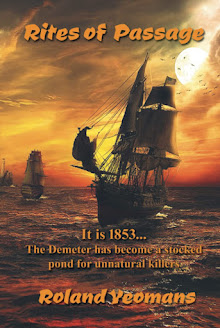
Not that either of them accepted any of the four queries I sent them for FRENCH QUARTER NOCTURNE, RITES OF PASSAGE, THE BEAR WITH 2 SHADOWS, or THE MOON AND SUN AS MY BRIDES.

No.

But they did write me a personal rejection. Sadly, no direct mention of what was wrong or how to correct it. But read their blogs, and you will discover that they are nice people.

This just in : Jodi Henry just let me know that Nathan quit Curtis Brown two days ago and is no longer in the industry at all. Sad news. He is one of the good guys.


And for a little flirty fun tune to keep the wind at your back :

Thursday, September 16, 2010

WHAT TO DO AFTER REJECTION


{“A dreamer is one who can only find his way by moonlight,

and his punishment is that he sees the dawn before the rest of the world.”

- Oscar Wilde.}

I received this in my inbox this morning in reply to my query of Feb. 26th :

Dear Roland,

Thank you for your submission. Although I find that your novel has potential, it is not the type of story that I seek at this time. I wish you the best of luck, and hope to hear great things from you in the future.

Best regards,

Marisa

Not the worst form rejection I've ever received. So what to do?

Get back on that horse.

Research who wants urban fantasy. I did and found a freelance editor who is getting into the agent side of things.

And she handles, among other things, urban fantasy. Go here to see if she handles your genre :

http://caseylmccormick.blogspot.com/2010/09/agent-spotlight-cari-foulk.html

And here is my sparkling, revised query : (No applause please -- just throw money.)

Dear Ms. Foulk :

Long before Man. Long before Light. Darkness reigned.

Light pierces its flesh. It hates the light. It hates even more Man who casts light like a garment over this world.

A man with the blood of Death in his veins. A revenant priest. Both thought their lives couldn't get any worse. Hurricane Katrina proved them wrong.

FRENCH QUARTER NOCTURNE is the 90,000 word urban fantasy detailing their struggles to keep the survivors alive and the Darkness at bay in post-Katrina New Orleans.

Here are the first few paragraphs :

It rained lies and death today.

I stood knee-deep in water outside my French Quarter jazz club, Meilori’s. My soul stretched tight across my chest. Everything I saw and heard in the shadows spoke to me ... in threats.

The sudden, short explosion of an unseen gun. A quick, sharp scream in the distance. And the blue spurt of a lighted match at the far end of the street. My city bled slowly in the ripples of the flooded streets.

I leaned back against the door to my club as if for reassurance that something solid still remained to me. That it survived Katrina was a mixed blessing. It was all that was left to me of my wife.

Staying here was both penance and purgatory. Meilori’s was the kind of place in which almost anything was likely to happen and in which almost everything had.

Inside, fifty-one survivors of Katrina were huddled in shivering, too quiet clusters. Words have no meaning when a city dies. Nothing much does.

Somewhere distant in the hot, red darkness a shot rang out. Another called out to it like a wolf. But it came from a different direction. I smiled bitterly. The predators had crawled out from their boarded shelters. They knew the restraint of law had died this day. Soon they would come for me.

You see, I had enemies in the night. And not all of them were human.

***

To get a better idea of my writing voice, you may want to visit my blog, WRITING IN THE CROSSHAIRS http://rolandyeomans.blogspot.com/


I am a former high school teacher, family counselor, and now a blood courier. The last a result of being evacuated from Lake Charles due to Hurricane Rita and having to support myself any way I could.

I found I liked the job and the people with whom I worked. And it gives me more time to write. Thank you for reading my query.

Two other agents are considering the first 50 pages of my novel. I would be happy to send you further sample chapters or the full manuscript May the rest of this year hold only happy surprises with some relief for punished eyes and swamped workloads.

Roland D. Yeomans M.A.
rxena77@yahoo.com

I wish all of us luck in finding success in our publication dreams, Roland
And here's wishing us all a day without rain :


Friday, May 28, 2010

CAN YOU SEE ME? CAN YOU SEE YOUR QUERY?


"The human face is really like one of those Oriental gods : a whole group of faces juxtaposed on different planes -- it is impossible to see them all."
- Marcel Proust

Marcel was a French novelist, essayist, and critic. He is known by many for his REMEMBRANCE OF THINGS PAST. His was a life of hardships, ill health, and yearnings for a family's love lost.

That particular quote was brought to mind in a email conversation I had with Vicki Rocho of RAMBLES & RANDOMNESS
http://missvspeaks.blogspot.com/

I was writing that non-fiction books on psychology like the one I was reading, SURVIVAL OF THE PRETTIEST, helped me in becoming a better writer. It is crucial that we as writers be discerning in how we humans relate to one another and why.

Our scenes must strike the reader as natural. The way our characters interact must resound with the ring of life as it is -- not as we wish it to be. Books like SURVIVAL OF THE PRETTIEST can help us see the multi-layers of human interactions.

In riveting style, Etcoff, a psychologist at Harvard Medical School, demolishes the belief that beauty is a cultural construct, arguing instead "that beauty is a universal part of human experience, and that it provokes pleasure, rivets attention, and impels actions that help ensure the survival of our genes."

By drawing widely from anthropological, psychological, biological and archeological literature, Etcoff discerns surprising similarities in the ways humans have perceived and responded to beauty across diverse cultures throughout the millennia.

For example, cross-cultural research comparing two isolated Indian tribes in Venezuela and Paraguay to people in three Western cultures demonstrated a remarkable similarity in what is considered beautiful. And evidence that red pigments were used as lipstick as long ago as 5000 B.C. suggests that media images are not the sole reason that "in the United States more money is spent on beauty than on education or social services."

The most important message in this book is that we cannot ignore our evolutionary past when attempting to understand our current behavior, even as we should recognize that we need not be slaves to our genes. Topics as wide-ranging as penis- or breast-enlargement surgery and the basics of haute couture are treated with wit and insight.

And Amazon sells a used hardcover for $4. How cool is that?
http://www.amazon.com/gp/product/0385479425/ref=kinw_rke_rti_1

Another indispensible psychology text for me as a student of human interaction, body language, and as a writer is EYE TO EYE, HOW PEOPLE INTERACT. It is truly an awesome aid to any writer of human interactions. It is loaded with color photographs with detailed summations of what is going on.

The observations of 26 British and American psychologists are combined in words and pictures "to identify precisely what it means to be a social animal."

A varied format blends text, headlines, boxed sidebars, diagrams, photographs and extended captions in a graphic overview of innate and cultural human communication.

The book analyzes how facial expression, eye contact, touch, gesture, appearance and comportment function in such attitudes as shyness, enthusiasm, territorial awareness, dominance, rivalry, aggression and so on in minor acquaintance, friendship, group activity, romance, sexual attraction, family relationships and career contacts as well as the possible effect of these on individual health, self-esteem, success or failure.

The clean layout and a wealth of charts and graphs make this volume an easy resource for YAs to use for research in psychology, health, or sociology classes. Bountiful color photographs illustrate this enjoyable, comprehensive volume. It's also an excellent book for browsers.

And on Amazon you can get a used paperback for a penny! Now that is really cool. But I would opt for the used hardback (it is oversized like a coffee table book) at $6. But I will give the link for the penny edition. I know money's tight these days :

http://www.amazon.com/Eye-How-People-Interact/dp/0881623717/ref=sr_1_1?ie=UTF8&s=books&qid=1275022476&sr=1-1

In 30 seconds you and all your friends will be pulled into it. It will be an invaluable aid in writing the interactions of your characters. Trust me. It will be a penny well spent. Or six dollars.

And speaking of being pulled in, that's what you're aiming at with queries :

Pulling in the agent. Making her/him pause in his whittling down the slush pile. Having her stop the mantra of "reject, reject, reject" to go, "Oh, here's a maybe."

How?

That is the question as Hamlet would say. Brevity {you knew that was coming, didn't you?} and broad strokes.

Hook. {If the world were all vampires, what would they drink?}

{Research what high-sale book this agent has handled that is like yours (don't cheat -- it has to be like yours -- or the agent will feel cheated)}

Mention how your book is cut from the same cloth as that book -- that will slow the reject mantra down. She made money from that particular book. She could possibly make money from yours.

3 stirring sentences boiling down your plot to the basics. At this point, the agent is only considering your query in the broadest sort of way. She is asking herself, "Do I want to see more?" Intrigue her enough to nod yes.

{Ever ask, "How are you?" to an acquaintence and get a three hour, detailed painful answer?} Don't be that in your query. The most effective monster in the movies is the one of whom you only see broad flashes.

Be a bad reporter : don't name names. It jars the agent to have to stop and mentally go, "How the h___ do you pronounce Sidhe de la Muerte?" The agent is thinking speed and ease of digesting your query.

Give the agent verbal indigestion at your peril. No names. Usually it is unnecessary. Hero. Love interest. Enemy. Arena of conflict.

Never trip your agent's attention. Highlight in broad strokes. Don't spotlight in numerous details.

"The man with death in his veins is the reluctant champion of life in post-Katrina New Orleans."

No sub-plots. Your agent will probably make her initial reject at the genre alone. "I don't do military history."

I do the housekeeping as it is called : title, length, and genre in the subject header of my email. Fast and upfront. And this way it doesn't interfere with the flow of the query.

Next will be your basic plot. If your base plot seems weak without your sub-plot. That's because you plot is weak. Time to tweak not query.

The above logline is too general. For once I did that on purpose. How about :

"In post-Katrina New Orleans, there is one dark French Quarter street where the dead are rising. And to stop them? One undead Texas Ranger. The Night of the Hungry Shadows has begun."

Think brief but specific. Also think : "What time is it anyway?" The agent is. Tell her.

As in the logline above. Hurricane Katrina. Two short words but they paint a whole picture of human struggle. I mention the time frame. The Night of the hungry shadows.

It gives an immediate structure to my work for the agent. She knows my book has a structure. She knows a lot from a little.

A novel set in post-Katrina New Orleans will have an entirely different flavor than one set during the six days of the missile crisis in the Kennedy White House.

Location gives a sense of atmosphere, of the culture, and of the people involved. Post-Katrina New Orleans. Three words that tell the agent a great deal.

In one sentence without one word of plot, the agent can see the broad scope of my novel.

Can you see your query a little more clearly now? Hope so.

The evocative cat photo comes from Jessica's lovely blog THE ALLITERATIVE ALLOMORPH
http://thealliterativeallomorph.blogspot.com/ The past two days she has had truly intriguing posts.

And here is a haunting melody called "Valley of Dreams."

Tuesday, May 25, 2010

IN THE BEGINNING WAS THE WORD

In the beginning was the Word.

Lucky for the universe God didn't need an agent to get his Word to see the Light.

But none of us is God. And if I'm wrong about this, would You please put in an appearance in my apartment? I've got some questions.

Not being Deity, you and I have to get an agent.

L. Diane Wolfe has an excellent post on why none of us should even consider a subsidy or vanity press.

http://circleoffriendsbooks.blogspot.com/

Bottom line : they're called vanity publishers for a reason. Basically, it's like paying for a kiss. It means very little. And less to major publishers if you refer to being published by them. The big boys all know you paid to get published.

And it only means something when they pay you for it. In a sad sidebar, that truth is why some hopeless women on the hard streets feel they have worth. Men pay for them.


Remember FIELD OF DREAMS?

"If you build it, he will come."

And the same is true for us as writers. An agent will not come because I'm a nice guy. She will not come because I'm a writer with a great idea. She will not come because I beg. {Although I have to admit, I've been tempted to do that.} She will not come because I have great promise.

No.

The agent will come when I build something real for her to appear for. A novel that is finished, that is riveting from the very first sentence, that grabs the reader and will not let her go, that finishes with a resolved crisis and growth for the main character, hinted at in the very first chapter.

But more : she will come when I have already built a platform from which she can stand, from which a publisher can view potential sales, from which they can compute the possible profit in it for them to buy my novel.

That is something she can use in the ways she knows best, taking a finished novel with existing interest. With that she can go to the editors, persuading them into a better financial deal than we could have dreamed.

Until that happens, there is no need for an agent. Lusting for one is even a distraction. A distraction from what, you say?

From crafting that polished," draw-you-in-with-the-first-sentence" novel. But the novel is not enough, you must also have a platform. Get your name out there.

Twitter. Learn how to use it. Listen to others. Learn how NOT to hawk yourself. Facebook has problems. But set up an account for later. Be prepared.

Do what you're doing now. Write an interesting, absorbing blog. Be the best you on that blog you can be. Go with your strengths. If you're funny, make 'em laugh. If you're wise {me, I'm otherwise}, then share what you have freely and compassionately.

Go to others' blogs. You see something there that is useful or fun or both, direct your readers to that blog. Have the back of your fellow blogger. Maybe they'll have your back in return. If not, you still have the good feeling inside that being decent and kind gives you.

Google on how to write queries. I've written a couple of decent posts on how to do that. Other bloggers have as well.

Now, go to http://www.agentquery.com/ and find agents for your genre. Go to Preditors and Editors http://pred-ed.com/ and see if there are any red flags to their names. Go to Absolute Write Water Cooler : http://absolutewrite.com/forums/ and see what fellow writers think of your targeted agent.

Write the shortest, most interest-grabbing query you can. I've just written a post on how to do that. Google will show you others. Now, write that query. Show it to a few fellow writers you trust.

Then, throw your note in a cyber bottle out into the sea. Throw ten notes. And if three request a partial or a full, send them. Also tell those requesting agents about the interest of the other two.

Is that honest? Yes. Is that wise? It's human nature wise.

Guys want a girl that other guys want. It's human nature. Finding out other agents are interested in you makes you seem more attractive to that agent reading your reply. Be professional, of course, in how you state it. State it as a courtesy to them.

Agents who read this may sputter. But I'm not writing this for them. I writing this for you to have the best shot at getting an agent.

Oh, and when you get your agent, and she sells your novel, her next question will be :

"What are you working on next?"

Be prepared for that with a polished proposal. Let her know that you are professional and not a one-shot wonder. Understand that there is a melody playing inside her head as she looks at you : "What do you have for me that will make me more money?"

Your goal is to write, sell, repeat. Enjoy the journey ... and the friends you make along the way.

Like Spenser says, "It is what it is."
****************
One of my favorite melodies is "Adiemus," and I have included it with a glimpse of 300, a movie stemming from brave men who would not admit "impossible" into their thinking.

Sunday, May 23, 2010

I CANNOT FEEL FOR OTHERS' WOES; I DARE NOT DREAM OF MY OWN

That is the lament of the 21st century man.
Through midnight hours that no longer yield their former harvest of rest, he stares up at the unblinking eye of the ceiling, seeing no hope. His spirit wanders over the wrecks of his former happiness, driven by haunted memories over the shoals of guilt and oceans of regret.

Words. Just words. But did they touch some inner ghost within your own spirit?

Our queries must do the same. But in a half-page.

What?

Doesn't seem fair or possible does it? What did Mark Twain write?

"I don't have time to write you a short letter, so I'm writing you a long one instead."
And that is so true. Economy in words is brutal and time-consuming. Ever been forced to use only one suitcase preparing for a trip? Ugly.

So much had to go. Not that those items weren't useful or even necessary. Just not as necessary as those items packed.

Agents will tell you that forcing you to submit a one page query is for your own good. Doing a half page query { the other half is filling in who you are and what you've published,} shows the agent we have the discipline of one of the 300 Spartans. If we had the skill, deliberation, and grasp of story-telling to arouse the agent's curiosity in a mere half page, it bodes well for what we did in our novel.

And all the above is true.

And it is applesauce as well.

It is not for us they demand the one page query. It is not even a measuring tool for the agent. It isn't about agent convenience either. It is about the agent's reality.


If an agent is reading this, she is probably sputtering. But as the British Daffy Duck might say to their great sounding reasons for the one page query, "Wank. Wank. Wank."

Bottom line : agents are drowning in a sea of unsolicited queries. They simply don't have the time to read a three page query that a 400 page novel calls for. But as Spenser might say, "It is what it is. So deal with it."

The half page query is forced upon us by the realities in which agents struggle. So we have to deal with it and do it expertly and with flair. If we want to communicate successfully with an agent, we must speak "agent-ese."

Can you squeeze your 400 page novel into three lines? Can you make them convey why your story is unique and absorbing, detailing background and characters? Sure, and after that, you'll establish world peace.

Here's an approach : go to http://www.imdb.com/ Type in the search box the title of a classic movie in the genre in which you write. I typed GONE WITH THE WIND. And I got : a manipulative woman and a roguish man carry on a turbulent love affair in the American south during the Civil War and Reconstruction.

Do those words sing? Do they capture the magic, scope, and heartbreak of the movie? No. They just lie there without life or spark.

Well, put a little spin to them : My novel is the saga of a selfish woman who doesn't want to admit her feelings about the man she loves, and she finally loses him.

Better but still murmurs "reject" to the agent. How about tuning up the summary in three sentences?

GONE WITH THE WIND is the epic tale of a woman's life during one of the most tumultuous periods in America's history. From her young, innocent days on a feudalistic plantation to the war-torn streets of Atlanta; from her first love whom she has always desired to three husbands. She survives going from the utmost luxury to absolute starvation and poverty and from being torn from her innocence to a sad understanding and bitter comprehension of life.


Are you beginning to see how you might be able to pull off the half page query?

Now, it is your turn. Your mission, Jim, should you choose to accept it, is to go to IMDb and type in five classic movies in the genre in which your novel exists. For each of the five, see what has been written in the summary section for the movie.

Re-write them in ways that sing and entice. If you feel like you're getting the hang of it after five times, then look at your novel as if you were writing the summation for its movie for IMDb.

Something else to think about. Your query letter is basically a job interview. And in the job interview you are thinking internally what the company can do for you. But what the company wants to hear is what you can do for them.

Same with an agent. Can you make the agent money? Period. The end.

Is your summary unique and "Oh, wow!" Do you include the punch line to your joke? No holding back to tease. If the agent presents an unfinished turkey to her editors, she gets her hard-earned reputation bruised.

Is your novel in the genre the agent handles? Her list of agents is genre specific. If she handles techno-thrillers, she doesn't know one editor who would be interested in your Western. And worse, you've shot your ounce of good will with that agent.

Agents are tired, impatient, and lovers of order. Agents want your summation to be three sentences. That's it. They want to see your entire query laid out in three orderly paragraphs. Short ones. Easy on the eye ones. Any more paragraphs, any longer, chunkier ones scream unprofessional rookie to them.

And they don't have time to be your mentor. They want a partner not a pupil. You are not in the remake of THE KARATE KID.

How about this for an introduction?

"I finished my first book 76 years ago. I offered it to every publisher in every English- speaking country on earth that I had ever heard of. Their refusals were unanimous. And it did not get into print until 50 years later. By then, publishers would print anything that had my name on it. "

- George Bernard Shaw.


You, however, are not famous. You get one sentence to introduce yourself. Unless you met the agent personally or was recommended by a close friend, save the introduction to the end. Begin with the best hook you can.

As for the intro at the end-tro, make it as personal to her as possible. "I'm submitting to you because I saw your interview with Larry King, and you mentioned you were looking for just the sort of book I've written."

Well, I've taken up many more than three paragraphs, so I'll end now. Here's Diana Krall singing a favorite of mine from her concert in Paris :


Wednesday, May 19, 2010

THERE'S A LOT TO BE SAID IN HER FAVOR, BUT THE OTHER IS MORE INTERESTING


So said Mark Twain.
He could have been talking about agents. I did my share yesterday. And I received a good many emails.
Every one expressed dismay that dealing with agents meant selling yourself. Many thought that meant selling yourself out. And every one expressed thinking that perhaps writing was not for them.

Whoa! They are all excellent writers. I don't want that. Every good fantasy out there whets the appetite for more of the same. Besides they are all good friends.

I wrote them back, and I'm posting a generic version of that email here :

As writers we wear many hats during the course of the journey. As much as it irks me, in query letters I must go from artist to ambassador. Ambassador of the world I have created. I want to do it justice to the "court" of the agent I am approaching.

To do that, I must speak the language of the court I address. The language of agents is "self-interest." Many of them believe in the "win/win" concept. They help you as you help them.

Sadly, many people are only as good as their options. The agents hold the power. And it is true that some people are not good at handling power. It goes to their heads. They vent their natural bent towards cruelty and pettiness to those who cannot defend themselves or retaliate in any meaningful way.

Thankfully that number is few. But you're right, those few do vicious damage to our hearts and spirits. And due to Google Search, those burned by them hesitate to speak their names on the internet.

Most agents are just overworked. Not mean or petty. Just impatient, reading with half-listening eyes. How many times have you been looking for an item while fatigued and have your eyes pass right over it several times before spotting it?

Agents are like that. Sadly, they glance over our query letter only once. If they miss that what we have is what they really want, they do not re-read and pick up on that. They just miss it.

The galling thing about rejections is that usually you are given no reason. Wrong genre? Wrong voice? Too sluggish? Too fast-paced?

Beta readers are just outsiders like you, looking in through the window at the world of the published authors. And published authors will tell you : it is a matter of chance that determines if your quality is recognized.

The quality has to be there, of course. But it is a crap shoot if your excellent writing slips through the window of opportunity to get its chance to dance in the spotlight of an approving agent's and accepting publisher's attention.

That realization, instead of weighing us down, should free us. The world will turn as it will turn. The tides come in on their own schedule. It is only up to us to walk as best we can, handling the reins of our lives with wisdom and courage.

Realize we are ambassadors to a self-interested system, learn its language, and present ourselves and our world with wit, humor, and the calm confidence that The Father has our back. And our friends, of course. As I am friends with all those who visit my blog and exchange comments with me.

And the literary world is what it is. We writers need agents, though I have read some experts say not. They are mistaken. Here's why :


A) NEVER TRY TO CHANGE A TIRE ON A MOVING CAR :
In other words, in this busy publishing world, editors no longer have time to read unsolicited queries. Bottom line : you won't get read; you will get a form rejection.

B) NEVER POUR SUGAR IN YOUR OWN GAS TANK :
You submit to a publisher. He whips back a form rejection. A miracle happens, and you get an agent. Professional courtesy says that agent can't submit your novel to even another editor from that same publishing house. Your agent tells you that you're #1 with the wrong finger. You just made his job that much harder.

C) NEVER WIN YOURSELF THE BOOBY PRIZE :
Another miracle happens. A publisher buys your book -- and a worse deal you would be hard-pressed to find. An agent would have gotten you a higher advance and royalties. Even if you sense you are getting a raw deal, the editor knows you have nowhere else to go.

D) NEVER PAINT YOUR CRYSTAL BALL BLACK :
If one publisher liked your novice unsolicited manuscript enough to buy, others would have, too. You will never know how much you could have gotten. Unlike an agent, you didn't have the contacts to arrange a bidding war for your novel. And the editor probably didn't even give you a jar of vaseline.

E) NEVER MAKE A DEAL WITH THE GODFATHER WITHOUT MUSCLE :
Stick your head out the window. See those vultures? They're drawn to that dead thing you call your "miracle contract." More than advance and royalties, there are other crucial items to consider like :
1) Translation rights.
2) Audio rights
3) Movie and TV rights.
4) Book Club rights.
5) Timing of your advance payment.
6) Bonus clauses.
7) Option on your next book.
8) Hear the hooting and laughter in the hallways. That's the sound of the editors laughing at your expense.

F) NEVER IGNORE THE DANGER OF THE PAVLOV EFFECT :
Without an agent, you will have to negotiate for a higher advance, those nit-picky contract issues you never saw coming, requesting a catalog copy, screaming about the stick figure drawings they have for your jacket art.

Guess what? The Pavlov effect kicks in very quickly. The editor hears your name and scowls, a sour feeling pervading his whole chest.

G) YOU EXPECTED MAYBE A NICE NAZI?
That's where your agent comes in. Editors expect agents to be combative. It's in their job description. They are your ambassadors. They allow your relationship with the editor to be purely on creative and editing matters. A healthy environment ensues.

H) NEVER GIVE YOURSELF THE BENDS :
It is what it is in publishing : a madhouse. Each editor usually has 2o to 30 authors in the pipeline. Yeah, that's a lot of pipe! You don't have an agent? Great.

Great for the overworked editor. He knows which novel to place at the bottom of the priority stack. See your novel buckling? It's got the bends.

I) EVERY ORPHAN ANNIE NEEDS A DADDY WARBUCKS.
See your stressed-out editor? No? That's because he just quit. What? Oh, don't look for any of the other editors to adopt you. No, they're busy gobbling up your editor's former resources like publicity money, marketing assets, and the dozen other publishing department time slots that are temporarily freed up.

You don't have an agent? Then, expect your book to be canceled faster than Tiger Wood's marriage license. Or placed so far down the pipeline, it would have been better for it to have been canceled so that you take it to another publisher.

J) NO ONE SHOOTS JOHN WAYNE'S HORSE :
You, however, don't have an agent. You can be shot. And if your first novel doesn't perform well, (and very few first novels do,) you will be shot ... out of the publishing house so fast there will be a sonic boom in Siberia.

All those experts that write that you don't need an agent hopefully mean well. But they are mistaken. And there are some great people out there I would be happy to have as friends, much less agents. Think Kristen Nelson http://pubrants.blogspot.com/ or Nathan Bransford http://nathanbransford.com/

Not that either of them accepted any of the four queries I sent them for FRENCH QUARTER NOCTURNE, RITES OF PASSAGE, THE BEAR WITH 2 SHADOWS, or THE MOON AND SUN AS MY BRIDES. No. But they did write me a personal rejection. Sadly, no direct mention of what was wrong or how to correct it. But read their blogs, and you will discover that they are nice people.


And for a little flirty fun tune to keep the wind at your back :


Tuesday, May 11, 2010

ANOTHER DREAM CAST ONTO THE SEA OF FATE


I've just sent out another query to a new agent. This time for my YA fantasy, THE MOON & SUN AS MY BRIDES. I thought it might prove helpful to those of you out there trying to write a query. Take what you find useful and leave the rest to the winds.

So here is another dream cast onto the mysterious sea of fate :

Dear Ms. ______ :

I know you must be weary of TWILIGHT knock-off's. Me, too. But for different reasons. Although I left my teen years some light years ago, I still enjoy the innocence and the angst of YA. I mean, TWILIGHT is a siren song of supernatural, forbidden love. CITY OF GLASS {Mortal Instruments} is a haunting tale of dove and serpent. But guys like to read, too.

Guys want a read that is a wild beast in the mind, surging along with fast-paced plotting and leaping-off-the-page characters. They want to be thrilled, to be made to laugh out loud, and, believe it or not, to be made to think -- usually outside the box -- but is that such a bad thing? So when they browse the teen section in the bookstore and read titles like WHY IS MY VAMPIRE BOYFRIEND PRETTIER THAN I AM?, they must mutter, "Help!"

Help! We've all cried that either mentally or just flat out loud. All of us have faced moments when we longed to be rescued. But mostly we must rescue ourselves. We must wear our own spandex, be our own hero.

Fifteen year old Blake Adamson has no spandex - only a world of nightmare. In the orphanage that is more prison than sanctuary, he retreats into books. But one night, a fire forces him to face reality.

Or does he face reality at all? Is he awake, or is he lost in the fever dreams of a burn-induced coma? Like Alice over a hundred years before him, Blake faces a world of wonder, insanity, and danger. He feels pain. But is that merely from the injuries of the fire as he lies in some hospital bed, or has the world always been larger, more mysterious than he ever imagined?

In the end, he decides reality is what you make it. It doesn't matter if what he sees are delusions within a coma or a wondrous journey through the worlds suggested by quantum mechanics. What matters are the choices he makes, the friends he holds dear, and the pain he can ease.

But then, he meets the enemy in this strange realm that threatens the two girls he has grown to love : himself. How do you battle yourself? And if saving the two girls you love means death for you, what do you do?

THE MOON & SUN AS MY BRIDES is a 90,000 word paranormal Young Adult adventure. I have just finished the rough draft of the sequel, LAST EXIT TO BABYLON. Thank you for the time you've spent reading my query. To get a better feel for my writing voice and my range, you might want to drop by my blog {Yes I have one of those, too.} www.rolandyeomans.blogspot.com

In compliance with your submission guidelines, here is a short sample of my writing. And since you love to take dance classes, here is an excerpt where my hero learns to dance aboard a haunted junk as he sails across the myterious Sea of Fate. He is accompanied by the raven Munnin, fleeing servitude to Odin, the legendary Maori warrior, Hone Heke, and the Sun goddess, Kirika Amaterasu :


What had Napoleon said? That if you pretended long enough, you became what you pretended. Well, then, I would pretend that we would make it out of this mess. All three of us, Kirika, Fallen, and me. I reluctantly pulled back from our kiss, both our mouths wet from it.

"You know what Napoleon told me?"

Kirika slowly stroked my cheek with soft fingers. "What, beloved?"

"That when you fought for love, you always won, even when you lost."

Muninn cawed sharp, "I seem to remember he said --"

Speaking as one, we turned to him and snapped, "Shut up!"

Then, realizing we had acted as one, we both sputtered in sad giggles. Muninn smiled. I nuzzled my head against his. The wise little guy had spoken up on purpose. It was good to finally have friends ... and love.

I wasn't alone anymore.

The next seven days were nothing like the week before it. They were magic, a time of happiness, healing, and laughter. Kirika seemed intent to focus only on the moment, never talking of the past or even acting like there would be a tomorrow. And I was more than happy to let her. But every now and then, I would catch a cloud of darkness flicker across her ivory face. Then, she would notice me looking at her, fling back her long hair, and wisk me away to some new wonder on board or upon the black Sea of Fate. Or more maddening, tease me with playful fingers or lips that would just skim across mine before leaping back in a throaty giggle.

I made a mistake that first day of telling her about my spooky dream. She laughed til tears came to her eyes as I spoke of Muninn dancing a waltz with a tiny Bast. But I left out what the cat goddess had said to him. Muninn glared at me as if willing the whole tale back into my mouth. And afterwards, I wished I could have oblidged.

She insisted on teaching me how to waltz. I was wooden-footed and awkward. Kirika was patient. Muninn was mocking. And Hone? He gleefully helped stoke the fires by playing waltz after waltz on a pipe he magically pulled out of his inside shirt pocket. Slowly, as hour followed hour, I got better until by the end of the first day, Kirika was satisfied enough with my progress to switch to something she called the Rumba.

I protested, trying to keep my voice from sounding like a little girl's, as she demonstrated the swaying hip movements. "I can't move like that!"

She giggled, swaying up to me, pressing her lower body against mine. "Of course, you can."

Hone started to pipe a wild gypsy tune as she smiled, "The Rumba is several dances melted into one. The guaracha --"

Her hips began to gyrate in a way that made me tingle all over. "The Cuban Bolero ---"

She swirled around me, rubbing her, ah, bottom against mine. "And the rural Rumba, which is really a dance of exhibition, not of participation."

Hone stopped playing, "I don't know, honey, your tush seems to be participating with his just fine. Too fine. You know, there're no cold showers on this tub."

She giggled and swirled in front of me. "The steps are quite simple, Blake. Here, see? The rhythm is set in counts of four of equal time. Look, the basic footwork is even more simple. Three steps taken on the first three beats of a measure, with a hold ---"

"A what?," I frowned.

She moved in, kissing me lightly, nipping me sharp on the upper lip as she pulled away. "A hold, silly rabbit. No step on the fourth beat."

"Oh, sure. I knew that."

She laughed throaty, moving her hips in a way that made me want Hone to turn away. "Of course, you did."

Her eyes grew heavy somehow, as her hips began to sway hypnotically. She moved closer and closer to me. She reached out to my hips, grabbed them, then, started moving them in time to her own.

"Let me help," she breathed. "That's right. Move, flow with the music."

"Wh-What music?"

"Can you not feel the pounding of the blood in your ears? Listen. Listen as I rub my hips against yours. Now? Can you hear it?"

I nodded slow, caught in the spell of her brown eyes. "I thought you could. Oh, now, you're doing even better."

She ran her hands up my sides, then back down to my hips, guiding them into hers. "The Rumba is an old, old dance. Long ago, we Ningyo's gave it to the Cubans as a way for the woman to attract and ultimately dominate her man with her ---"

She tickled my ear as she whispered into it, "--- her feminine charms."

Hone was suddenly right by us, pushing us apart. "Alright, that does it. No sex standing up. Not unless I can jump in."

"Hone!," I sputtered.

He winked. "Just kidding, kid."

He laughed deep. "Now, I'll teach you a Maori war dance."

Kirika scowled, "Fitting, old man. I am in the mood for war right now."

He laughed cruel. "Thought you might be. Here, watch how a warrior does it."

He bent in a fluid flourish and picked up his staff. "Can't do it right without the traditional Maori Killing Stick."

He grinned at me. "Last time, I remember doing this, poor Hina lost her hula skirt."

He rolled his eyes. "She almost killed me when she found out I had untied the knot when she wasn't looking."

He spun his staff in a blur. Twisting at the hips, he jumped and spun in the air like a jungle cat, landing like one on the balls of his feet. Jungle cat? My scalp began to prickle at a ridiculous idea. But he spun me around, up, and over his shoulder, then stomped happily with both feet. He broke out into a roaring chant.

"Kamate. Kamate.

Ka Ora. Ka Ora.

Tenei te tangata

puburuburu

nana nei i tiki mai

I whakawhiti te ra

Upane Upane

Whiti te ra!"

Thanks to Solomon's gift of Tongues, I knew what Hone was singing. And singing in not a bad voice either. Kirika wasn't so blessed. She pouted.

"It is impolite to sing so we cannot understand. For all we know, you could be shouting the recipe for penguin soup."

He laughed and twirled her in a square dance kind of circling loop. Despite herself, Kirika giggled, caught up in his genuine lust for life and the dance. He swung about and, dropping his staff, looped his right arm through mine. Then, we found ourselves skipping and dancing all about the deck as Hone bellowed in English this time.

"It is Death! It is Death!

It is Life! It is Life!

This is the hairy one, (he mussed my wild hair as he sang those words),

Who caused the sun to

shine.

Abreast. Keep abreast!

The rank. Hold fast!

Into the sun that shines."

Hone swung us all about, while impossibly stamping his feet merrily and shouting, "Kia korero te katoa o te tinana. (The whole body should speak.)"

"What you said," giggled Kirika.

Hone swept us around some more as he bellowed out again :

"Ringa pakia

Uma tiraha

Turi whatia

Hope whai ake

Waewae takahia kia kino."

Kirika punched him in the ribs, and he chuckled out :

"Slap the hands against the thighs. (Which he did gleefully.)

Puff out the chest. ( I thought Hone's shirt buttons would pop off.)

Bend the knees. ( I almost fell as he dragged us down with him.)

Let the hip follow. (He frowned as Kirika swayed much too sexy.)

Stamp the feet as hard as you can. (We all laughed as we did just that.)"

Hone yelled, "Now, the pukana." (And he dilated his eyes like a guy with a thyroid condition.)

As Kirika pulled away giggling, Hone laughed, "Next, the whetero!"

And he stuck out his tongue so far I thought he was a human lizard.

Kirika folded her arms. "By no means! I am quite careful where I stick my tongue." (And she gazed at me in such a way, I tingled in places I hoped Hone didn't notice.)

"That's alright, honey," smiled Hone, slapping, puffing, bending, and stamping away. "The whetero can be only done by men."

Her eyes narrowed. "Oh, really?"

She stuck out her tongue right at him, looking not a bit fearsome, but like a mad little girl.

He reached out and swung her in a happy circle. "Yeah, who cares about centuries of tradition when I can finally see that cute little tongue of yours. Ouch!"

She had kicked him in the shin. And Hone added a few new dance steps to the Peruperu, the war haka of the Maori. He glared at her.

"You know, princess, there's the potete that only women can do."

She looped her arm back with his and smiled like a happy cat with canary feathers in her mouth. "Oh, and what is that?"

"The closing of the eyes -- like you're gonna do now!"

And with that, he swung her over his shoulder and around his waist to set her right next to me with a thud.

She steadied herself against me with a shaky hand. "No, I think I'll just do the whetero again."

And she proceeded to stick out her tongue at him, lunging in a blur and slamming a foot right into his other shin. "Oh, look, Blake, some more new steps for us to learn."

And she spun me around, leaping up and down, rubbing her own shin bone. "I like this new step!"

"I hate it," Hone grumbled, then held his sides laughing.

He reached out and hugged the two of us. "Now, that's how the Maori dance!"

***

I am a former high school teacher, family counselor, and now a blood courier. The last a result of being evacuated from Lake Charles due to Hurricane Rita and having to support myself any way I could. I found I liked the job and the people with whom I worked. I stayed.


Thank you for taking the time to read my query. I would be happy to send you sample chapters or the full manuscript. I hope that you find some gem in the flood of submissions that pour your way. May your Spring hold only happy surprises with some relief for punished eyes and swamped workloads.

Roland D. Yeomans M.A.

And not to leave my favorite character, Sam McCord left out totally, here is his favorite scene from the ancient movie, THE ELECTRIC HORSEMAN :


Monday, May 10, 2010

CASTING DREAMS INTO THE DARKNESS

Casting dreams into the darkness.

That's what you do when you send out queries to agents or to publishers. Writing a short note in a bottle and tossing it out onto the horizon-to-horizon waves. Will it succeed it getting you off the deserted island of unpublished status?

The million dollar question.

{Leonardo da Vinci scribbled in his many notebooks never knowing if all his work would ever be appreciated.}

Like any intelligent person, I read what each individual agent writes she would prefer -- only to read in another article how she just had to sign this debut author. One who broke all the query rules and wrote such a refreshingly different query, breaking away from the crowd who slavishly submitted the same old, same old {in other words : followed her submission guidelines.}

Sometimes I can feel a nosebleed coming on.

I have been following the conventional wisdom lately and feeling a lot like Snoopy riddled by the Red Baron. Once I emailed a query early in the morning to get the rejection in the late afternoon of the same day.

All right. Obviously, it was course correction time. I looked back at the four queries that got 4 agents to ask to see more. They had what I call the 4 C's : interesting Character, primal Crisis, enough of the plot to make the agent Curious, and most important, they were all Concise ... ie. short as to be kind to a weary agent's eyes and frayed patience.

I decided to go with what had won me the attention of four agents and write a query that used the 4 C's, trying to improve upon the theme. And this is what I wrote and promptly sent off to another agent {who did not reject me the same day or the day after.}

Dear Ms. _________ :

Hurricane Katrina has mortally wounded New Orleans. There is no help in sight. Federal agencies are grid-locked. State officials are befuddled and ineffectual. The police are undermanned with little amunition and no sure means of communication.

And along every dark, flooded street ... the dead have started to rise.

Samuel McCord, legendary French Quarter jazz club owner, decides he has lost enough : his family, his wife, and his humanity. He will not lose his adopted city -- not to inept, corrupt politicians, not to the rising dead in the shadows, nor to a life-long enemy whose power is causing the dead to return and the creatures of the night to close in around a helpless New Orleans.

And so begins the 90,000 word urban fantasy, FRENCH QUARTER NOCTURNE. I'm including the first three pages of my novel to give you a feel for my writing voice :

It rained lies and death today.

I stood knee-deep in water outside my French Quarter jazz club, Meilori’s. My soul stretched tight across my chest. Everything I saw and heard in the shadows spoke to me ... in threats. The sudden, short explosion of an unseen gun. A quick, sharp scream in the distance. And the blue spurt of a lighted match at the far end of the street. My city bled slowly in the ripples of the flooded streets.

I leaned back against the door to my club as if for reassurance that something solid still remained to me. That it had survived Katrina was a mixed blessing. It was all that was left to me of my wife. Staying here was both penance and purgatory. Meilori’s was the kind of place in which almost anything was likely to happen and in which almost everything had. Inside, fifty-one survivors of Katrina were huddled in shivering, too quiet clusters. Words have no meaning when a city dies. Nothing much does.

Somewhere distant in the hot, red darkness a shot rang out. Another called out to it like a wolf. But it came from a different direction. I smiled bitter. The predators were crawling out of their boarded shelters. They knew the restraint of law had died this day. Soon they would come for me.

You see, I had enemies in the night. And not all of them were human.

But what was human? Science kept telling us that human was only another kind of animal. We certainly acted it.

The lights were out all over New Orleans. And the real face of Man was showing. I knew what so many were thinking : ‘Now, I can do what I’ve always wanted. No one to see me. No one to stop me. No one to make me pay.’

“There’s me,” I whispered to the approaching darkness. “And soon there’ll be hell to pay.”

The water lapped at my knees, and I shook my head. Hell had already come collecting. But it seemed Hell was never satisfied. Soon it would demand more.

I had no words. An entire life’s outrage at lying politicians tried to crowd itself into this one moment. It wouldn't fit. In fact, I felt like I was about to explode. My anger was a wild beast inside my heart. But the outrage was slowly pushed into the background by the numbed shock of the sight before me.
My city shouldn't be drowning in front of me. And yet, here it was doing just that. I tried to remember what these streets had looked like dry and filled with laughing tourists. I couldn't. My mind felt broken.

The love that had kept me whole in its invisible sheath was gone. Gone. And what was left worth having? There had to be something better than cursing the darkness. But for the life of me I couldn’t think of it. All I could do was mourn.

I thought about the words Wilde had me carve on his false tombstone.

“Alien tears will fill for him

Pity’s long-broken urn,

For his mourners will be outcast men,

And outcasts always mourn.”

I looked all around. Yes, those words fit the desolation I saw. Hell, they fit the desolation inside me. The emptiness that had been born seven years ago when Meilori, my wife, could no longer stand the sight of me and had stormed away into the night.

Now, another lady named Katrina had come storming back. And she didn't seem to like me any more than had Meilori. I shook my head. That particular line stretched around the block.

The light was quickly fading. A last crimson glory filled the French Quarter. Its glow lay on the flooded streets like a crown of blood. A whisper of ice murmured that I was watching more than the death of the day. I was watching the death of a city, of a people’s hopes and dreams. Sadly, it wouldn’t be the first time. And like the people now inside my club, they had looked to me for answers and meaning then, too.

My jaw firmed. It would be different this time. I heard Meilori’s mocking laughter in my mind.

Damn it. It would be different. I would be different.

The laughter continued.

********************************************


To get a better idea of my writing voice, you may want to check out my blog, WRITING IN THE CROSSHAIRS, www.rolandyeomans.blogspot.com .

I am a former high school teacher, family counselor, and now a blood courier. The last a result of being evacuated from Lake Charles due to Hurricane Rita and having to support myself any way I could. I found I liked the job and the people with whom I worked. I stayed.

Thank you for taking the time to read my query. I would be happy to send you sample chapters or the full manuscript. I hope that you find some gem in the flood of submissions that pour your way. May your Spring hold only happy surprises with some relief for punished eyes and swamped workloads.

Roland D. Yeomans M.A.

*************************************
I included the first three pages as that was part of her submission guidelines. If no pages had been requested, I would have sent the first three paragraphs anyway. That is usually all weary agents read of our submissions before deciding to reject or not.

Just thought my query might help you write your own -- either incorporating some of its facets or steering away from them. Good luck with your queries everyone. And success to us all.

And here is a tune that describes how Samuel McCord feels towards his one great love, Meilori Shinseen.