Why do bloggers and twitterers go on about how publishing may be doomed?
Because it hits to the core of who we are as a society.
We live and die by the printed word.
Communities change because of what has been written, and if Aldous Huxley is to be believed, society will suffer tremendously without it.
Nearly every day I read of another magazine or newspaper that is folding,
closing its doors and giving up the ghost of publishing.
Is this signaling the chaos before the end?
I'm an optimist for the publishing industry. A pessimist for what lies ahead for struggling writers
Let me explain. Consider how many books are printed every single year.
In 2005 (the most recent year data was collected for),
there were 206,000 new titles, while the US saw 172,000.
That’s titles, not the actual number of books.
Say there was an average of 10,000 books printed per each title. (Probably a conservative estimate.)
That would mean at least 3,780,000,000 physical, paper books were printed. This is only new titles that were introduced that year.
qHow many of those books hit the NYTimes bestseller list?
How many sold their entire first print run?
How many made back the money that was spent on their physical production?
Not all of them.
Nor even most of them.
It’s relatively few that ever make it big.
The publishers know not every book produced will succeed, . But now in these dark economic times for publishing, it is very likely
that will ask themselves,
"Why not save money and precious resources for most (if not all) of the titles that don’t have as much chance for immediate success?"
Translation :
the purchasing agents will slam shut the gates on most of the books brought to them by agents.
Those agents, in turn, will reject nearly every query sent them by unknowns.
So, yes, publishing will have a future. We, as unknown authors, may very well not.
Oh, but there is ePublishing you say.
self-publishing may be the next dot-com bubble:
There's money to be made, so people are climbing over each other to post eBooks on Amazon so they can start raking in their fortune.
Except that's not going to happen, and eventually the flood of first-timers testing the self-publishing waters is going to subside.
some of the self-publishing poster children (Amanda Hocking being a good example) have used their success to procure traditional publishing deals.
And how sometimes it seems like there's more money to be made in teaching writers how to self-publish (i.e., a lot of self-publishing advocates aren't selling salvation, they're selling their own brand).
Amazon is turning eBook shoppers into bargain hunters who will stop paying for books in favor of ones they can get during free promotions.
All of this ebook talk is becoming a business in itself. Money is being made out of thin air in this strange new speculative meta-practice: there are seminars,
conferences and courses springing up everywhere, even at the Society of Authors (a writers' union which, until recently, was largely against epublication). Television and radio programmes are being made about self-epublishing
Everyone can be a writer now: it only takes 10 minutes to upload your own ebook, and according to the New York Times "81% of people feel they have a book in them ... And should write it.
Are we deluding ourselves?
Dangerous if that is true. If it is indeed a bubble, and the epub bubble bursts, as all previous bubbles have done,
the fall-out for publishing and writing may be even harder to repair than it is proving to be in the fields of mortgages, derivatives and personal debt.
Because this bubble is based on cultural, not purely economic, grounds ***
The light of my writing is my heart. I give it freely.
Publishing is a business. We are writers, basically creative souls with little experience in the world of contracts and predators wearing business suits.
Reading for pleasure is becoming a lost art in a video game/TV world.
Publishers are downsizing.
The surviving editors are gun-shy of taking chances.
Purchasing agents for said publishers want a guarantee-return for their advances.
Ebooks are illusionary. Three hundred dollars is a lot to spend for a devise that gives you teeny-tiny books with no color and few graphics with less illustrations.
The odds of any of us getting an agent are atrocious :
.04%
And when you do, you will have no say over the all-important title and cover art. There is the horror story of Allison, a client of sage agent Rachelle Gardner (who, by the way, will not even look at queries for the 1st quarter of 2011) :
Many literary agents are so fearful of offending the all-important publishers, who are the source of their livelihood, that they will not challenge outrageous behavior on the part of said publishers.
And no, we are not the source of the agents' livelihoods. Would-be authors are a penny a dozen. Publishers who are still open to looking at unpublished authors on the other hand are getting fewer and fewer.
Ebooks are an option, of course. But with limitations. Go to Raquel Byrnes excellent post to see what they are :
I write because I enjoy the art of crafting a suspenseful, lyrical, fun read. If I ever get published that will just be the icing on the cake. But even I get weary of the sound of one hand clapping that I receive from queried agents. How about you? ***
Publishers of children's books are unbelievably important to the survival of publishing as a whole.
If you think about the long-term future of the industry,
the people who are reading 'The Very Hungry Caterpillar' today
will hopefully be reading a thick piece of literature in a few years.
Children's publishing is often viewed as a stable segment of the industry,
thanks to reliable sales to parents and school libraries.
Suzanne Murphy, vice president of Scholastic's trade division, said children's publishers "have fared well during a very tough economic time.
I think parents may -- especially during the holiday time --
cut back in other ways but are willing to spend money on something they think is valuable to childhood and education."
Nielsen BookScan reported
that sales of juvenile books were the strongest of any category in 2008, rising 6 percent from 2007.
In 2009, Nielsen reported, sales held mostly even.
By contrast,
last year adult hardcover and mass market paperbacks both declined nearly 4 percent,
and trade paperbacks fell 2 percent.
Sales of juvenile books may be skewed because many adults are buying young adult titles such as "Harry Potter" and "Twilight."
But the savior of publishing has an uncertain future :
Entertaining the kids with the printed page seems to grow more difficult by the year.
Children's appetite for cell phones, computers, video games and television far exceeds that for books.
In January, a Kaiser Family Foundation report found that the time spent on all entertainment by kids from 8 to 18 rose from 6.5 hours a day five years ago
to 7.5 hours a day.
But only 25 minutes were typically spent reading a book.
The Department of Education found that in 1984 only 8 percent of 13-year-olds
and 9 percent of 17-year-olds reported that they "never or hardly ever" read for fun on their own.
By 2008, the percentage had jumped to 24 percent for both groups.
But publishers are not giving up without a fight :
Last fall, HarperCollins published a missing-girl mystery, "The Amanda Project," with a major online social networking component.
And Simon & Schuster is getting into the game this June with its multimedia venture "Spaceheadz."
Written by Jon Scieszka, author of "The Stinky Cheese Man" and the former Library of Congress National Ambassador for Young People's Literature,
"Spaceheadz" is centered on aliens who come to Earth disguised as fifth-graders.
Simon & Schuster also plans to release it as an e-book. Sill, without color, e-books do not appeal to most children.
The question remains whether all these multimedia add-ons to the reading experience will pay off.
"At the heart, you still have to have good storytelling," Kinney said. "You can't resort to gimmickry and hope to retain an audience."
What do you think? Is Kid Lit our savior? Or is it simply a breath-taking story that will save declining readership of books? *** What does Hollywood think of struggling writers :
Dreamer. Writer. Believer in the worth of each soul I meet.
It is not so bad a thing to have been born with the gift of laughter and the knowledge that the world is mad.
Book 4: Victor Standish risks all reality to bring back from the dead those he loves.
WOLF HOWL HAS HIS OWN BLOG!
VISIT IF YOU DARE
THE LAST SHAMAN AUDIO BOOK!
Mankind's time is nearly up. Can the last Lakota shaman save the soul of the assassin he loves before the end?
McCorkle Creations!
Let Heather McCorkle design covers and promo materials for you. You will be amazed.
ONLY $4.86!
Sometimes it is death, not life, that brings us love
A GHOSTLY WRITING MANUAL
Twain, Hemingway, Lovecraft & More!
An Age Is Ending & Ancient Evil Returning
Like PENNY DREADFUL? This is for you.
A SUPERNATURAL LONGMIRE
In Egypt, the dead never rest easy
NO ONE HEARS THE SCREAMS IN SILENT FILMS
An isolated Hollywood film crew is hunted by Nightmare
A SAMPLER OF MY HEROES
Mysteries Explained, Secrets Exposed
The Origin of Toomey Starks!
Hellhounds were never this much fun! Only $4!
VOODOO & LOVE IN THE FRENCH QUARTER
Now available in PRINT!
FRENCH QUARTER NOCTURNE AUDIO BOOK!
The supernatural predators come out after Katrina. Can two undead legends stop them?
AFTER KATRINA, THERE IS NONE BUT TWO TO STOP THE UNDEAD
ONLY $1.99 WHEN YOU BUY THE KINDLE BOOK!
LISTEN to GHOST OF A CHANCE
Can an author be drawn into his own fictional world and killed by his own characters?
HIBBS HAS FOUND HIS VOICE!
A tale of enchantment
Souls At The Crossroads
Where do you need to be?
THE DEADLIEST ENEMY IS WITHIN
What if Stephen King wrote of the life of a blood courier?
Listen to this haunting tale of horror and love
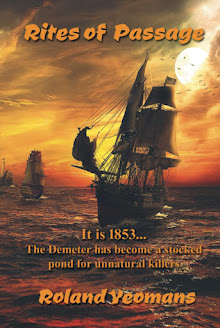
It is 1853. An undead Texas Ranger is on board a cursed ship in search of a murderer who is wearing the face of her last victim as a mask.
Listen to the LAST FAE
When the world is mad, there is little else to do but show them what true insanity is!
Can a man marry both the moon and the sun?
In the eclipse of myth, he can
What Defense is an innocent soul against the Powers of Darkness?
Let Hibbs, the cub with no clue, show you
Before Indiana Jones or Allan Quartermain
There was Sam McCord and his doomed love for Meilori Shinseen
Alice and Victor in 1834 New Orleans
Do a review and have a 1 in 13 chance to win a Johnny Depp autograph!
Buy_FRENCH QUARTER NOCTURNE
Hurricane Katrina has cast New Orleans into darkness. Predators, living and undead, close in on the helpless survivors. Can Samuel McCord and a vampire priest keep the French Quarter from being drowned in blood?
Buy_LET THE WIND BLOW THROUGH YOU
Enter the dangerous world of a Native American Noir thriller where forbidden love clashes with the politics of crime
You will never see the end coming
In his beginning is his end
My 1st SERIAL TRILOGY continues
There are none so lost as those who refuse to see
The 1st SERIAL TRILOGY!
In the dark, we are all orphans
In Memoriam - Maukie my cyber friend
RITES OF PASSAGE link
The earliest Samuel McCord adventure: Dare to board a fantasy Titanic as it sails into the Bermuda Triangle
VICTOR'S HERE!
BOOK 1: No one talks openly of the misty figures seen walking along New Orleans' iron-laced terraces, casting no shadow. Of the shapes seen rising from sewer grates. And no one willingly visits the crypt of Marie Laveau at midnight. Into this strange world arrives the street orphan, Victor Standish, from Charon's Greyhound. Charon has to keep up with the times ... the End Times. And the teen destined to be called the "Ulysses of the French Quarter" has come just in time for Hurricane Katrina, the End of All Things ... and the deadly love of the Victorian ghoul, Alice Wentworth.
VICTOR AND ALICE ARE BACK!
BOOK 2: Victor's a street kid. Alice is a Victorian ghoul Their love breaks the chain of reason. Their new adventures bring the French Quarter back from the brink of nightmare.
THE RIVAL
BOOK 3: Victor & Alice are in the French Quarter of 1834. Voodoo. Demigods. Revenants. And the hilarious Menage a Trois of Death! Oh, and someone we love dies at the end.
END OF DAYS is here!
St. Marrok's. The most eerie high school in which you will ever die. Its curriculum? The End of Days. Alice Wentworth plans to get an A+.
ADRIFT IN THE TIME STREAM link
SEQUEL to RITES OF PASSAGE: Come aboard the doomed DEMETER with undead Texas Ranger, Sam McCord, and sail with her into the depths of madness in ADRIFT IN THE TIME STREAM.
Buy_CREOLE KNIGHTS
SEQUEL to FRENCH QUARTER NOCTURNE: The dead rise. Elder Beings strain to enter our world through Katrina devastated New Orleans. And the Angel of Death is kidnapped to clear their way. Can Sam McCord stem the tide of madness in time?
Buy_THE LAST FAE
Once there was an age undreamed where legends walked this earth … and nightmares, too. Terrible were the battles, tragic the outcome of the wars. Until finally there were only two survivors : the nightmare and one bruised legend. These are the legend’s stories, each one a different facet of the same priceless gem – a jewel that has come to believe herself worthless. So come. Listen to her. Listen to THE LAST FAE.
GHOST OF A CHANCE
What if what you wrote became real?
BURNT OFFERINGS
When dreams are sacrificed, it is the soul that burns.
CHECK OUT THE FUN!
Explore if you dare
Buy_THE LAST SHAMAN
Journey with the last Lakota shaman, Wolf Howl. The white govenments call him Drew August. Those who hunt him call him Death. The last day of Man has dawned. Watch as Wolf Howl turns to meet his human hunters. Shadow, the love of his life, returns to aid his hunters. Then, Mankind's death descends. Can he save Shadow before the world's time runs out?
BRING ME THE HEAD OF McCORD!
Only 99 cents. C'mon. Take a chance.
GHOST WRITERS IN THE SKY
LEARN TO WRITE BETTER AND LAUGH ALONG THE WAY
LAST EXIT TO BABYLON
At the dawn of the End of All Things, the Last Fae finds there is no hope ... but love.
IT'S HERE TO BUY!!
The trilogy concludes. Not even the eclipse of myth is forever. But love is. And eclipses return. Listen. The voice of Blake, son of Man, is calling across the night skies.
Buy THE PATH BACK TO DAWN
Only in the eclipse of myth can a young man find himself with both the Moon and the Sun as his brides. Can he survive what follows?
Buy_LOVE LIKE DEATH
From the pages of THE LAST FAE springs this paranormal romance/thriller. Fallen, the last fae, discovers the name of the young teenager to whom she lost her heart : Blake Adamson.But she also discovers what happens when you believe your fears over your love : heartache and loss. And so Blake Adamson finds himself torn between two loves : one fae, the other an alien drinker of souls. Their love is deadly, but love, like death, will have its way.
THE BEAR WITH 2 SHAD0WS link
Based on the stories my Lakota mother told me as a child when I was deathly ill in a freezing Detroit basement apartment. Think a Native American LORD OF THE RINGS.
FROM THE GREAT BEYOND HOP!
You dare not miss it!!
ZOMBIE PREPAREDNESS!
LISTEN TO THE CDC
Thanks, Alex!
THE WORLDS OF ROLAND YEOMANS
Donna Hole astonishes with her insights on my linked worlds
FANTASTIC REVIEW OF THE LEGEND OF VICTOR STANDISH
Michael Di Gesu does a masterful review. I am honored by his friendship
LIFE LESSONS taught me by GYPSY
Dedicated to GYPSY
PAPYRUS PRODUCTIONS
Have Wendy make your book into a trailer that wows the reader!
HELP THE HURTING
100% of the profits for ALL my books this FEBRUARY are going to THE SALVATION ARMY. My Valentine's gift to the hurting.
Buy_BLOOD WILL TELL
One lone telepath finds himself a helpless spectator as the race of Man is subjugated into mindless drones by the very blood within their bodies.When the war is over, and he finds himself totally alone ... How can he go on and why?
CALL ME TOMBS
The last Lakota Heyoka faces voodoo and ultimate evil in the Carpathian Mountains of Transylvania with his Hellhound, Puppy
CATCH FIRE!
BLOG TOUR FOR ALEX J, CAVANAUGH'S NEWEST NOVEL
SIV'S BLOGFEST!
The Norse Gods Are Watching You!
NERDY IS THE NEW SEXY!
BECOME A JEDI KNIGHT FOR TEENS
THE SECRET OF SPRUCE KNOLL
Help save the endangered species of Earth by buying THE SECRET OF SPRUCE KNOLL!
AMAZON KEEPS SELLING OUT!
Written by the author who could very well turn out to be the new William Faulkner, Elliot Grace
FABULOSITY GALORE bookstore
Visit an online bookstore and help a blogging friend!!

 Posts
Posts


 Why is this such a big topic?