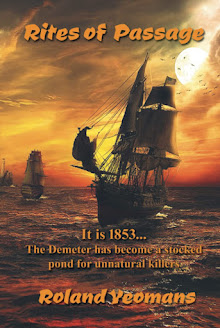
FREE KINDLE FOR PC

FREE KINDLE FOR PC
So you can read my books
Showing posts with label ERNEST HEMINGWAY. Show all posts

Monday, July 21, 2014

FINISHING


I am at the 60,000 word mark on
THE STARS BLEED AT MIDNIGHT ...


   And the silence is loud, the inertia of writing weighing down on me. 

After all this work, will anybody really WANT to read this novel?


I hear gruff words above me: 

"Tarnation, Son!  Let me tell you about two hellions who wrote ...

to each other ... and to the world at large."

It is the ghost of Mark Twain:

"Ernest Hemingway and F. Scott Fitzgerald

had a lot in common. They were both drunks ... let's not be PC about it, shall we?"

Mark wrinkled his moustache.

"They both had intense and complicated marriages. They were both deeply committed to their craft.

Most importantly, they were literary giants at a time when the Great American Novel was more than just a myth—it was a real possibility."

"I don't want to write the Great American Novel ...." I began.

Mark laughed, "Shoot for the moon, son.  Anyway, the two of them wrote to each other on how things were going for them."

The ghost of Hemingway sat down beside me, grumbling,

“Scott took LITERATURE so solemnly. He never understood that it was just writing as well as you can and finishing what you start.”

He lit up a cigar.  "You quit, kid, and I will kick your butt from here to Putin.  He loves you, don't you know?"

He shook his head. 

"I was a believer in self-discipline while Scott depended on his Muse ... and week long benders, scribbling frantically and pushing his lank blonde hair out of his eyes."

Hemingway snorted,

"Me?  I wrote like clock-work -- standing up at the typewriter, at the same time every day -- pushing through even the 'dry' days when the words came slowly."

He jabbed his cigar at me.  "In life, you are either a doer or a dreamer."

Hemingway gruffed, "You just have to go on when it is worst and most helpless—

there is only one thing to do with a novel and that is go straight on through to the end of the damn thing.”

Mark lit up his own cigar.  "Sometimes even Hemingway is right."


Wednesday, July 16, 2014

LISTEN TO THIS!


Only $10.46!


Some of you know that I am part-Lakota ...

     What you don't know is ...

          That the more I write, the more real my creations become until ...

                They take on a life of their own!


Join me in my LATEST AUDIOBOOK ...

     where I am accused of killing the ghost of Ernest Hemingway!


Can the ghosts of MARK TWAIN and MARLENE DIETRICH guide me safely through my own fictional worlds

to find the true murderer before MY OWN CHARACTERS KILL ME?

Listen to my audiobook GHOST OF A CHANCE and find out!

Mark Kamish  will entertain and amaze you with his skill.


Thursday, November 14, 2013

SEX AND DEATH

{Victor's Mother courtesy of Leonora Roy}

Ghost of Ernest Hemingway here

since Twain cheats at cards.

I lost to him at poker at Meilori's,

so I have to write a post

about the secrets to writing well.

Like with SEX and DEATH,

there are NO SECRETS.

Yet there are. 


In fact, SEX and DEATH are the backbone of most good novels, for all good stories are based in some way on those two elements in life.

So you want to know the SECRETS to writing a bestseller? All right, here they are:


THE SECRETS

Secret #1:
There aren't any secrets.

Secret #2:
There is only one secret:

The only secret to good writing is that it is poetry written into prose, and it is the hardest of all things to do.

But I will try to see if I can't share a bit of what I've learned. We are all apprentices in a craft where no one ever becomes a master.

And if you are reading this at night, it will mean something different than if you are reading this in the day. I know the night is not the same as the day:

that all things are different, that the things of the night cannot be explained in the day,

because they do not then exist, and the night can be a dreadful time for lonely people once their loneliness has started.

There are no secrets to good writing. But there is a compass:

No sentimentality allowed.

There is no sentimentality in prose that touches the heart.

Sounds like nonsense. It isn't.

Sentimentality, sympathy, and empathy are turned inwards, not restrained, but vibrant below and beyond the level of fact and fable.

If you would touch your reader, find what gave you a similar emotion :

what the action was that gave you the excitement. Then write it down making it clear so the reader will see it too and have the same feeling as you had.


No secrets. No sentimentality. 


Yet, there are rules:


THE RULES:

Rule #1
Writing is re-writing.

The first draft of anything is shit. Get the draft done, then sculpt away anything that is excess.

Rule #2
In fiction as in life: you can't go back.

The reason most sequels, films or books, fail is that the author tries to unscramble the egg. The hero has changed, has learned, has become something other.

Rule #3

Good books belong to the reader.

The reader will identify with your protagonist if you've been honest.

The tale then belongs to him : the good and the bad, the ecstasy and the remorse and the sorrow. He will have felt the air on his cheek, smelled the bread baking on the breeze, and how the weather was.

He will feel that it has happened to him.

Rule #4
Talent is not enough.

It doesn't matter if you have the talent of Kipling. You must also have the discipline of Flaubert if you would become a good writer. Dreamers dream pipe dreams. Writers write. Writers grow in their craft.

Rule #5
Know everything.

No bullshit. And if you would be a writer, you must develop a foolproof shit detector.

A good writer must know everything. Naturally, he will not. That is why you must read.

Mr. King was right when he said that if you do not have time to read, you have no business being a writer.

Read fiction. Read non-fiction. Read psychology texts. Read biographies, autobiographies. Become a student of life.

Good writing is true writing.

If a man is making up a story, it will be true in proportion to the amount of knowledge he has about life and how conscientious he is :

so that when he makes something up, it is as it would truly be.

Sit down and think about what I've written. Look over what you last wrote. Slash and burn what is excess.

Sermon over. Now, sit down and write something.
***


Wednesday, October 23, 2013

THE DAYS ARE PRECIOUS_A GHOSTLY DISCUSSION OF NaNo


Dorothy Parker, Mark Twain, F. Scott Fitzgerald, and Ernest Hemingway (their ghosts rather) and I were playing poker at my table at Meilori's.

Dorothy Parker took a sip of her whisky and smiled at me. 


"If you have any young friends who aspire to become writers, the second greatest favor you can do them is to present them with copies of The Elements of Style.

The first greatest, of course, is to shoot them now, while they’re happy.”

"Bah!" snapped Hemingway.  "The lemmings are throwing together words just as fast as they can to create hovels of novels."

Mark lit a cigar and grinned, "Well, I certainly believe in using the right word not its second cousin.  Hemingway, did you mean to rhyme?  Weren't you a poet, too, Dorothy?"

Dorothy bent down, grabbed a rubber doll whose throat was torn from ear to ear, and tossed it to her poodle -- who faithful even beyond death -- lingered beside her mistress.


"Ha! My verses. I cannot say poems. Like everybody was then, I was following in the exquisite footsteps of Miss Millay, unhappily in my own horrible sneakers.

 My verses are no damn good. Let’s face it, honey, my verse is terribly dated—as anything once fashionable is dreadful now. I gave it up, knowing it wasn’t getting any better, but nobody seemed to notice my magnificent gesture."

Fitz, as he liked me to call him, took a sip of his own champagne.  "Never confuse a single failure with a final defeat."

Hemingway gruffed, "We are all defeated in the end.  It is only the struggle that matters and why you struggle in the first place."

He glared at Ratatoskr who scampered from ghost to ghost, looking at their hands and whispering in my ear.  "He's telling you our cards, isn't he?"

I shook my head.  "He's merely teasing you and telling me terrible jokes."

"How terrible?" frowned Twain.

I sighed, "What did Jay-Z call his girlfriend before they got married? FeyoncĂ©."

Dorothy groaned, "Ouch!"

I said to her, "It’s a popular supposition that there was much more communication between writers in the twenties. The Round Table discussions in the Algonquin, for example."

"Gertrude Stein did us the most harm when she said, 'You’re all a lost generation.' That got around to certain people and we all said, 'Whee! We’re lost.'

 Perhaps it suddenly brought to us the sense of change. Or irresponsibility. But don’t forget that, though the people in the twenties seemed like flops, they weren’t. Fitzgerald, over there and the rest of them, reckless as they were, drinkers as they were, they worked damn hard and all the time."

I asked, "Did the “lost generation” attitude you speak of have a detrimental effect on your own work?"

"Silly of me to blame it on dates, but so it happened to be. Dammit, it was the twenties and we had to be smarty. I wanted to be cute. That’s the terrible thing. I should have had more sense."

Fitz sighed, "At eighteen, our convictions are hills from which we look.  At forty-five, they are caves in which we hide."

Mark Twain nodded, "Each day is like a coin.  We can spend it any way we like.  But we can only spend it once."

Hemingway lit his own cigar and puffed out the smoky words.  "The living think they have more days than they do.  They look out at a thousand lives.  At the end, they'll turn around and find only one --

and if they frittered away precious days investing in work that is inferior, that one life will be inferior."

Fitz looked into the shadows.  "All good writing is swimming underwater and holding your breath, knowing it will not last."

Ratatoskr looked up at me from the table top.  "What do you think of this NaNo nonsense, Roland."

I smiled sadly.  "Some of my friends are for it.  Some of them are against it."

Dorothy asked, "And you?"

"I'm for my friends."

Ratatoskr groaned.


Monday, October 14, 2013

A GHOSTLY VERDICT ON NaNoWriMo


BUT FIRST:
Consider buying for a mere 99 cents, pilgrim:

http://www.amazon.com/LUCIFERS-ORPHAN-JOURNEY-LOST-ebook/dp/B00FVGDTN8/ref=sr_1_1?ie=UTF8&qid=1381725811&sr=8-1&keywords=lucifer%27s+orphan%3A+journey+of+the+lost
Now at #77 in Amazon's Top 100!
Oh, all right, Hemingway!
Here!  Have at it!


{There is nothing to writing.

All you do is sit down at a typewriter and bleed.”

- Ernest Hemingway.}

Ghost of Papa here again.

VR Barkowski
http://vrbarkowski.wordpress.com/2013/10/14/uh-oh-nano/


wrote an intriguing post about this lemming event that happens every November.  Really popular among you novice writers

I caught Roland shaking his head over NaNo or NoMo or NoNoNanettes

or whatever you people call it as he read VR's post.

I told him that it was the Litmus Test to determine the Dreamers from the Determined.

Gentle people, writing is not a group hug affair.


It is lonely, hard, and demands discipline.

You build a hovel when you just slap boards together as fast and as many as possible.

Same for a novel. You take 25 words, distilling them into 15 or 10. You agonize over 400 true words a day not 4,000.

Raymond Carver had it right when he said good writing demands brevity and intensity. Those elements are distilled not vomited.

Be NoNoNanettes if you choose. Or BOO-hooers when you read a month later what you felt so thrilled about in the high of creation.

But if your goal is to be a good writer, you must eskew the month long frenzy of throwing words together to get a semblance of a novel.

You wail it is popular. Are you a lemming? 


You pout that it is only a month.

A month where you will be teaching yourself destructive writing habits.

A writer will have to sacrifice much to craft (notice my word) a novel. Let your sacrifices be for a novel that will take the reader's breath away.

Children, if you choose to write, write well. And how do you do that you pout. Here are the secrets:

THE SECRETS

Secret #1:
There aren't any secrets.

Secret #2:
There is only one secret :

The only secret to good writing is that it is poetry written into prose, and it is the hardest of all things to do.

But I will try to see if I can't share a bit of what I've learned. We are all apprentices in a craft where no one ever becomes a master.

And if you are reading this at night, it will mean something different than if you are reading this in the day. I know the night is not the same as the day:

that all things are different, that the things of the night cannot be explained in the day,

because they do not then exist, and the night can be a dreadful time for lonely people once their loneliness has started.

There are no secrets to good writing. But there is a compass:


No sentimentality allowed.


There is no sentimentality in prose that touches the heart.

Sounds like nonsense. It isn't.

Sentimentality, sympathy, and empathy are turned inwards, not restrained, but vibrant below and beyond the level of fact and fable.

If you would touch your reader, find what gave you a similar emotion:

what the action was that gave you the excitement. Then write it down making it clear so the reader will see it too and have the same feeling as you had.


No secrets. No sentimentality. Yet, there are rules:

Rule #1
Writing is re-writing.

The first draft of anything is shit. Get the draft done, then sculpt away anything that is excess.

Rule #2
In fiction as in life: you can't go back.

The reason most sequels, films or books, fail is that the author tries to unscramble the egg. The hero has changed, has learned, has become something other.

Rule #3

Good books belong to the reader.

The reader will identify with your protagonist if you've been honest.

The tale then belongs to him:
the good and the bad, the ecstasy and the remorse and the sorrow. He will have felt the air on his cheek, smelled the bread baking on the breeze, and how the weather was.

He will feel that it has happened to him.

Rule #4
Talent is not enough.

It doesn't matter if you have the talent of Kipling.
You must also have the discipline of Flaubert if you would become a good writer. Dreamers dream pipe dreams. Writers write. Writers grow in their craft.

Rule #5
Know everything.

No bullshit. And if you would be a writer, you must develop a foolproof shit detector.

A good writer must know everything. Naturally, he will not. That is why you must read.

Mr. King was right when he said that if you do not have time to read, you have no business being a writer.


Read fiction. Read non-fiction. Read psychology texts. Read biographies, autobiographies. Become a student of life.

Good writing is true writing.


If a man is making up a story, it will be true in proportion to the amount of knowledge he has about life and how conscientious he is:

so that when he makes something up, it is as it would truly be.

Sit down and think about what I've written. Look over what you last wrote. Slash and burn what is excess.

Sermon over. Now, sit down and write something.
*************
I like Jesse Cook. Don't cock those eyes at me. An old ghost can like new music.

Jesse would have developed a real following in pre-Castro Cuba.

Roland even used this tune in his END OF DAYS in the chapter
THERE IS NO FAIL, where a chopper fights a swarm of attacking dragons of all things!

Wednesday, October 3, 2012

THE SCRATCH OF THE CLAW_INSECURE WRITERS' SUPPORT


*

How do you write?

Do you write as if your novel were a pressurized airplane cabin?

Are your characters insulated from the truth of their environment?

Is your locale as flat as a cardboard movie backdrop?

Are there smells to your surroundings? Does the soft breeze make an airy stew of their aromas?

Or do you drag your poor reader down sterile, silent streets?

What are the prevailing winds of mindset, manners, and economic demands of your setting?

Does your main character sail against them? Or does he/she flounder in their wake?

Or does he, puppet-like, go through lifeless motions, tugged by your whims and not by motivations relate-able to your readers?

And what about you as a writer?

Do you persist? Or do you stall out when the words become lost in the mist.

Persistence. It is what separates those just playing from those dedicated to the dream.

When the writing is sluggish that is when it is most important to bull through to the end. Writing is like life in that.

Winners don't stop when they meet resistance. Weight resistance builds muscle. Blank-out resistance builds fine prose.

Persistence is the heart. The story is the soul.

For luck, Ernest Hemingway used to carry a rabbit's foot in his right pocket. The fur had long since been worn off. The bones and sinews were polished by wear.

The claws scratched in the lining of his pocket,

and by that sting he knew his luck was still there.

Why was that?

When you feel the scratch of life against you, you know that your luck as a writer is still at your back. How is that?

The sting of life makes you aware :

of your own humanity,

of others' failings and strengths,

of the precious fragility of life.

And that awareness gives your pen the gift of perception, depth, and heart.

What did Ernest put in his journal?

"Travel and writing broaden your ass, if not your mind, so I try to write standing up."

***
{Col. Charles T. Lanham and Ernest Hemingway in Germany 1944.
This image is a work of a U.S. Army soldier or employee, taken or made during the course of the person's official duties. As a work of the U.S. federal government, the image is in the public domain.}
***

Thursday, September 13, 2012

BE MORE THAN A WRITER_GHOST OF ROGER ZELAZNY

Be sure and enter Roland's TRICK OR TREAT GHOST OF A CHANCE CONTEST, will you?

Lovecraft has been whispering something about visiting you in your dreams.

Ah, we ghosts do care for Roland. But more of that later.

Did not Leonora Roy do a marvelous image for him?

The ghost of Hemingway is presently keeping him company on one of Roland's blood runs.

Hemingway is reminded of his own days driving an ambulance in WWI when he accompanies Roland.

So it is left up to me to talk to you mortal writers.

Most of you are scoffing that the ghost of Roger Zelazny is currently typing his thoughts to you. Impossible you say.

You, and the rest of mankind, are quite sure what is possible and what is impossible.

In the daylight.

When the night descends, the stride of your thoughts is not quite so confident.

Not so Roland.

He is much like an animal. I do not mean that as an insult.

He takes what comes at face value, not forcing it to fit into any preconceived notions Man teaches as Science.

He deals with what comes without protesting that it cannot be, only seeing what is and adapting.

Perhaps that is why we ghosts are drawn to him. In him is that quality that Stubbs expressed in MOBY DICK :

“I know not what all may be coming, but be it what it will, I’ll go to it laughing.”

Not that he is overly optimistic about the world around him. For being part Lakota Sioux, he still reads the Bible by his bedside. He often quotes :

“They sleep not, except that they have done mischief;
And their sleep is taken away unless they cause
Some to fall.

For they eat the bread of wickedness
And drink the wine of violence.”

That is Proverbs 4:16-17 for those of you interested in such things.
In life I was not.

I thought the love of God was like the light burning from the stars :

cold and distant.

Now, that I am a ghost …

but no.

There are some secrets the dead may not share with the living.

But the secrets on how to write well … they I can share with you.

Oh, you are wondering who I am.

Don’t be embarrassed. In life I wondered the same thing.

As I wrote earlier: I am Roger Zelazny.

I made somewhat of a splash in Science Fiction in the sixties, endured and evolved in the seventies and eighties. I went the way of all flesh mid-way through the nineties in Santa Fe, New Mexico.

And Roland mourned me as a distant older brother gone over the crest of the hill before him, leaving him cold and alone.

Oh, and I inspired him to take up the pen and follow my steps into weaving tales in the genre I call Science Fantasy.

That I sparked the idea in him to be a writer drew me to him.

It was his gentle, quiet, amused nature that has made me stay. He looks on all the awkwardness of life with a sly smile that says, “You expected water to run uphill?”

But now I have an important question for you reading:

What makes one tale live, vibrant and riveting, and another merely flat, lifeless words on paper?

Not that any of us have a sure idea, although Hemingway would glare at me for writing that. But we had a close enough glimpse of the answer to make a living at what we loved to do:

Write.

What is the answer?

A joyous cry: “Come see what I found!”

If you can bring anew the childlike sense of wonder and awe to your readers that the poisons of living have drained from them, you will have a loyal following that will not quit.

What words will do that?

Certainly not the same sing-song repeat and rinse of someone else’s bestseller.
The words must tilt the reader’s expectations on its ear. Did you notice I said reader?

Not readers.

You are talking to only one at the campfire of their imagination and curiosity. If you think of your audience as readers, you will talk AT them not TO them.

The author/reader relationship is intimate : friend to friend. “Look at this, man!”

One friend sharing with another something fantastic and wondrous :

The meaning of life in the skating sparks of the sun along the uneven facets of a piece of rock candy …

or striking fire down the razored spirals of a unicorn’s tusk.

If you are drawn to write, you do not need to be told the basics. You already have absorbed them from the masters :

Stirring plots, memorable characters, and absorbing ideas.

You must tap the humanity of the situations, of the people struggling against the tide of events.

Remember this is the Microwave Culture.

Your prose must be lean and spare, yet sing with the poetry of mystery and suspense. How do you do that?

Mind your surroundings.

Nothing is ever wasted to a real writer. Circumstances suggest. Events coalesce. The story will begin to flow like a shadow along the floor of your unconscious.

Once you have seen their shapes, the stories will exist as ghosts for you until you have pinned them to the paper. Perhaps that is why there are so many ghosts of writers in the Shadowlands.

We made our living from ghosts, so reciprocity demands its due.

Sometimes you will have to post a Help Wanted Ad in your unconscious to apply for positions in the story and events that have called out to you.

Do not worry. Within the hour, your unconscious mind will have them lining up for you to consider.

Read your work aloud.

Hear the clumsy prose misstep that jars your ears? A sentence is too long? Make them two. A word unneeded? Remove it. Sand your prose as a sculptor would his carving.

Give your characters life by giving them a new take on what it means to be human, to be fully alive. Most people you pass on the streets are sleepwalking from long years of debt and unfulfilled passion.

Give them hope that there is more out there, that each corner could reveal the start of an adventure that might shorten their lives but awaken their souls.

Do that and you will become more than a writer. You will become an author.

Want to read more on how to be an author? Buy GHOST WRITERS IN THE SKY:

http://www.amazon.com/GHOST-WRITERS-THE-SKY-ebook/dp/B006Z1MAP6

I have several chapters in it as does the ghost of Hemingway, Twain, Faulkner, even Bruce Lee and Groucho Marx!

***


Sunday, August 26, 2012

RULES TO WRITING_RAYMOND CHANDLER, GHOST, HERE

*
{"If two people love each other there can be no happy end to it."
— Ernest Hemingway.}

Raymond Chandler, ghost, here.


I'm substituting for Roland who is laid out with that migraine still. To hurt like that and still have to work a weekend he was supposed to be off.

Hemingway and I are going to pay his supervisor a visit later on tonight. We'll be bringing the ghost of Lovecraft with us. We'll explain some things to him.

Speaking of Hemingway, I don't know if I totally agree with those words of his I quoted earlier.

But they occur to me as I think of the star-crossed love of Alice Wentworth, the Victorian ghoul, and Victor Standish.

The pair remind me of a young Alan Ladd and Veronica Lake in my BLUE DAHLIA.

You, who visit Roland's blog, think Victor's and Alice's love affair is fiction. Alas, it is not. Fiction, unlike truth, must be logical.

And as Alice Wentworth keeps saying : Their love breaks the chain of reason.

Reason you say? Yes, and good fiction must obey the RULES.

Let me tell you the SECRET RULES TO WRITING FICTION :

Rules. Most struggling writers think there are mysterious magic rules out there that if followed will insure success.

There aren't. But I'll give them to you, anyway.

Rule #1 :
The most durable thing in writing is style. I had mine. Hemingway had his. We're both imitated.

Be inspired by your favorite authors but leave them be. Keep the original. Lose the copy. Be yourself. But a self that grows each day.

Rule #2 :
Unlike the age of Jane Austin, this age is not remote. It is as intimate as a lonely heart and as intense as the bill collector over your phone.

Do not cliche your words. Brutality is not strength. Flipness is not wit. Do not mistake cool for character, attitude for competence.

It is not funny that a man is killed. But it is sometimes funny that he should be killed for so little, and that his death should be the coin of what we call civilization.

Rule #3 :
It's the journey, the struggles of the hero that grab the reader and keep him turning the pages. Make the hero sweat. But let him get the girl. Even Victor will get -- no, I won't go there. I can't.

Rule #4 :
Pull your nose from the computer keyboard and live life -- don't just write about it. Tasting each drink, feeling each breeze, touching the soft skin of the woman who loves you and only you.

God, I hope Victor does that with Alice ...

if only for a moment.

Sorry, you don't need to read an old ghost's keening.

Rule #5 :
Remember that human nature has learned nothing over the centuries, yet has forgotten nothing either. Men do things for reasons.

Your characters, if they are to be believed, must do so, too. You cannot shove them into actions that your prior words would not imply they would take.

Yet human nature is fickle : a man who is steel in the fires of adversity will melt at the glance of a pair of ice blue eyes. Eyes like Alice has ....

Sorry ... that ... that is all I have the heart for.

I will sit out on Roland's terrace now and look out as the night fog slips away from the bordering bayou.

The rains are over. The fields are still green.

And with my ghost eyes I will look out over the vastness of America to the Hollywood Hills and see snow on the high mountains.

The fur stores will be advertising their annual sales. The call houses that specialize in sixteen year-old virgins will be doing a land-office business. In Beverly Hills the jacaranda trees will be beginning to bloom.

And none of that will matter ... for I know how it must end for Victor and Alice.

The French have a saying that to say good-bye is to die a little. They are right. I am a ghost, and I thought I was past feeling dead inside. I was wrong.

I think I will always see Victor walking down lonely streets, leaning against the grimy bricks of shadowy dead-end alleys, saddened but never quite defeated.

Down those mean streets Victor went who was not himself mean, who was neither tarnished nor afraid ... only mortal -- who loved too well ... and not at all wisely.
***
Why not LIKE the kid's AMAZON author page? You wouldn't want a visit from Lovecraft's ghost would you? www.amazon.com/author/rolandyeomans
*
This is a standard publicity photo taken to promote a film role. As stated by film production expert Eve Light Honathaner in The Complete Film Production Handbook, (Focal Press, 2001 p. 211.):

"Publicity photos (star headshots) have traditionally not been copyrighted. Since they are disseminated to the public, they are generally considered public domain, and therefore clearance by the studio that produced them is not necessary."

Nancy Wolff, includes a similar explanation:

"There is a vast body of photographs, including but not limited to publicity stills, that have no notice as to who may have created them." (The Professional Photographer's Legal Handbook By Nancy E. Wolff, Allworth Communications, 2007, p. 55.)--Wikiwatcher1 (talk) 09:35, 15 December 2009 (UTC)
****


Sunday, August 12, 2012

GUERILLA MARKETING YOUR EBOOK!

Want to know why Ernest Hemingway is still talked about as a writer when so many of his contemporaries are forgotten?

He started out his adult life on the battlefield.

Life is a battle. Victory is not to the swift, to the valiant, or the brave. (Though that is often the way to bet.)

It is to the one who fights smart.

Siv Maria voiced what many of us feel:

"I think I was born too late or too early. In the world we live in today there just is nothing new anymore."

Ernest Hemingway felt the same way when he was struggling to find the title to his new novel. He returned to the giants of the past. Out of the verses of John Donne, he picked ...

FOR WHOM THE BELL TOLLS.

We can prevail if we do not give up. If we assail a knot until we loosen it, we will succeed.

The Turkish author, Selim Yeniceri, wrote me:

"A great work of art comes through talent which you bring from birth,

but to make it successful in worldly terms, you have to be a strategist, because business world is really like a battleground."

We have to implement GUERILLA MARKEKTING TACTICS!

1.) KNOW WHAT WEAPONS SCORE HITS.

Shooting a Sherman tank with a handgun is pointless.

Myths will get you killed on the battlefield:

SOCIAL MEDIA WILL GARNER SALES.

Like much of life that myth is both true and not. Take Amanda Hocking.

She is thought to have translated a Facebook and Twitter following into huge sales.

Right before her books took off, she had about 500 to 1,000 visitors to her social media properties.

The math makes it simple.

How can 1,000 people drive 2 million in sales? Not possible.

IT WAS THE UNIQUENESS OF THAT APPROACH WHICH GARNERED WORD OF MOUTH.

Now, everybody shouts BUY ME! from Twitter and Facebook, but no one is listening.

2.) MAKE EACH BLOW COUNT.

Engaging in forums, blogs, twitter, and Facebook will get you sales. But you have to invest enormous time to garner a trickle of sales.

Invest that time in what will get the most out of your efforts.

3.) SEO

No, not SOL (Merde Out of Luck) but it could be unless you choose the right 7 keywords for your book.

S(earch) E(ngine) O(ptimization)

Amazon searchers are humans not robots so think like a human.

A.) Use Google Search to find what pops up most when you type in a possible word you are considering for your seven Amazon words:

Say, put down Urban Fantasy ...

A list will pop down. Look at it. Think what will pop up in Amazon if you use your chosen word.

B.) Use Google Adwords Keyword Tool. This will give you not only possibilities but percentages of people using the word!

C.) Ebay's Hot Trends ... see what items are hot that are related to your book.

D.) AMAZON'S MOVERS AND SHAKERS

Look those books up. Check to see what keywords that you are considering that you can find in their product description. Check to see what keywords you could utilize from their descriptions in your own.

E.) AMAZON'S SEARCH BOX.

Write ... say horror or dark fantasy and see what list pops down from the search box. You will see possible great words you can use in your own seven key words.

F.) TODAY'S TOP SEARCHES ON GOOGLE.

You may find inspiration for one of your seven key words there. Don't waste any avenue of help here!

4.) I AM NOT GETTING A COMMISSION FROM THIS RECOMMENDATION.

Spend $4.99 and get MAKE A KILLING ON KINDLE.

http://www.amazon.com/Blogging-Facebook-Guerilla-Marketers-ebook/dp/B007XVWEIU

Michael Alvear will make you laugh, argue with him, and give you many sell-making hints for your book.

The laughs alone were worth the five dollars to me. They came on very black days. I needed them.

Will you make a killing on Amazon? Hey, my sales are still in the basement! But he gave me smart weapons to use. What more can we ask?

(What is said about websites is also true about your book on Amazon's Search Engine as well in this following video)

Thursday, August 9, 2012

AN OPEN LETTER TO WRITERS FROM HEMINGWAY

*
Ghost of Ernest Hemingway here.

I and some friends at Meilori's

were talking about Ms. Fite's complaint about no support from those who had dangled its promise to her.

Now, all of you here already know how underwhelmed I am by these monthly word races:

the rush for word count blunts your ability to produce words that count.

Charlie’s (Scribner’s) ridiculing of my daily word count was because he did not understand me or writing well

nor could he know how happy one felt to have put down properly 422 words as you wanted them to be.

And days of 1200 or 2700 were something that made you happier than you could believe. Since I found that 400 to 600 well done was a pace I could hold much better, I was always happy with that number. But if I only had 320 I felt good.

Candy, my dear, listen to an old ghost:

Writing is something that you can never do as well as it can be done. It is a perpetual challenge and it is more difficult than anything else that I have ever done.

There’s no rule on how to write. Sometimes it comes easily and perfectly. Sometimes it is like drilling rock and then blasting it out with charges.

I think you should learn about writing from everybody who has ever written that has anything to teach you.

You must set a regular routine. Believe it or not, Candy, I had one:

Ordinarily I never read anything before I wrote in the morning to try and bite on the old nail with no help, no influence and no one giving me a wonderful example or sitting looking over my shoulder.

So, you see, those who refrain from giving you support or chiding you for lack of production are actually doing you a very real favor.

Zelda Fitzgerald has urged me to do what your computer friends seem reluctant to do. So as a gentleman ghost, I will give you a few hints on how to write each day:

1.) You have to look at your words as if seeing them for the first time.

What is on the page is all your readers are going to see :

not what you meant to say, not the images that were in your mind while you wrote them ... just your words.

What emotions do your WRITTEN words leave you with? Yes, I ended that sentence that way on purpose. See how I did that? Don't do it.

2.) If you want to succeed, you must have talent like Coleridge had.

More important, you must have the discipline of Michaelangelo. Coleridge wasted his talent in drugs.

Leonardo wasted his talent in doing party favors for princes.

As my friend, Samuel Clemens, once wrote:

Each day is a coin. You can spend it any way you want. But you can only spend it once. Make each day count.

3.) Leave out the non-essentials.

You know what I mean. Pick up a book in the store at random. Slip into the middle and start to read. What do you see?

Enormous, bloated eye-boring paragraphs. Plaster paris descriptions of places I have no wish to be. Slides of cousin Merle's trip to Idaho. (If you have seen one pair of potato eyes, you've seen them all.)

Blah-blah-blah.

The dialogue should be short, funny, something to bring up your eyes from the page and make you reflect on something that hit you like the memory of your first mistake in public.

There should be danger, love, or laughter ... on every page. Because it may be the only page the considering buyer will ever read.

4.) The most important gift for a good writer is a built-in, shockproof, shit detector.

Sitting at Meilori's the other night, I read a few entries in a computer-journal first paragraph contest of all things

There was this one where a woman lay in a pit of dead bodies, looking up at a ton of rock and more human corpses about to drop on her. Did she curse and get the hell out of the way?

No, she lay there like Hamlet contemplating the state of the world where such a thing could happen.

Excuse me, lady?

I understand depressed. After all I did commit suicide. But if tons of rock and rotting bodies are about to crush me, I scramble the hell out of the way.

5.) Your scenes must read true ... fake we can have by listening to the State of the Union address.

You living read to live outside of yourselves ... in adventures where life makes sense, where you find fun, acceptance, and love.

Life is only life ...

when it is real ... or seems real.

When characters are flat, prose puppets, made to do what you want them to do, not what real flesh-and-blood humans would do or say ...

the story seems flat like coke left out on the table a day, no fizz, no sparkle ... no readers.

6.) Good writing is true writing:

If a writer is making up a story, it will be true in proportion to the amount of knowledge of life he has and how disciplined he is. So that when he makes something up, it is as it would truly be.

The more a writer learns of life, the better he or she will be able to imagine what a set of circumstances would feel or seem. Do it well enough, and the readers will get a feeling as if what they are reading actually happened.

7.) I learned never to empty the well of my writing.

I learned to always stop when there was still something there in the deep part of the well, and let it refill at night from the springs that fed it.

Last Bit of Wisdom:

Writers should work alone.

They should see each other only after their work is done,

and not too often then.

Write for yourself. As you type your manuscript, write for a person you know, living or dead, to make that person smile or be caught up in the wonder.

There!

What are you doing still staring at the screen? Put the seat of your pants in the seat of your chair and WRITE!

* {This photgraphic image is from the Ernest Hemingway Photograph Collection at the John F. Kennedy Presidential Library and Museum (JFK Library).

This image was originally created and/or owned by Ernest Hemingway and/or his wife Mary Hemingway.

After Ernest Hemingway's death, his widow Mary donated many of his papers, photographs and other items to the JFK Library,

and transferred the copyright for images she owned to the JFK Library.

The JFK Library is part of the National Archives, an agency of the United States Federal Government, and has released the photos into the public domain.

This photo is marked "Public Domain" on its web page at the JFK Library.}

Monday, July 30, 2012

WINNING BY LOSING

{Hemingway with Col. Charles (Buck) T. Lanham in Germany, 1944,

during the fighting in HĂĽrtgenwald, after which he became ill with pneumonia.}*

Winning by losing. But lose what? Now that depends upon what you want to win.

"If you wish to travel far, take off your envies, jealousies, unforgiveness, selfishness, and fears."
- Glenn Clark {THE THOUGHT FARTHEST OUT}

I would add but keep your sense of humor. What did Mark Twain write?

"Josh Billings defined the difference between humor and wit as that between the lightning bug and the lightning.

Which brings to mind the man who receives a telegram telling him that his mother-in-law is dead and asking, 'Shall we embalm, bury, or cremate her?'

He wired back, 'If these fail, try dissection.'"

Win by losing. Win a better novel. By losing ...

1) Long sentences :

Hemingway hated long sentences. He said you tended to get lost amidst the tangle of adverbs. Say more by writing less.

2) Long paragraphs :

Hemingway was once mocked by a critic and challenged to tell a winning story in one paragraph. He wrote an entire story in only six words :

For sale : Baby shoes, never used.

3) Tired words.

Use vigorous words. Words that imply action, fear, pain. Words that involve your reader.

He pushed a boulder up the hill. {The ghost of Hemingway just winced.}

He sweated the boulder to the top of the hill. {Hemingway's ghost nodded but still frowned at me. Better but no cigar. Hey, I couldn't smoke a ghost's cigar anyway.}

4) Lose the negative :

Hemingway, not the most uplifting of souls, was still the best at this. How? He wrote what something was -- not what something wasn't.

Direct the reader's mind where you want. Using painless still focuses the mind on the concept 'pain.'

Instead of 'inexpensive' use 'economical.'

This software is error free. Ouch. This software is stable. Better.

5) Lose the shit :

“I write one page of masterpiece to ninety-one pages of shit,” Hemingway confided to F. Scott Fitzgerald in 1934.

“I try to put the shit in the wastebasket.”

6) Lose the frills :

William Somerset Maugham said his early writing was filled with self-consciousness and frills. He started writing well when he admitted his bad writing and cast aside the goal of fine writing.

"I decided to write bare. I had so much to say I could afford to waste no word. I set the impossible goal of using no adjectives at all. I used what I saw. My observing eye saw detail where others saw only vagueness.

I aim at lucidity, simplicity, and euphony. I state them in the order of their importance."

7) Lose the copy. Keep the original :

Raymond Chandler (The Big Sleep) wrote --

"The most durable thing in writing is style,and style is the most valuable investment a writer can make with his time. Your own style, not that of your writing inspiration"

This example of Raymond Chandler's hardboiled prose style has been drawn from the opening chapter of his 1939 novel, The Big Sleep:

It was about eleven o'clock in the morning, mid October, with the sun not shining and a look of hard wet rain in the clearness of the foothills. I was neat, clean, shaved, and sober, and I didn't care who knew it. I was everything the well-dressed private detective ought to be. I was calling on four million dollars.

The main hallway of the Sternwood Place was two stories high.

Over the entrance doors, which would have let in a troop of Indian elephants, there was a broad stained-glass panel showing a knight in dark armor rescuing a lady who was tied to a tree and didn't have any clothes on but some very long and convenient hair.

The knight had pushed the vizor of his helmet back to be sociable, and he was fiddling on the ropes that tied the lady to the tree and not getting anywhere. I stood there and thought that if I lived in the house, I would sooner or later have to climb up there and help him.


Compare and contrast Chandler's style with that of Ernest Hemingway in the excerpt from his story "In Another Country."

In the fall the war was always there, but we did not go to it any more. It was cold in the fall in Milan and the dark came very early. Then the electric lights came on, and it was pleasant along the streets looking in the windows.

There was much game hanging outside the shops, and the snow powdered in the fur of the foxes and the wind blew their tails. The deer hung stiff and heavy and empty, and small birds blew in the wind and the wind turned their feathers. It was a cold fall and the wind came down from the mountains.
***
Two styles. Neither one of them yours or mine. We must lose the copying of them and keep true to the voice within our own muse.
****
*{This image is a work of a U.S. Army soldier or employee, taken or made during the course of the person's official duties. As a work of the U.S. federal government, the image is in the public domain.}

***

Saturday, July 14, 2012

NO GRAVES IN THE SHADOWLANDS_Ghost of Raymond Chandler here

A long time ago in a blogverse far away ...

I wrote a blog serial, GHOST OF A CHANCE,

Its first chapter:
http://rolandyeomans.blogspot.com/2010/07/chapter-one-living-in-crosshairs.html


where I found myself on the run in my own prose universe. Each post depicted a page from the seared journal that the ghost of Mark Twain found, the only clue to my ultimate fate.

Here is a post from GHOST OF A CHANCE written by the ghost of Raymond Chandler with a few tips for writers of any age:


{"If two people love each other there can be no happy end to it."
— Ernest Hemingway.}

Chandler here. Raymond Chandler. Or rather his ghost.

I started with that quote from Hemingway because it was too damned appropriate not to.

Some of you are dropping in, expecting to read something from Roland. He’s been on the run in the Shadowlands, falsely accused of the murder of Hemingway’s ghost.

The same ghost who has been laughing up his sleeve here in Roland’s apartment, pontificating on how to write good literature. Apparently, he forgot how to live a good life or be a good friend.

No, he was too jealous of how the ghost of Marlene Dietrich felt about Roland.

He’s been rubbing his hands in pure joy as the ghosts closed in for revenge and others in the darkness bayed at the kid’s heels, seeking to tear the secret of how to kill ghosts from him.

Now, where is Hemingway? On his way to Hell if there's any justice. But there isn't.

Word in the Shadowlands is that he is just walking aimlessly into the darkness, his eyes deep holes into nothingness.

I only have the cold comfort that I knocked him on his arrogant ghost-butt. How did a Hollywood hack like me do that? Easy. I cheated.

I surprised him. I walked into Roland's apartment looking clean, neat, and sober, smiling my best "ain't we chums?" smile. Then, I let him have it with the blackjack in my fist.

He went down hard. Not hard enough.

"Good news, boxer," I grunted. "Word in the Shadowlands is that Roland's dead. Died in the arms of Marlene."

His eyes fought to focus. "Is she --"

"Yeah, hero. She's dead, too. Killed by the one who poisoned you. I hope you're --"

I didn't get the chance to finish. The most godawful yowling came from the head of Roland's bed. Then, I saw her -

Gypsy, his ghost cat, all covered in sand. I could have sworn she hadn't been there when I first came in.

Her head was reared back, her eyes full of tears. Hell, his cat was crying. Crying.

And Gypsy howled like her guts were being cut out of her. I can hear it still. It seemed to go on forever.

I pray to God I never hear such a sound again. She stopped abruptly and looked at me with eyes gone sick and insane.

Then she just slowly faded away into the darkness like an old photograph left out too long in the sun. I shivered. And I knew. I knew.

I would never see his cat again.

I turned to Hemingway as he struggled to his feet, and I managed to get out the words. "Roland trusted you."

My grief and anger were battling so inside my heart, it felt as if I was standing outside myself. "You hid in his apartment, knowing he was being blamed for your murder, knowing he was being hunted by things that would make a pit bull puke."

I realized I was literally shaking with my anger. "You could have stopped this. You should have."

He turned hollow eyes to me. "Right on both counts."

And with that he walked out through Roland's door. And I knew something else. I would never see him again either.

So here I am, sitting in the dark at Roland's laptop. What do I write that would express just what the kid meant to me? It's all too fresh. I - I can't.

There are no graves in the Shadowlands. No place where I can lay one black rose. To die there is to disappear utterly both body and spirit. But I have to do something. Something.

What I will do is reach out to you, his friends. He wrote to you, trying as best he could to help you write better.

So that is what I'll do. Just a short post. I don't have a long one in me.

Besides, I'm not sure how delicate this thing is -- if tears on the keyboard will short something out or not.

All right. I'm a big boy. I can do this.

Where to start?

Rules. Most struggling writers think there are mysterious magic rules out there that if followed will insure success.

There aren't. But I'll give them to you, anyway.

Rule #1 :
The most durable thing in writing is style. I had mine. Hemingway had his. We're both imitated.

Be inspired by your favorite authors but leave them be. Keep the original. Lose the copy. Be yourself. But a self that grows each day.

Rule #2 :
Unlike the age of Jane Austin, this age is not remote. It is as intimate as a lonely heart and as intense as the bill collector over your phone.

Do not cliche your words. Brutality is not strength. Flipness is not wit. Do not mistake cool for character, attitude for competence.

It is not funny that a man is killed. But it is sometimes funny that he should be killed for so little, and that his death should be the coin of what we call civilization.

Rule #3 :
It's the journey, the struggles of the hero that grab the reader and keep him turning the pages. Make the hero sweat. But let him get the girl. Even Roland -- no, I won't go there. I can't.

Rule #4 :
Pull your nose from the computer keyboard and live life -- don't just write about it. Tasting each drink, feeling each breeze, touching the soft skin of the woman who loves you and only you.

God, I hope Roland did that with Marlene ...

if only for a moment.

Sorry, you don't need to read an old ghost's keening.

Rule #5 :
Remember that human nature has learned nothing over the centuries, yet has forgotten nothing either. Men do things for reasons.

Your characters, if they are to be believed, must do so, too. You cannot shove them into actions that your prior words would not imply they would take.

Yet human nature is fickle : a man who is steel in the fires of adversity will melt at the glance of a pair of ice blue eyes. Eyes like Marlene had ....

Sorry ... that ... that is all I have the heart for.

I will sit out on Roland's terrace now and look out as the night fog slips away from the bordering bayou.

The rains are over. The fields are green.

And with my ghost eyes I will look out over the vastness of America to the Hollywood Hills and see snow on the high mountains.

The fur stores will be advertising their annual sales. The call houses that specialize in sixteen year-old virgins will be doing a land-office business. In Beverly Hills the jacaranda trees will be beginning to bloom.

And none of that will matter ... for my friend is dead.

The French have a saying that to say good-bye is to die a little. They are right. I am a ghost, and I thought I was past feeling dead inside. I was wrong.

I think I will always see him driving down lonely roads, sitting in lonely rooms, saddened but never quite defeated.

Down those mean streets he went who was not himself mean, who was neither tarnished nor afraid ... only mortal.

I will miss you, my friend.
****
He liked this prayer, so I will end with it: