Monday, I noticed a tattooed man talking animatedly in the
parking lot of the Eye Clinic to which I was going to get my new glasses.
He was walking in circles, talking into a cell phone – his left
arm waving wildly like a rabid windmill.
As I got out of my car, I heard him wail to the phone:
“Baby!You gotta believe me.I wasn’t
drunk. I wasn’t!I promised you I wouldn’t drink, and I haven’t.If I sounded funny to you it was ‘cause I was
on dope!”
He went silent, listening to the phone.And I almost walked back to him to ask what his “Baby” was saying in reply.
But I wasn’t suicidal that day so I walked into the Eye
Clinic.Yet, I wondered how did he think
what he said made things any better?
Yesterday, I read a Wall Street Journal article about Putin
seeking a “Double-Tier” solution to his woes about the shot down airliner:
to
apologize yet still be right.
I could feel a nose-bleed coming on so I stopped reading.
I remember reading what Winston Churchill wrote after
completing his volume on his early life {1874 to 1904} in 1920.
“I have drawn a picture of a vanished age.
The character of society, the foundations of
politics, the outlook of youth, the scales of values are all changed –
And changed to such an extent I should not have believed
possible in so short a time without any violent domestic revolution.”
I reflected on how much further his world changed after 1920
until the time in 1953 when he won the Nobel Prize in Literature.
Yes, LITERATURE not peace.Politics was a dirty world in those days as
well.The “Lion in Winter” was a rival
to be diminished in British politics back then.
Edward R. Murrow, the journalist who braced and shamed
McCarthy, said of Churchill in 1940:
“He mobilized the English language and sent it into battle.”
I wonder:
Do words carry any weight anymore?
Like Gore Vidal wrote: Has this age gone from the Guttenberg era to
the Dark Ages of MTV?
Are we destined to devolve not evolve in our society?
How much has society changed around you since you were a
teenager?
Was the world simpler only because you, yourself, was
simpler?
Or have we edited our memories, as Churchill did who was
emotionally abandoned by both parents
yet enshrined them in his memoirs?
Oh, by the way –
Congrats to Justin Bieber for FINALLY getting an advantage
in life by cutting lines at Disneyland by being pushed in a borrowed wheelchair
by handlers for a bad knee.
Disneyland allows its disabled guests to cut the lines at
any rides that can accommodate them.
Of course, Disneyland has a fast line for the famous, but
the wheelchair allowed him to get in front of his famous peers as well.
I was writing in the dim interior of the haunted jazz club, Meilori's.
I heard a mellow yet deep voice to my right. "Dear boy, don't tell me you're still persisting to write?"
I looked up. Gore Vidal. Or rather his ghost, looking rather dapper as young as me.
He sat down, leaned next to me, reading what I had just written on THREE SPIRIT KNIGHT, and shook his head.
"My boy, half of the American people have never read a newspaper. Half never voted for President."
I smiled. "Let's hope it's the same half."
He slapped my arm. "You're stealing from me!"
"Steal from the best Oscar Wilde always said."
He leaned and scanned my laptop screen again, nodding. "You have your own distinct sytle. Style is knowing who you are, what you want to say, and not giving a damn."
I made a face. "And it's gotten me so far."
Gore raised a long forefinger in admonition. "I’m not sentimental about anything. Life flows by, and you flow with it or you don’t. Move on or move out.”
I nodded and sighed, "It's just that sometimes I get depressed."
Gore smiled sadly. "As do I, my boy. As societies grow decadent, the language grows decadent, too.
Words are used to disguise, not to illuminate, action:
you liberate a city by destroying it. Words are to confuse, so that at election time people will solemnly vote against their own interests.”
He tapped my laptop screen. "But words like those of your friends and you give me hope. How marvelous good books are, crossing worlds and centuries, defeating ignorance and, finally, cruel time itself.”
I asked, "What would be your advice to my writing friends, sir?"
He smiled wickedly, “Write what you know will always be excellent advice for those who ought not to write at all. Write what you think, what you imagine, what you suspect!”
He winked at me. “You can't really succeed with a novel anyway; they're too big.
It's like city planning. You can't plan a perfect city because there's too much going on that you can't take into account.
You can, however, write a perfect sentence now and then. The trick is to write one after another.”
He looked off into the bronze mists of Meilori's. “The most interesting thing about writing is the way that it obliterates time.
Three hours seem like three minutes. Then there is the business of surprise.
I never know what is coming next. The phrase that sounds in the head changes when it appears on the page.
Then I start probing it with a pen, finding new meanings. Sometimes I burst out laughing at what is happening as I twist and turn sentences.
Strange business, all in all. One never gets to the end of it. That’s why I go on, I suppose. To see what the next sentences I write will be.”
A tall ghost sat down on the other side of me. Oscar Wilde. He laughed.
"Roland, as a young man in the South, you are in a splendid position to write great novels. Southerners make good novelists: they have so many stories because they have so much family.”
Gore's eyebrow rose. "I said that!"
Oscar smiled wide. "As I have been quoted: if you are going to steal, steal from the best. Go on. Admit it. I'm your hero, Gore."
Gore gave Oscar a look that would have curdled vinegar. " Don’t ever make the mistake with people like me, thinking we are looking for heroes. There aren’t any and if there were, they would be killed immediately. I’m never surprised by bad behaviour. I expect it."
Oscar pouted, "You think me nothing but a gossip."
Gore relented, "Everybody likes a bit of gossip to some point, as long as it’s gossip with some point to it. That’s why I like history. History is nothing but gossip about the past, with the hope that it might be true."
Oscar laughed deeply, "Oh, the gossip about me is definitely true ... if it is bad."
Gore looked sadly at my laptop screen again. "It is all a waste, you know."
"What, sir?"
"Your striving for quality, for uniqueness. In the case of the new writers, rather like priests who have forgotten the meaning of the prayers they chant,
we shall go on for quite a long time talking of books and writing books,
pretending all the while not to notice that the church is empty and the parishioners have gone elsewhere to attend other gods, perhaps in silence or with new words."
I said, "People still read, sir."
Gore nodded grimly, "The fad of the moment is what they read. Not to think, not to reflect, but to be aroused."
Oscar shook his head firmly. “The malady of civilized man is his knowledge of death.
The good artist, like the wise man, addresses himself to life and invests with his private vision the deeds and thoughts of men.
The creation of a work of art, like an act of love, is our one small yes at the center of a vast no.”
Gore grumbled, "You just stole my words again!"
Oscar nodded, "Because you seemed to have forgotten them. We writers exist to be the 300 Spartans in the tide of ignorance and hopelessness."
I raised an eyebrow. "I thought it was to be on the best seller list."
Oscar laughed, "That, too!"
*{As the restrictions on this collection expired in 1986, the Library of Congress believes this image is in the public domain. However, the Carl Van Vechten estate has asked that use of Van Vechten's photographs "preserve the integrity" of his work, i.e,
that photographs not be colorized or cropped, and that proper credit is given to the photographer. Such has been respectfully done.}
I dropped in to brood with my young friend, Roland.
Gore Vidal died this evening.
It was heralded by an eerie mourning in the Shadowlands, echoing in the darkness like the wails of lost children.
Tall and distinguished looking, with a haughty baritone not unlike that of his conservative arch-enemy William F. Buckley,
Vidal appeared cold and cynical on the surface.
But he bore a melancholy regard for lost worlds, for the primacy of the written word, for "the ancient American sense that whatever is wrong with human society can be put right by human action."
Few living now have that sense. Americans have become the hollow people.
I found Roland lying on his back, a sock, of all things, over his eyes.
He was being murdered by a migraine he groaned.
He asked if I would write to the young writer of today in his place.
I looked at the keyboard.
To write again. And to write on the art of prose.
I felt renewed.
But how to fill the vacuum of the blank monitor screen?
Vacuum. That was the key.
Despite the deluge from the media and this new technology, the internet,
today's young writer is oddly forced to function in a vacuum of the human race.
The irony of your main character is not that he or she is not tough enough or brave enough or deserving enough to be accepted into humanity.
No, there simply is no human race there.
Just a mass of frustrated urges, fears of terrorism, and nightmares of economic insecurity and rampant crime,
unredeemed by hope or education or self-awareness.
All your characters can do is buzz inside the upside-down tumbler of conventions and customs that have replaced humanity.
People all around us are being de-souled like stallions being gelded.
As a writer, your basest crime is to ignore the human soul.
I stroll unseen down the aisles of the bookstores of today's cities.
It seems to me that the young man or woman writing today has forgotten the problems of the human heart in conflict with itself ...
which alone can make good writing because only that is worth writing about, worth the agony and the sweat.
In your imagination have no room for anything but the old verities and truths of the heart,
the old universal truths lacking which any story is ephemeral and doomed -
love and honor and pity and pride and compassion and sacrifice.
Until he does so, the writer labors under a curse.
He writes not of love but of lust,
of defeats in which nobody loses anything of value, of victories without hope and, worst of all, without pity or compassion.
His griefs grieve on no universal bones, leaving no scars.
He writes not of the heart but of the glands.
He writes of the end of all that makes Man more than an animal.
I decline to accept the end of man. I believe that man will not merely endure: he will prevail.
He is immortal, not because he alone among creatures has an inexhaustible voice,
but because he has a soul, a spirit capable of compassion and sacrifice and endurance.
The poet’s, the writer’s, duty is to write about these things.
It is his privilege to help man endure by lifting his heart,
by reminding him of the courage and honor and hope and pride and compassion and pity and sacrifice which have been the glory of his past.
The poet’s voice need not merely be the record of man,
it can be one of the props, the pillars to help him endure and prevail.
You writers out there reading this, you have a sacred duty.
Entertain, yes.
But touch the heart, the soul. Mankind needs you to do this. And deep down, you know you need to do this, too.
*{As the restrictions on this collection expired in 1986, the Library of Congress believes this image is in the public domain.
However, the Carl Van Vechten estate has asked that use of Van Vechten's photographs "preserve the integrity" of his work, i.e, that photographs not be colorized or cropped, and that proper credit is given to the photographer. Such has been done respectfully.}***
Gore Vidal said that of a book written by Harold Robbins. He also added : "To call Harold Robbins an author is like calling a woodpecker a carpenter."
Those words were brought to mind by a milestone of history trivia.
On this day in 1184 BC, according to calculations made some 900 years later by the North African Greek, Eratosthenes, Troy was sacked and burned.
And we've been sacking and burning it, and other icons, ever since.
I thought to myself : when did archetype devolve into cliche? And can we revive archetype back to life in our writing?
I asked that after thinking of the movie, TROY, and reading the reviews for DARK SHADOWS and BATTLESHIP.
An acre of craft goes into a bad novel.
How much more must go into a great one. You must fertilize it by going beneath the surface with wit and intelligence ... and love.
Yes, you must love your idea.
How else do you expect an editor to even like it if you don't love it?
And the protagonist ...
do you know him/her down to the depths of his yearnings, her doubts, his sense of humor?
Do you like him?
Would you like to spend time with him on a roadtrip? If not, why would expect a reader to want to spend days reading about him/her?
Whether he is Sherlock Holmes or Hannibal Lector, he thinks along lines that are beyond your abilities --
but not your dreams. He says and does the things you wish you could, whether in your dreams or your fantasies of revenge.
And you must know where he's going. Listen to Mickey Spillaine's wisdom :
Nobody reads a mystery to get to the middle.
They read it to get to the end. If it's a letdown, they won't buy anymore.
The first page sells that book. The last page sells your next book.
And know what the readers want of your hero. Mickey has advise on this as well :
Imagine a guy hits Mike Hammer over the head with a wooden coathanger and knocks him out.
No reader wants that.
You hit Mike Hammer over the head with a wooden coathanger, he'll beat the crap out of you. That's what the reader wants.
And how do you discover what the reader wants? Read the kind of books you are writing.
Time's a problem with that? Stephen King has a word for you :
"If you don't have time to read, you don't have the time (or the tools) to write. Simple as that."
And try to keep a sense of humor about it. Stephen King has a word about that as well :
When his life was ruined, his family killed, his farm destroyed, Job knelt down on the ground and yelled up to the heavens, "Why god? Why me?"
And the thundering voice of God answered, "There's just something about you that pisses me off." — Stephen King (Storm of the Century: An Original Screenplay )
King winks at us and says,
"Fiction is the truth inside the lie. Good books don't give up all their secrets at once. If yours does, guess what kind of book yours is?"
But I began this post by talking about how to breathe life into cliche, making it vibrant archetype. How do you do that?
BRING IT HOME :
I thought about this method while walking today across a hospital lobby as I delivered rare blood to an ailing patient.
On the wall TV was the tail end of an interview with a poor woman, sobbing in despair and loss over the death of a loved one in Arkansas.
The CNN camera switched to the newscaster in the studio.
Her face was glowing. Literally glowing. Not somber with empathy. No, her plastic Barbie face was bright, cheerful even.
"That video certainly brings it home to our viewers, doesn't it, Bob?"
And I suddenly realized why her face was so radiant.
The cameras had caught a scene certain to grab the audience and boost the ratings.
She was oblivious to the trauma of the woman, fixated only on her own needs as a reporter, eager to be promoted to a better time slot.
Some writers are like that reporter. They want a bestseller.
They want to snare millions of readers. They need a tragic trauma to happen in the lives of her characters. In the compulsion to write of an epic crisis, they see only the details of the situation --
not the soul of it.
To touch our audience, to make our novel throb with life,
we must bring it home to the readers. We must touch the heart. Do more than describe what happens.
We must merge the terror, the heartbreak of the characters with the mind of the reader.
Speak to the universal fears of people everywhere :
abandonment, loneliness, yearning for love, caught up in a desperate need to belong, yet feeling always on the outside.
I believe most of us who write are more aware, more sensitive than that CNN reporter.
I think we believe what William Faulkner once wrote :
"A man's moral conscience is the curse he had to accept from the gods in order to gain from them the right to dream."
I believe we as writers must bear that curse proudly and follow the path William Faulkner urged the writers who followed him to take :
"Always dream and shoot higher than you know you can do.
Don't bother just to be better than your contemporaries or predecessors. Try to be better than yourself. If you do that, you're a writer.
And a writer is a creature driven by demons. You won't know why they chose you. Luckily, you'll usually be too busy to even wonder why."
To me, TROY told the surface story. GLADIATOR, on the other hand, touched the heart, the soul of its viewers. Here's the trailer for that movie, followed by the song by Loreena McKennitt that I played on a constant loop while healing from my burns.
Gore Vidal said that of a book written by Harold Robbins.
He also added : "To call Harold Robbins an author is like calling a woodpecker a carpenter."
Those words were brought to mind by a milestone of history trivia.
On this day in 1184 BC, according to calculations made some 900 years later by the North African Greek, Eratosthenes, Troy was sacked and burned.
And we've been sacking and burning it, and other icons, ever since.
I thought to myself :
when did archetype devolve into cliche? And can we revive archetype back to life in our writing?
I asked that after thinking of the movie, TROY,
and reading the reviews for KNIGHT AND DAY, VAMPIRES SUCK, and THE LAST AIRBENDER.
Two losers. One so bad it was painful to watch. You guess which that one was.
An acre of craft goes into a bad novel. How much more must go into a great one.
You must fertilize it by going beneath the surface with wit and intelligence ... and love.
Yes, you must love your idea.
How else do you expect an editor to even like it if you don't love it?
And the protagonist ...
do you know him/her down to the depths of his yearnings, her doubts, his sense of humor? Do you like him?
Would you like to spend time with him on a roadtrip? If not, why would expect a reader to want to spend days reading about him/her?
Whether he is Sherlock Holmes or Hannibal Lector, he thinks along lines that are beyond your abilities --
but not your dreams.
He says and does the things you wish you could, whether in your dreams or your fantasies of revenge.
And you must know where he's going. Listen to Mickey Spillaine's wisdom :
Nobody reads a mystery to get to the middle. They read it to get to the end.
If it's a letdown, they won't buy anymore. The first page sells that book.
The last page sells your next book.
And know what the readers want of your hero. Mickey has advise on this as well :
Imagine a guy hits Mike Hammer over the head with a wooden coathanger and knocks him out.
No reader wants that.
You hit Mike Hammer over the head with a wooden coathanger, he'll beat the crap out of you. That's what the reader wants.
And how do you discover what the reader wants? Read the kind of books you are writing. Time's a problem with that? Stephen King has a word for you :
"If you don't have time to read, you don't have the time (or the tools) to write. Simple as that."
And try to keep a sense of humor about it. Stephen King has a word about that as well :
When his life was ruined, his family killed, his farm destroyed, Job knelt down on the ground and yelled up to the heavens, "Why god? Why me?"
And the thundering voice of God answered, "There's just something about you that pisses me off." — Stephen King (Storm of the Century: An Original Screenplay )
King winks at us and says, "Fiction is the truth inside the lie. Good books don't give up all their secrets at once. If yours does, guess what kind of book yours is?"
But I began this post by talking about how to breathe life into cliche, making it vibrant archetype. How do you do that?
BRING IT HOME :
I thought about this method while walking some days ago across a hospital lobby as I delivered rare blood to an ailing patient.
On the wall TV was the tail end of an interview with a poor woman, sobbing in despair and loss over the death of a loved one in a mine-collapse in New Zealand.
The CNN camera switched to the newscaster in the studio. Her face was glowing. Literally glowing. Not somber with empathy. No, her plastic Barbie face was bright, cheerful even.
"That video certainly brings it home to our viewers, doesn't it, Bob?"
And I suddenly realized why her face was so radiant.
The cameras had caught a scene certain to grab the audience and boost the ratings. She was oblivious to the trauma of the woman, fixated only on her own needs as a reporter, eager to be promoted to a better time slot.
Some writers are like that reporter. They want a bestseller. They want to snare millions of readers.
They need a tragic trauma to happen in the lives of their characters. In the compulsion to write of an epic crisis,
they see only the details of the situation -- not the soul of it.
To touch our audience, to make our novel throb with life, we must bring it home to the readers.
We must touch the heart.
Do more than describe what happens. We must merge the terror, the heartbreak of the characters with the mind of the reader.
Speak to the universal fears of people everywhere :
abandonment, loneliness, yearning for love, caught up in a desperate need to belong, yet feeling always on the outside.
I believe most of us who write are more aware, more sensitive than that CNN reporter. I think we believe what William Faulkner once wrote :
"A man's moral conscience is the curse he had to accept from the gods in order to gain from them the right to dream."
I believe we as writers must bear that curse proudly and follow the path William Faulkner urged the writers who followed him to take :
"Always dream and shoot higher than you know you can do.
Don't bother just to be better than your contemporaries or predecessors.
Try to be better than yourself. If you do that, you're a writer.
And a writer is a creature driven by demons.
You won't know why they chose you. Luckily, you'll usually be too busy to even wonder why."
To me, TROY told the surface story.
GLADIATOR, on the other hand, touched the heart, the soul of its viewers.
Here's the trailer for that movie, followed by the song by Loreena McKennitt that I played on a constant loop while healing from my burns.
Gore Vidal said that of a book written by Harold Robbins. He also added : "To call Harold Robbins an author is like calling a woodpecker a carpenter."
Those words were brought to mind by a milestone of history trivia. On this day in 1184 BC, according to calculations made some 900 years later by the North African Greek, Eratosthenes, Troy was sacked and burned.
And we've been sacking and burning it, and other icons, ever since.
I thought to myself : when did archetype devolve into cliche? And can we revive archetype back to life in our writing?
I asked that after thinking of the movie, TROY, and reading the reviews for THE A-TEAM, SPLICE, and THE LOSERS. One winner. Three losers. You guess which.
An acre of craft goes into a bad novel. How much more must go into a great one. You must fertilize it by going beneath the surface with wit and intelligence ... and love.
Yes, you must love your idea.
How else do you expect an editor to even like it if you don't love it?
And the protagonist ... do you know him/her down to the depths of his yearnings, her doubts, his sense of humor? Do you like him? Would you like to spend time with him on a roadtrip? If not, why would expect a reader to want to spend days reading about him/her?
Whether he is Sherlock Holmes or Hannibal Lector, he thinks along lines that are beyond your abilities -- but not your dreams. He says and does the things you wish you could, whether in your dreams or your fantasies of revenge.
And you must know where he's going. Listen to Mickey Spillaine's wisdom :
Nobody reads a mystery to get to the middle. They read it to get to the end. If it's a letdown, they won't buy anymore. The first page sells that book. The last page sells your next book.
And know what the readers want of your hero. Mickey has advise on this as well :
Imagine a guy hits Mike Hammer over the head with a wooden coathanger and knocks him out. No reader wants that. You hit Mike Hammer over the head with a wooden coathanger, he'll beat the crap out of you. That's what the reader wants.
And how do you discover what the reader wants? Read the kind of books you are writing. Time's a problem with that? Stephen King has a word for you :
"If you don't have time to read, you don't have the time (or the tools) to write. Simple as that."
And try to keep a sense of humor about it. Stephen King has a word about that as well :
When his life was ruined, his family killed, his farm destroyed, Job knelt down on the ground and yelled up to the heavens, "Why god? Why me?"
And the thundering voice of God answered, "There's just something about you that pisses me off." — Stephen King (Storm of the Century: An Original Screenplay )
King winks at us and says, "Fiction is the truth inside the lie. Good books don't give up all their secrets at once. If yours does, guess what kind of book yours is?"
But I began this post by talking about how to breathe life into cliche, making it vibrant archetype. How do you do that?
BRING IT HOME :
I thought about this method while walking today across a hospital lobby as I delivered rare blood to an ailing patient. On the wall TV was the tail end of an interview with a poor woman, sobbing in despair and loss over the death of a loved one in Arkansas.
The CNN camera switched to the newscaster in the studio. Her face was glowing. Literally glowing. Not somber with empathy. No, her plastic Barbie face was bright, cheerful even.
"That video certainly brings it home to our viewers, doesn't it, Bob?"
And I suddenly realized why her face was so radiant. The cameras had caught a scene certain to grab the audience and boost the ratings. She was oblivious to the trauma of the woman, fixated only on her own needs as a reporter, eager to be promoted to a better time slot.
Some writers are like that reporter. They want a bestseller. They want to snare millions of readers. They need a tragic trauma to happen in the lives of her characters. In the compulsion to write of an epic crisis, they see only the details of the situation -- not the soul of it.
To touch our audience, to make our novel throb with life, we must bring it home to the readers. We must touch the heart. Do more than describe what happens. We must merge the terror, the heartbreak of the characters with the mind of the reader.
Speak to the universal fears of people everywhere : abandonment, loneliness, yearning for love, caught up in a desperate need to belong, yet feeling always on the outside.
I believe most of us who write are more aware, more sensitive than that CNN reporter. I think we believe what William Faulkner once wrote :
"A man's moral conscience is the curse he had to accept from the gods in order to gain from them the right to dream."
I believe we as writers must bear that curse proudly and follow the path William Faulkner urged the writers who followed him to take :
"Always dream and shoot higher than you know you can do. Don't bother just to be better than your contemporaries or predecessors. Try to be better than yourself. If you do that, you're a writer.
And a writer is a creature driven by demons. You won't know why they chose you. Luckily, you'll usually be too busy to even wonder why."
To me, TROY told the surface story. GLADIATOR, on the other hand, touched the heart, the soul of its viewers. Here's the trailer for that movie, followed by the song by Loreena McKennitt that I played on a constant loop while healing from my burns.
Gore Vidal once said, "To call Harold Robbins a writer is like calling a woodpecker a carpenter."
Yet Harold Robbins continually outsold Gore Vidal.
There is art. And then there is marketing.
We writers have to know the difference.
We take months, years even, to finish a novel. Then
burning to see it published, we hurriedly scratch off a query letter in two weeks and send it to six agents found in a dog-eared edition of last year's WRITER'S MARKET.
And you know what happens next.
Query letters are like eyes. You can tell a lot from them. A good agent can look at your one page query letter and tell you things about yourself that would take your breath away at their accuracy.
Harlon Ellison, one of the greats authors of science fiction, said that a good writer can write in any genre. We must consider marketing just another genre -- with its own rules and guidelines.
You could be the next J K Rowling, but if you don't query like Billy Mays, you will never get your novel read.
You must sell yourself first. And what do great salesmen do? They study their target market. See? I rhymed just like Billy Mays. All right, put down the rotten tomatoes.
Our target market? Agents. And with agents think : Post Traumatic Stress Syndrome.
O.K. They're not in that bad a shape. But close.
1) They have seen an ocean of terrible queries : on scented paper, on colored paper, addressed to their dog or cat, sucking up -- "Oh, wisdom and wit drip from your blog like honey from a comb." Quick! Get me my insulin!
2) They've seen it all, and it has made them : very harsh critics, jaded, and very, very impatient.
3) They are dreamers. Yes, dreamers. You think money got them into this business? They could make more money selling real estate, earth shoes, or unlimited texting to Tiger Woods.
4) They want to discover the next Faulkner or Clancy. Or they wanted badly to be a writer themselves.
5) They are sinking in a sea of bad queries. And when your rowboat is sinking, what do you do? You bail out the invading flood just as fast as you can -- which leads them to do this ...
6) Reading to reject :
No hook? Reject! First three sentences boring? Reject! Addresses it "To Whom It May Concern?" Reject! Calls me by the name of the guy I replaced last year? Reject!
7) They carve a niche in early or late hours to read queries. They read fast. They skim. They're already tired when they begin to hack down the emails or letters. In a few dreary, mind-numbing minutes of root-canal skimming, they are reading with half-listening eyes. YOU GOTTA BE BILLY MAYS HERE! But a smart one.
All right, Mr. "I've got the answers" Roland, what do I do?
A salesman is a hunter. And a good hunter knows his quarry. And it is Agent Season, so be veeery smart and remember these things about agents :
A.) The embers of the dream that got them into the business are still there.
B.) It's up to you to fan them into the fires of renewed hope and curiosity.
C.) Don't give them obvious handholds to toss your query out of their rowboat. Refer to #6 up there for some clues of how to do that.
D.) Remind them why they got into the business in the first place. Spark their sense of wonder at the magic of words. Give them hope that you know your business, that you know them ...
E.) A hunter knows his game's habitat. Go to your target agent's website. Google his recent interviews. Go to conferences where she/he is speaking.
Faithfully read their blog if they have one. Stay away from "the drippling wit and wisdom" bit. But do get a sense of who they are, what they like, what they detest, and what genres they CURRENTLY solicit.
F.) Remember your real goal :
1. not to convey everything
2. not to include the detailed plot, every character, all the themes.
BUT your real goal is :
1.) Get them to want to read more. That's all. Period. The End.
*** Now doesn't that take the pressure off? It crystalizes your focus. Now you can be calm instead of desperately trying to cram 400 pages into a detailed synopsis and thesis of your work. All impossibly in one page.
** You don't want to come across like a used car salesman. No, you want to come across in a calm "Sam Elliot -- Wouldn't you like a steak?" approach.
Another analogy that might help :
Agents are like drug lords. Hold on. Go with me on this.
Imagine you're a poppy farmer in Columbia. You're in front of the lovely new representative of the Drug Cartel. What you say next is literally life or death.
She doesn't want to hear how long you've worked on your crop. She doesn't want to hear how lovely you find her, how witty and charming she is. And what she wants to hear better be quick, to the point, and mighty damn interesting. Or else.
She, like any agent we query, wants to know the answers to four questions :
1) What is your product exactly? {What genre is it. Fantasy. All right, is it urban or classic? You get the idea.}
2) What is its quality? {Do you have a suspenseful story with a definite beginning, middle, and end?}
3) How large is the market for your particular product? {The love life of clams may tickle your fancy, but mostly it is a dead topic to the rest of us.}
4) And will her bosses be impressed with her buying your product for them? {If you're dealing with a large agency, chances are your agent will be lower-rung. She wants to keep her new job, so she doesn't want to hit them in the face with a cold fish.
And if she is a lone wolf agent, her bosses are the publishers to whom she has to take your novel. If they gag at the sight of it, her next meeting with them will be tainted with that memory -- if they agree to see her at all.}
**** We have to be Billy Mays before we get to be J K Rowling. We have to concentrate on what the agents want and need from our query letter. If we can do that successfully, we have a shot at scoring an agent.
Sigh. Which is only the first step in the thousand mile journey of getting our novel published. But it is a very crucial one. Without it being accomplished successfully, our novel and our dreams will stay unborn.
But if we stand our ground, continually grow, then we will succeed. The Texas Rangers had a saying : "There is no stopping a man who believes he's in the right and keeps on coming."
Lastly {no applause at that -- you'll just depress me}, this entire post has been a blueprint for your query letter. A title that grabbed your attention. The first sentence that made you laugh. The meat of the post which gave you hope.
And that is the blueprint for your query in a nutshell. Eye-Catching Book Title. Hook at the beginning. Make them laugh or smile. And briefly tell them why they can't let another agent make off with your great writing. Oh, and let them know how they can get back into touch with you.
Dreamer. Writer. Believer in the worth of each soul I meet.
It is not so bad a thing to have been born with the gift of laughter and the knowledge that the world is mad.
Book 4: Victor Standish risks all reality to bring back from the dead those he loves.
WOLF HOWL HAS HIS OWN BLOG!
VISIT IF YOU DARE
THE LAST SHAMAN AUDIO BOOK!
Mankind's time is nearly up. Can the last Lakota shaman save the soul of the assassin he loves before the end?
McCorkle Creations!
Let Heather McCorkle design covers and promo materials for you. You will be amazed.
ONLY $4.86!
Sometimes it is death, not life, that brings us love
A GHOSTLY WRITING MANUAL
Twain, Hemingway, Lovecraft & More!
An Age Is Ending & Ancient Evil Returning
Like PENNY DREADFUL? This is for you.
A SUPERNATURAL LONGMIRE
In Egypt, the dead never rest easy
NO ONE HEARS THE SCREAMS IN SILENT FILMS
An isolated Hollywood film crew is hunted by Nightmare
A SAMPLER OF MY HEROES
Mysteries Explained, Secrets Exposed
The Origin of Toomey Starks!
Hellhounds were never this much fun! Only $4!
VOODOO & LOVE IN THE FRENCH QUARTER
Now available in PRINT!
FRENCH QUARTER NOCTURNE AUDIO BOOK!
The supernatural predators come out after Katrina. Can two undead legends stop them?
AFTER KATRINA, THERE IS NONE BUT TWO TO STOP THE UNDEAD
ONLY $1.99 WHEN YOU BUY THE KINDLE BOOK!
LISTEN to GHOST OF A CHANCE
Can an author be drawn into his own fictional world and killed by his own characters?
HIBBS HAS FOUND HIS VOICE!
A tale of enchantment
Souls At The Crossroads
Where do you need to be?
THE DEADLIEST ENEMY IS WITHIN
What if Stephen King wrote of the life of a blood courier?
Listen to this haunting tale of horror and love
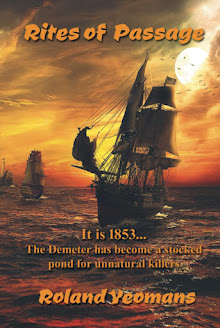
It is 1853. An undead Texas Ranger is on board a cursed ship in search of a murderer who is wearing the face of her last victim as a mask.
Listen to the LAST FAE
When the world is mad, there is little else to do but show them what true insanity is!
Can a man marry both the moon and the sun?
In the eclipse of myth, he can
What Defense is an innocent soul against the Powers of Darkness?
Let Hibbs, the cub with no clue, show you
Before Indiana Jones or Allan Quartermain
There was Sam McCord and his doomed love for Meilori Shinseen
Alice and Victor in 1834 New Orleans
Do a review and have a 1 in 13 chance to win a Johnny Depp autograph!
Buy_FRENCH QUARTER NOCTURNE
Hurricane Katrina has cast New Orleans into darkness. Predators, living and undead, close in on the helpless survivors. Can Samuel McCord and a vampire priest keep the French Quarter from being drowned in blood?
Buy_LET THE WIND BLOW THROUGH YOU
Enter the dangerous world of a Native American Noir thriller where forbidden love clashes with the politics of crime
You will never see the end coming
In his beginning is his end
My 1st SERIAL TRILOGY continues
There are none so lost as those who refuse to see
The 1st SERIAL TRILOGY!
In the dark, we are all orphans
In Memoriam - Maukie my cyber friend
RITES OF PASSAGE link
The earliest Samuel McCord adventure: Dare to board a fantasy Titanic as it sails into the Bermuda Triangle
VICTOR'S HERE!
BOOK 1: No one talks openly of the misty figures seen walking along New Orleans' iron-laced terraces, casting no shadow. Of the shapes seen rising from sewer grates. And no one willingly visits the crypt of Marie Laveau at midnight. Into this strange world arrives the street orphan, Victor Standish, from Charon's Greyhound. Charon has to keep up with the times ... the End Times. And the teen destined to be called the "Ulysses of the French Quarter" has come just in time for Hurricane Katrina, the End of All Things ... and the deadly love of the Victorian ghoul, Alice Wentworth.
VICTOR AND ALICE ARE BACK!
BOOK 2: Victor's a street kid. Alice is a Victorian ghoul Their love breaks the chain of reason. Their new adventures bring the French Quarter back from the brink of nightmare.
THE RIVAL
BOOK 3: Victor & Alice are in the French Quarter of 1834. Voodoo. Demigods. Revenants. And the hilarious Menage a Trois of Death! Oh, and someone we love dies at the end.
END OF DAYS is here!
St. Marrok's. The most eerie high school in which you will ever die. Its curriculum? The End of Days. Alice Wentworth plans to get an A+.
ADRIFT IN THE TIME STREAM link
SEQUEL to RITES OF PASSAGE: Come aboard the doomed DEMETER with undead Texas Ranger, Sam McCord, and sail with her into the depths of madness in ADRIFT IN THE TIME STREAM.
Buy_CREOLE KNIGHTS
SEQUEL to FRENCH QUARTER NOCTURNE: The dead rise. Elder Beings strain to enter our world through Katrina devastated New Orleans. And the Angel of Death is kidnapped to clear their way. Can Sam McCord stem the tide of madness in time?
Buy_THE LAST FAE
Once there was an age undreamed where legends walked this earth … and nightmares, too. Terrible were the battles, tragic the outcome of the wars. Until finally there were only two survivors : the nightmare and one bruised legend. These are the legend’s stories, each one a different facet of the same priceless gem – a jewel that has come to believe herself worthless. So come. Listen to her. Listen to THE LAST FAE.
GHOST OF A CHANCE
What if what you wrote became real?
BURNT OFFERINGS
When dreams are sacrificed, it is the soul that burns.
CHECK OUT THE FUN!
Explore if you dare
Buy_THE LAST SHAMAN
Journey with the last Lakota shaman, Wolf Howl. The white govenments call him Drew August. Those who hunt him call him Death. The last day of Man has dawned. Watch as Wolf Howl turns to meet his human hunters. Shadow, the love of his life, returns to aid his hunters. Then, Mankind's death descends. Can he save Shadow before the world's time runs out?
BRING ME THE HEAD OF McCORD!
Only 99 cents. C'mon. Take a chance.
GHOST WRITERS IN THE SKY
LEARN TO WRITE BETTER AND LAUGH ALONG THE WAY
LAST EXIT TO BABYLON
At the dawn of the End of All Things, the Last Fae finds there is no hope ... but love.
IT'S HERE TO BUY!!
The trilogy concludes. Not even the eclipse of myth is forever. But love is. And eclipses return. Listen. The voice of Blake, son of Man, is calling across the night skies.
Buy THE PATH BACK TO DAWN
Only in the eclipse of myth can a young man find himself with both the Moon and the Sun as his brides. Can he survive what follows?
Buy_LOVE LIKE DEATH
From the pages of THE LAST FAE springs this paranormal romance/thriller. Fallen, the last fae, discovers the name of the young teenager to whom she lost her heart : Blake Adamson.But she also discovers what happens when you believe your fears over your love : heartache and loss. And so Blake Adamson finds himself torn between two loves : one fae, the other an alien drinker of souls. Their love is deadly, but love, like death, will have its way.
THE BEAR WITH 2 SHAD0WS link
Based on the stories my Lakota mother told me as a child when I was deathly ill in a freezing Detroit basement apartment. Think a Native American LORD OF THE RINGS.
FROM THE GREAT BEYOND HOP!
You dare not miss it!!
ZOMBIE PREPAREDNESS!
LISTEN TO THE CDC
Thanks, Alex!
THE WORLDS OF ROLAND YEOMANS
Donna Hole astonishes with her insights on my linked worlds
FANTASTIC REVIEW OF THE LEGEND OF VICTOR STANDISH
Michael Di Gesu does a masterful review. I am honored by his friendship
LIFE LESSONS taught me by GYPSY
Dedicated to GYPSY
PAPYRUS PRODUCTIONS
Have Wendy make your book into a trailer that wows the reader!
HELP THE HURTING
100% of the profits for ALL my books this FEBRUARY are going to THE SALVATION ARMY. My Valentine's gift to the hurting.
Buy_BLOOD WILL TELL
One lone telepath finds himself a helpless spectator as the race of Man is subjugated into mindless drones by the very blood within their bodies.When the war is over, and he finds himself totally alone ... How can he go on and why?
CALL ME TOMBS
The last Lakota Heyoka faces voodoo and ultimate evil in the Carpathian Mountains of Transylvania with his Hellhound, Puppy
CATCH FIRE!
BLOG TOUR FOR ALEX J, CAVANAUGH'S NEWEST NOVEL
SIV'S BLOGFEST!
The Norse Gods Are Watching You!
NERDY IS THE NEW SEXY!
BECOME A JEDI KNIGHT FOR TEENS
THE SECRET OF SPRUCE KNOLL
Help save the endangered species of Earth by buying THE SECRET OF SPRUCE KNOLL!
AMAZON KEEPS SELLING OUT!
Written by the author who could very well turn out to be the new William Faulkner, Elliot Grace
FABULOSITY GALORE bookstore
Visit an online bookstore and help a blogging friend!!

 Posts
Posts